3 Tips for Building a Home Business in 2026
By James Svetec · March 4, 2021 · 7 min read
Part of our Airbnb Hosting 101 guide →
Key Takeaways
- Choose a business model with low startup costs, recurring income, and minimal risk — the model matters more than the product.
- Consistency beats intensity: 30–60 minutes of focused work every day, five days a week, outperforms sporadic 15-hour grind sessions.
- A proven mentor or system can save you months of trial and error and thousands of dollars in avoidable mistakes.
- Airbnb co-hosting (managing other people's properties) checks every box: no capital required, recurring income, and a scalable model.
- Building momentum early is the single biggest accelerator for a home-based business — consistency is what creates it.
Building a home-based business that gives you genuine freedom — over your time, your income, and your schedule — is one of the most searched topics online in 2026. This blog video breaks down three concrete tips from BNB Mastery founder James Svetec on how to start, grow, and sustain a business you can run from anywhere.
Watch the full video above or keep reading for the complete breakdown.
Tip 1: Choose the Right Business Model
Most people starting a business obsess over the product or service they'll offer. That's understandable — but it's the wrong starting point. The business model determines everything: how much risk you carry, how fast you can grow, and whether hitting your income goals actually gives you more freedom or less.
So what exactly is a business model? Simply put, it's the fundamental equation for how your business makes money. Two businesses can offer identical services and produce wildly different outcomes just because of how they're structured.
Here's what to look for when evaluating a business model for a home-based business:
- Low upfront capital requirements — Debt is the fastest way to lose freedom before you've even started. Avoid business models that require significant inventory, furnishings, or property deposits to launch.
- Recurring income — One-time transactions create income peaks and valleys. Monthly recurring revenue gives you predictability and breathing room.
- Scalable without proportional cost — If growing means spending significantly more money, the model is working against you. Look for models where adding clients or units doesn't require major new capital outlays.
- Time flexibility — A business that demands your active presence 50+ hours a week isn't freedom — it's a self-created job. Choose a model designed to be managed remotely and efficiently.
Consider the comparison between rental arbitrage and Airbnb co-hosting (managing properties on behalf of owners). Both involve Airbnb. But rental arbitrage requires first month's rent, last month's rent, a security deposit, and furnishings every time you add a property. That's a significant cash outlay per unit.
Co-hosting, by contrast, requires none of that — you manage the owner's asset and take a management fee.
The service is nearly identical. The business model is night and day. For a deeper look at how these models stack up, check out this breakdown of Airbnb business models or this honest look at the risks of Airbnb arbitrage.
Pro tip: Before choosing a business model, write down your top three goals — whether that's financial security, time flexibility, or income consistency — and evaluate each model against those specific criteria. Most people skip this step and end up building something that undermines the exact goals they started with.
Tip 2: Stay Consistent — Even When It's Boring
Once you've picked the right model, the single biggest factor determining your success isn't talent, hustle, or luck. It's consistency.
This is one of the most misunderstood concepts in entrepreneurship. The internet glorifies the 80-hour work week and the all-night grind. But in practice, someone who works a focused 30–60 minutes every day, five days a week, for six months will almost always outperform someone who works 15 hours one week, disappears the next, and repeats that pattern indefinitely.
Why? Because business momentum is real, and inconsistency destroys it.
When you're building something — a client base, a reputation, a pipeline — every gap in your effort resets part of what you've built. You lose warm leads. You miss follow-up windows. You fall out of the routine that makes execution feel natural. And you have to spend energy getting back up to speed every time you return.
Here's a practical framework for staying consistent:
- Set a fixed weekly schedule. Block specific hours in your calendar for business-building activities. Treat them like appointments you can't cancel.
- Start small and protect it. Even 30 minutes a day, five days a week, adds up to 130+ hours over a year. That's enough to build something real.
- Track your inputs, not just outcomes. Early in a business, results lag effort. If you only measure results, you'll quit before the momentum kicks in. Measure the actions you're taking instead.
- Identify your most common excuse and plan for it. If you know you tend to skip Fridays, schedule something accountability-based on Fridays. Remove the decision.
The hockey stick growth curve that every entrepreneur talks about? It doesn't come from talent. It comes from compounding consistency over enough time that results accelerate. The question isn't whether you can work hard for one week — it's whether you can show up for 26 weeks straight.
For more on building the right habits and mindset as you grow, the key things successful entrepreneurs know is worth reading alongside this.
Free Tool
Grab the Airbnb Nightly Pricing Tool
Grab the exact spreadsheet James uses to set profitable nightly rates — plus a step-by-step setup cheatsheet.
Tip 3: Find a Mentor and Follow a Proven System
Trial and error has a place — specifically when no one has solved the problem you're working on before you. But for most people starting a home-based business in 2026, that's not the situation. Proven systems exist. Mentors who have made every mistake you're about to make are accessible. Ignoring those resources isn't bold — it's expensive.
A good mentor or structured program offers three things that are nearly impossible to replicate on your own:
- A map of the common pitfalls. The mistakes that kill early-stage businesses aren't random — they're predictable. Someone who's been through them can show you exactly where the landmines are.
- A compressed learning timeline. What might take two years to learn through experience can often be absorbed in weeks through the right mentorship. That's not an exaggeration — it's the math of learning from someone else's iteration.
- Accountability and community. Building a business alone is harder than building it with others. A community of people working toward similar goals accelerates progress and provides support when motivation dips.
This doesn't mean outsourcing your judgment. It means standing on the shoulders of people who've already done what you're trying to do, so you can move faster and with fewer scars.
Connecting with experienced hosts and operators in a community like the BNB Tribe community gives you ongoing access to people actively running these businesses — sharing what's working, what's changed, and what to watch out for in the current market.
Example: Two people start managing Airbnb properties in the same month. One follows a proven system with mentorship. The other tries to figure it out independently. Six months later, the first has two or three clients generating consistent income.
The second is still troubleshooting the same operational problems the first person avoided in week two. The difference isn't effort — it's access to the right information at the right time.
Why Airbnb Co-Hosting Fits All Three Tips
Airbnb co-hosting — managing short-term rental properties on behalf of property owners and earning a management fee — happens to satisfy all three criteria above better than almost any other home-based business model available in 2026.
Here's how it stacks up:
| Criteria | Airbnb Co-Hosting | Rental Arbitrage | E-commerce / Dropshipping |
|---|---|---|---|
| Low startup cost | ✅ Yes | ❌ No | ⚠️ Varies |
| Recurring income | ✅ Monthly management fees | ✅ But offset by rent costs | ❌ Transaction-based |
| Scale without capital | ✅ Yes | ❌ Each unit costs more | ❌ Inventory scales with cost |
| Run from anywhere | ✅ Yes | ✅ Mostly | ✅ Mostly |
The model is genuinely low-risk to start. There's no inventory to purchase, no lease to sign, no property to furnish. A co-host finds a property owner who wants help managing their listing, agrees on a fee structure, and gets to work. Revenue flows monthly. As you add more properties, income scales without proportional cost increases.
For those ready to build a full co-hosting operation, BNB Mastery's Co-Hosting Program provides a step-by-step framework for landing your first clients, managing operations efficiently, and scaling beyond your first few properties — without the trial and error that costs most people months of momentum.
Curious about how much a single property can generate? This blog video on earning $1K managing one Airbnb gives a concrete look at what the numbers can look like early on.
Final Thoughts on Building a Home Business
Starting a home-based business in 2026 doesn't require a massive budget, a groundbreaking idea, or a decade of experience. It requires three things: a business model that's actually built for freedom, the discipline to show up consistently even before results appear, and the wisdom to learn from people who've already figured out what you're working toward.
The blog video above covers each of these principles in James Svetec's own words — and the underlying framework applies whether you're starting an Airbnb co-hosting business or anything else. But if you're specifically looking for a low-risk, location-independent business with recurring income, managing short-term rentals for property owners is one of the most accessible paths available right now.
Pick the right model. Stay consistent. Find your mentor. Those three steps, applied over six to twelve months, produce results that feel dramatic — because they are.
Frequently Asked Questions
What is the best low-cost home business to start in 2026?
Airbnb co-hosting — managing short-term rental properties for owners and earning a management fee — is one of the strongest options in 2026. It requires no upfront capital, generates recurring monthly income, and can be managed remotely from anywhere.
How much time do I need to invest to build a home business?
Consistency matters more than volume. Setting aside 30–60 focused minutes per day, five days a week, is enough to build meaningful momentum over time. Sporadic high-intensity effort followed by breaks tends to reset progress and slow results.
Why is choosing the right business model so important?
The business model determines your risk level, income consistency, and whether growth requires more capital. Two businesses offering the same service can produce completely different outcomes based on how they're structured financially.
Is Airbnb co-hosting still a viable business in 2026?
Yes. Airbnb co-hosting remains one of the most accessible entry points into the short-term rental industry. With no property purchase or lease required, the barrier to entry is low, and demand for professional property management continues to grow.
How do I find a mentor for starting an Airbnb management business?
Look for someone who has built the specific type of business you want and has a documented track record. Structured programs with mentorship components, like BNB Mastery's Co-Hosting Program, combine training with community support to accelerate your results.
If Airbnb co-hosting sounds like the right fit, the hardest part for most people is landing that first client — not managing the properties. BNB Mastery's Co-Hosting Program walks you through exactly how to do that, from your first outreach to building a roster of clients generating consistent monthly income. And if you want ongoing support and a community of hosts who are actively doing this, the BNB Tribe community is where that conversation happens every day.
Free Tool
Grab the Airbnb Nightly Pricing Tool
Grab the exact spreadsheet James uses to set profitable nightly rates — plus a step-by-step setup cheatsheet.
Ready to get started with Airbnb?
Join 240+ members in BNB Tribe — the community James built for hosts and investors who want real results.
Join BNB TribeMore Articles
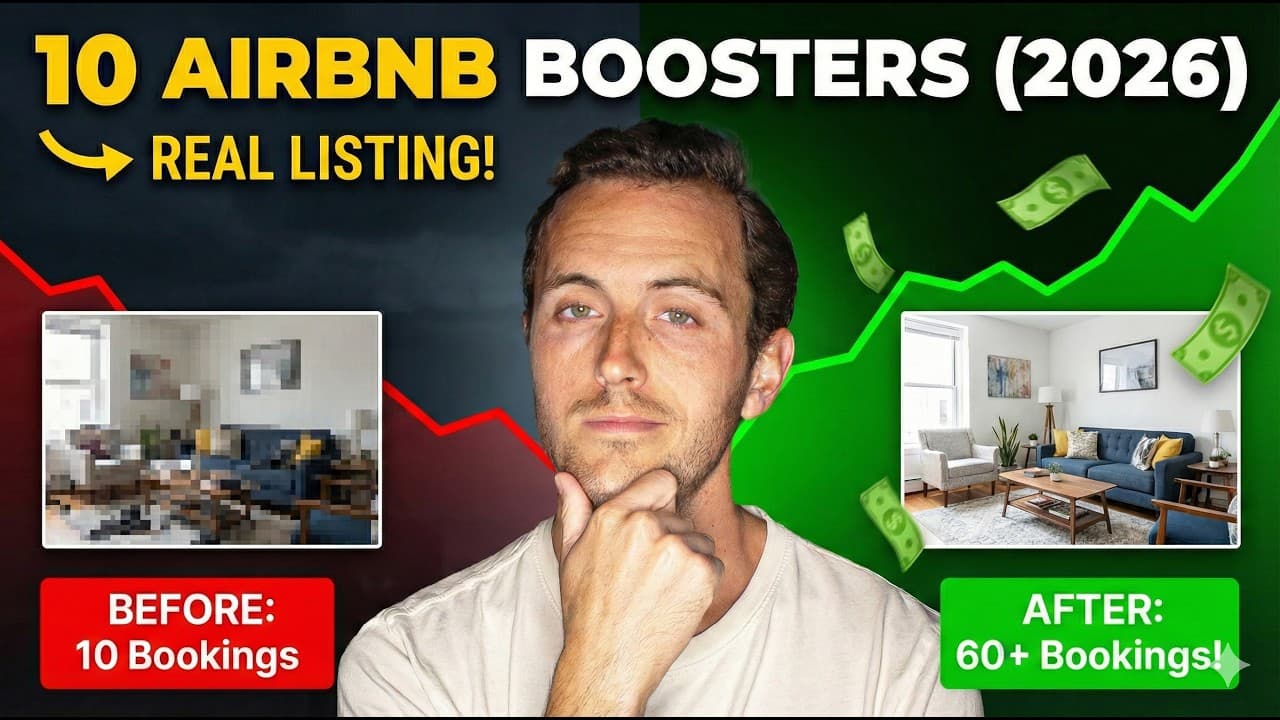
10 ESSENTIAL Steps to Improve Your Airbnb in 2026 (Real Listing Example!)
Most Airbnb listings lose bookings to the same fixable mistakes: bad photos, weak headlines, incomplete amenities, and missed seasonal opportunities. Here are 10 proven strategies to turn any underperforming listing into a consistent booking machine in 2026.
January 1, 2026 · 11 min read

10 Game-Changing Hacks to Improve Your Airbnb
What does it really mean to run a successful Airbnb in 2026? These 10 practical hacks — including a $15 sensor that prevented $44,000 in property damage — show exactly what separates top hosts from average ones.
January 16, 2025 · 9 min read

10 Tips to Get More Views on Airbnb
More views mean more bookings, and more bookings mean more revenue. This guide breaks down 10 actionable Airbnb listing optimization strategies that help hosts climb the search rankings and fill their calendars in 2026.
March 26, 2024 · 14 min read