Airbnb vs VRBO vs Booking.com: Which Platform Wins?
By James Svetec · November 3, 2022 · 9 min read
Part of our Airbnb Hosting 101 guide →
Key Takeaways
- Airbnb is the top platform for most STR hosts in 2026 due to its massive audience and host-friendly features like AirCover protection up to $1 million.
- Booking.com works best for hotel-equivalent listings — think urban one-bedrooms competing directly with hotels.
- VRBO attracts vacation rental seekers willing to pay higher rates, but delivers lower booking volume than Airbnb.
- Expanding to additional platforms before optimizing your Airbnb listing is a common mistake — fix the fundamentals first.
- Direct bookings are a low-hanging-fruit strategy to fill gaps and avoid the ~15% platform fee once your core listing performs well.
Choosing the right booking platform can make or break an STR host's revenue strategy — and this blog video breaks down exactly how Airbnb, VRBO, and Booking.com stack up against each other in 2026.
Whether you're listing your first property or managing a portfolio of short-term rentals for other owners, understanding where your guests actually search is critical to maximizing occupancy and income.
Watch the full video above or keep reading for the complete breakdown.
Why Platform Choice Matters for STR Hosts
At its core, every OTA (online travel agency) is a marketing platform for your property. The platform drives traffic to your listing, handles payment processing, and provides tools to screen guests. But not all platforms attract the same type of traveler — and that distinction determines where your bookings actually come from.
Think of each platform as a different advertising channel. A downtown studio apartment attracts a completely different traveler than a rural four-bedroom lakeside cottage. Mismatching your property type to the wrong platform means paying fees and managing extra calendars for minimal return.
The good news: in 2026, the strategic framework for choosing platforms is clearer than ever. Most hosts should start in one place, optimize aggressively, and only then consider expanding. Here's how each platform breaks down.
Airbnb: The Default Starting Point
Airbnb is the dominant STR platform globally, and for most hosts, it's the obvious first choice. The platform has become so synonymous with short-term rentals that people routinely say "let's book an Airbnb" the same way people say "Google it." That brand recognition translates directly into guest traffic — and guest traffic translates into bookings.
What Makes Airbnb Stand Out
- Largest audience: More guests search Airbnb for STR properties than any other platform. If a host lists only on one platform, Airbnb will generate a landslide more bookings than VRBO or Booking.com.
- AirCover protection: Airbnb's host protection policy covers up to $1 million in damages caused by guests — a meaningful safety net for property owners.
- Built-in guest screening: The platform's review system and ID verification tools make it easier to vet guests before accepting a reservation.
- Best user interface: Setting up a listing, managing your calendar, and processing payments is more intuitive on Airbnb than either VRBO or Booking.com.
- Full payment processing: Airbnb collects and distributes funds automatically, removing friction for new hosts.
For anyone new to hosting — whether managing their own space or exploring co-hosting as a business model — Airbnb is the clear starting point. Get your listing optimized here before anything else.
The main downside? Airbnb charges hosts a service fee (typically around 3% for the split-fee structure, or up to 15% for the host-only fee model). Those fees add up at scale, which is part of why direct bookings become attractive later.
Booking.com: Best for Hotel-Equivalent Listings
Booking.com gets enormous traffic — hundreds of millions of visitors per month globally. But here's the nuance most hosts miss: Booking.com was built for hotels. The majority of people landing on Booking.com are looking for a hotel room, not a vacation rental.
Over recent years, Booking.com has made significant efforts to build out its STR inventory and attract non-hotel travelers. But the platform's identity hasn't fully shifted. A traveler searching for a rural cabin or a lakeside retreat is unlikely to open Booking.com first.
When Booking.com Makes Sense
The sweet spot for Booking.com is what BNB Mastery describes as "hotel-equivalent listings" — properties that compete directly with hotels in the same market. Think:
- A one-bedroom condo in a downtown urban core
- A studio apartment near a convention center or airport
- A bachelor suite in a dense residential neighborhood with strong hotel demand
These properties sit in the same consideration set as hotel rooms. Travelers booking on Booking.com for a business trip or city weekend might see your listing and choose it over a hotel — especially if you offer a full kitchen, more space, or a lower nightly rate.
The tradeoff: Booking.com's host-facing interface is significantly less user-friendly than Airbnb. Getting your property set up, configuring payment collection, and managing reservations involves more complexity. Factor that learning curve into your decision.
VRBO: The Vacation Rental Specialist
VRBO (Vacation Rental By Owner) occupies the opposite end of the spectrum from Booking.com. Where Booking.com skews toward hotel-style travelers, VRBO attracts guests specifically looking for vacation rentals — often whole-home listings, often in leisure destinations.
VRBO's audience tends to be slightly older, family-oriented, and familiar with renting vacation homes. Florida beach houses, mountain ski cabins, lakefront cottages — these properties align well with what VRBO's users expect.
VRBO's Key Advantages
- Higher average rates: VRBO guests are accustomed to paying more for whole-home vacation rentals and tend to book longer stays.
- Less competition per listing: VRBO has fewer total listings than Airbnb, which can mean better visibility for properties that fit the platform's niche.
- Whole-home focus: If you're not offering a shared space or a single room, VRBO's audience is more aligned with your product.
VRBO's Limitations
- Lower overall traffic volume compared to Airbnb
- Less effective for urban, hotel-equivalent properties
- Platform nuances in pricing, guest screening, and listing optimization require attention — you can't just copy-paste your Airbnb listing over
For a deeper look at how these platforms compare side by side — including direct booking options — see this full comparison of Airbnb vs VRBO vs Booking.com vs direct booking.
When Should You Actually Expand to More Platforms?
Here's where most hosts get this wrong: they list on Airbnb, they're not hitting their revenue targets, and their instinct is to add VRBO and Booking.com immediately. More platforms equals more bookings, right?
Not necessarily. And often, not at all.
The question to ask is: What is the actual constraint on my revenue? Is it genuinely a lack of traffic, or is it something else — pricing, photos, listing copy, reviews?
BNB Mastery uses a straightforward analogy here: if your car's engine is broken, pouring more gasoline into the tank won't make it go farther. Expanding to additional platforms when your core Airbnb listing is underperforming just means more people see a listing that isn't converting. You've multiplied your management complexity without fixing the underlying problem.
The right time to expand is when your Airbnb listing is genuinely optimized and you're looking to fill remaining calendar gaps with incremental bookings from a secondary audience.
Free Tool
Grab the Airbnb Nightly Pricing Tool
Grab the exact spreadsheet James uses to set profitable nightly rates — plus a step-by-step setup cheatsheet.
Fix the Fundamentals Before Expanding
Before adding a second platform, work through this checklist on your Airbnb listing:
- Photos: Are they professional-quality? Well-lit, wide-angle, and showing every room? In practice, 9 out of 10 listings have photos that could meaningfully be improved.
- Listing headline: Does it communicate your property's best feature and target the right guest?
- Listing description: Is the copy compelling, specific, and optimized for the type of guest you want to attract?
- Pricing strategy: Are you adjusting rates for seasonality, day of week, local events, and lead time? A flat rate year-round is leaving money on the table.
- Review count and rating: Have you accumulated enough reviews for Airbnb's algorithm to trust your listing?
Hosts who struggle with pricing often see dramatic improvements just from implementing a dynamic pricing approach. For a tactical breakdown, these three Airbnb pricing hacks are a good starting point.
Once those fundamentals are dialed in — and your occupancy rate and revenue reflect a well-performing listing — that's when expanding to a second platform makes sense. You're now giving more people a chance to book something that's actually working.
Hosts building a management business who want structured guidance on both listing optimization and platform strategy might find value in BNB Mastery's Co-Hosting Program, which covers the operational systems needed to manage listings effectively across platforms.
Direct Bookings: The Overlooked Revenue Strategy
There's a fourth option that doesn't get enough attention: direct bookings through your own platform. This isn't a replacement for OTAs, but it's a smart complement — especially once you've built a guest base.
The strategy is straightforward. Collect the email address of every guest who stays with you. Build that list over time. Then periodically send a simple email offering past guests the opportunity to book again — directly through your own booking platform, bypassing the OTA fee entirely.
Why does this work so well?
- You're marketing to people who already know your property and had a positive experience
- You avoid the platform fee (roughly 15% on Airbnb, depending on fee structure) on every direct booking
- The conversion rate is higher because there's already established trust
- Setup is relatively simple using channel management software with a direct booking feature
Pro tip: Channel management tools like Hostaway, Lodgify, or Guesty often include a direct booking website feature. If you're already using one for calendar synchronization across platforms, the direct booking setup requires minimal additional effort.
This approach fills calendar gaps without the complexity of learning an entirely new platform's optimization nuances. It's genuinely low-hanging fruit for established hosts.
For hosts interested in building out multiple income streams from their STR business, this breakdown of income streams for STR hosts covers several additional strategies worth exploring.
The Right Order to Expand Your Platform Presence
Assuming your Airbnb listing is optimized and performing well, here's the recommended expansion sequence based on property type:
For Hotel-Equivalent Properties (Urban, Studio/1BR)
- Airbnb — always first
- Booking.com — second, to capture hotel-seeking travelers in your market
- Consider VRBO only if you see meaningful demand from longer-stay leisure travelers
For Vacation Rental Properties (Whole Home, Leisure Markets)
- Airbnb — always first
- VRBO — second, to capture the vacation rental audience willing to pay premium rates
- Booking.com is generally less effective for rural or resort-area properties
Important: When you do expand, don't assume you can use the same listing, pricing, and strategy across platforms. Each OTA has its own algorithm, fee structure, guest expectations, and optimization levers. What works on Airbnb won't automatically translate — plan to spend time customizing your approach on each new platform.
For investors building a portfolio across multiple markets, understanding platform dynamics is just one piece of the puzzle. The BNB Investing Blueprint provides a framework for analyzing deals, choosing markets, and building an STR portfolio with strong cash flow from the ground up.
Connecting with other hosts who have navigated multi-platform strategies firsthand is also invaluable. The BNB Tribe community brings together experienced hosts and investors to share what's actually working across different markets and property types in 2026.
Final Verdict: Airbnb vs VRBO vs Booking.com
For the vast majority of STR hosts in 2026, Airbnb is the right starting point — full stop. It has the largest audience, the most intuitive interface, the strongest guest screening tools, and the best brand recognition among travelers actively seeking short-term rentals. If someone can only list on one platform, it should be Airbnb.
Beyond Airbnb, the right secondary platform depends entirely on your property type. Hotel-equivalent urban listings benefit from Booking.com's hotel-hunting audience. Whole-home vacation rentals find a better secondary audience on VRBO. And direct bookings offer every host a fee-free path to repeat business once a guest base is established.
The biggest mistake hosts make with this blog video's core topic isn't choosing the wrong platform — it's expanding too early before the fundamentals on their primary listing are solid. Nail your photos, optimize your listing copy, dial in your pricing strategy, and then let additional platforms amplify what's already working.
"Frequently Asked Questions
Is Airbnb still the best platform for short-term rentals in 2026?
Yes. Airbnb remains the dominant STR platform in 2026 by a significant margin. It has the largest audience of travelers actively searching for short-term rentals, the most intuitive host interface, and built-in features like AirCover (up to $1 million in damage protection). For most hosts, Airbnb should be the first — and for a while, only — platform they focus on.
What is the difference between VRBO and Airbnb?
Airbnb caters to a broader range of property types and travelers, from shared rooms to entire homes. VRBO (Vacation Rental By Owner) focuses specifically on whole-home vacation rentals and attracts travelers accustomed to booking getaway properties. VRBO tends to offer higher average nightly rates but lower booking volume compared to Airbnb.
Should I list my Airbnb property on Booking.com?
It depends on your property type. Booking.com is most effective for hotel-equivalent listings — urban studios or one-bedrooms competing directly with hotels. If your property is a rural vacation home or large whole-home listing, Booking.com's primarily hotel-focused audience is unlikely to generate significant bookings. Optimize your Airbnb listing first before adding Booking.com.
When should I expand my STR listing to multiple platforms?
Expand only after your primary Airbnb listing is fully optimized — professional photos, compelling listing copy, a dynamic pricing strategy, and a solid review base. Expanding too early means more people see an underperforming listing, which won't fix your revenue problem. Once Airbnb is performing well, secondary platforms fill incremental gaps.
How do direct bookings compare to Airbnb and VRBO?
Direct bookings let hosts bypass OTA fees (roughly 15% on Airbnb) by booking repeat guests directly through their own platform. The strategy works best with past guests who already trust your property. It's not a replacement for OTAs but a smart complement — especially for filling calendar gaps without adding the complexity of a new platform.
If your Airbnb listing isn't hitting its revenue potential yet, the platform you're missing probably isn't the problem — the listing itself is. The BNB Mastery Co-Hosting Program walks through exactly how to optimize listings, set pricing strategy, and build the systems needed to perform consistently across platforms. And for ongoing strategy discussions with hosts navigating the same decisions, the BNB Tribe community is where those conversations happen in real time.
Free Tool
Grab the Airbnb Nightly Pricing Tool
Grab the exact spreadsheet James uses to set profitable nightly rates — plus a step-by-step setup cheatsheet.
Ready to get started with Airbnb?
Join 240+ members in BNB Tribe — the community James built for hosts and investors who want real results.
Join BNB TribeMore Articles
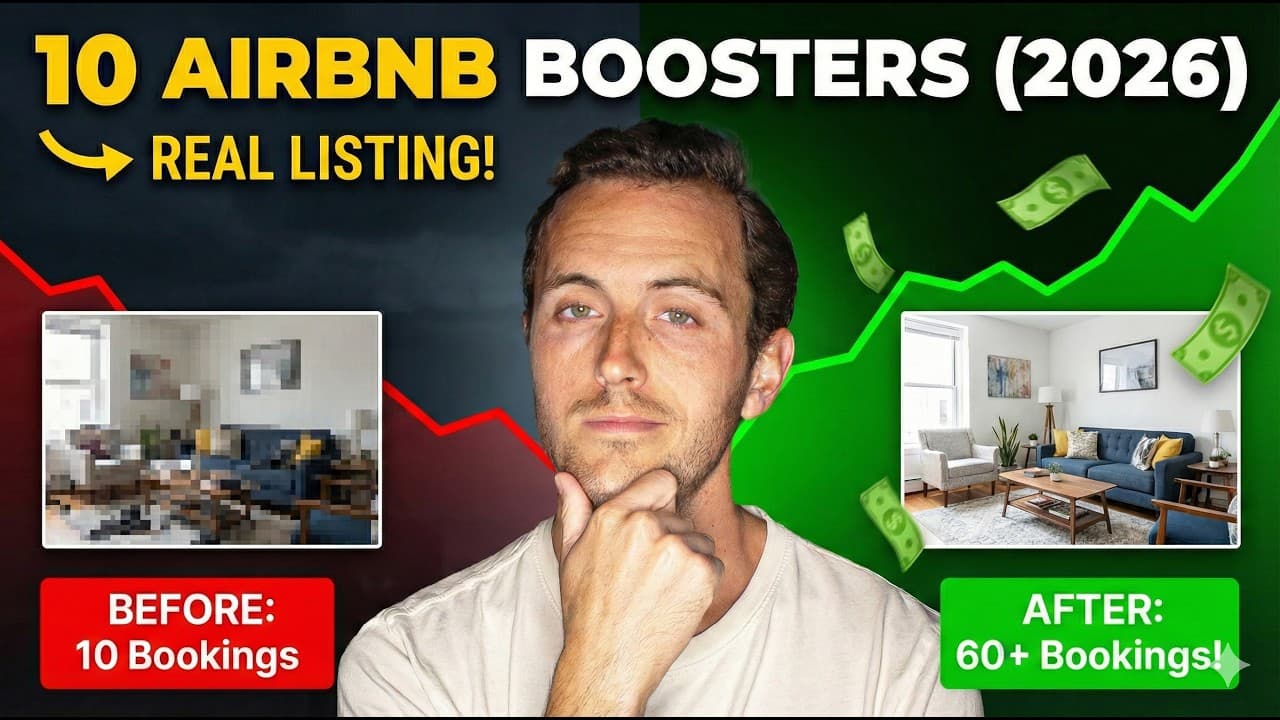
10 ESSENTIAL Steps to Improve Your Airbnb in 2026 (Real Listing Example!)
Most Airbnb listings lose bookings to the same fixable mistakes: bad photos, weak headlines, incomplete amenities, and missed seasonal opportunities. Here are 10 proven strategies to turn any underperforming listing into a consistent booking machine in 2026.
January 1, 2026 · 11 min read

10 Game-Changing Hacks to Improve Your Airbnb
What does it really mean to run a successful Airbnb in 2026? These 10 practical hacks — including a $15 sensor that prevented $44,000 in property damage — show exactly what separates top hosts from average ones.
January 16, 2025 · 9 min read

10 Tips to Get More Views on Airbnb
More views mean more bookings, and more bookings mean more revenue. This guide breaks down 10 actionable Airbnb listing optimization strategies that help hosts climb the search rankings and fill their calendars in 2026.
March 26, 2024 · 14 min read