Is Airbnb Management a Good Business? 4 Reasons It Works
By James Svetec · November 11, 2021 · 8 min read
Part of our Airbnb Hosting 101 guide →
Key Takeaways
- You can start an Airbnb management business with just a few hundred dollars — no need to buy, rent, or furnish properties
- Co-hosting generates monthly recurring revenue, making it easier to replace a 9-to-5 income than most business models
- The business scales without constant reinvestment — adding properties doesn't require putting more capital at risk
- At 5-10 properties, most operations can be automated with a small team, freeing up your time significantly
- This model is best suited for people who want financial freedom and lifestyle flexibility, not necessarily empire-building
If you've been searching for a low-risk way to build real income in the short-term rental space, Airbnb management — also called co-hosting — deserves a serious look. This blog video breaks down exactly why the model works, who it's built for, and what realistic growth looks like in 2026.
Watch the full video above or keep reading for the complete breakdown.
What Is Airbnb Management (Co-Hosting)?
Airbnb management, sometimes called co-hosting or short-term rental property management, means you run Airbnb listings on behalf of property owners — and earn a percentage of the booking revenue in return. You never buy the property. You never sign a lease. You simply manage the operation.
Your responsibilities typically include creating and optimizing the listing, handling guest communications, coordinating cleaning crews, managing pricing, and resolving any issues that come up during stays. In exchange, co-hosts generally earn anywhere from 15% to 30% of gross rental revenue per property.
At scale, that adds up fast. A single well-performing property generating $4,000/month in bookings puts $600–$1,200/month in your pocket. Five properties? You're looking at a solid full-time income without owning a single square foot of real estate.
For a deeper look at how co-hosting stacks up against other Airbnb business models, the comparison of Airbnb hosting vs. co-hosting vs. investing is a useful starting point.
Reason 1: Extremely Low Startup Costs
Most businesses require capital just to get off the ground. A franchise might cost $50,000. An e-commerce store needs inventory. A restaurant needs equipment, a lease, and staff before a single customer walks through the door.
Airbnb management sidesteps almost all of that. You don't need to buy property, rent it through arbitrage, or furnish it yourself. The property owner already has the asset. You bring the expertise, the systems, and the time.
In practice, most co-hosts get started for a few hundred dollars in miscellaneous expenses — things like basic software tools, a professional email, and perhaps some marketing materials to land that first client. That's a remarkably low barrier for a business capable of producing five or six figures annually.
Pro tip: This low barrier to entry doesn't mean it's easy — it means the risk is low. You still need to learn the right systems and know how to pitch property owners effectively. But losing $300 if something doesn't work out is very different from losing $15,000.
For those who want to understand the full process, how Airbnb management actually works covers the day-to-day reality of running properties for other people.
Reason 2: Monthly Recurring Revenue
One of the most underrated advantages of co-hosting is the income structure. Unlike freelance work, consulting, or most service businesses where you constantly need new clients to stay afloat, Airbnb management generates recurring monthly income.
Once you land a property, that property earns you revenue every month — ideally for years. You're not starting from zero each billing cycle. That consistency changes everything, especially if the goal is to replace a 9-to-5 salary.
Think about what it takes to quit a job. You need reliable income — not lumpy, feast-or-famine income. Monthly recurring revenue from a managed portfolio gives you the stability to make that leap with confidence, knowing your baseline is covered before you even think about growth.
Example: A co-host managing 8 properties at an average of $800/month per property in management fees is bringing in $6,400/month in recurring revenue. That's a livable, sustainable income — without chasing new clients every 30 days.
This predictability also makes financial planning much more straightforward. You can budget, invest, and make long-term decisions without constantly second-guessing your cash position.
Want to see what single-property management can actually generate? This breakdown of earning $1,000 managing a single Airbnb shows what's possible even before you scale.
Reason 3: The Business Scales Without Eating Its Own Profits
Most business owners face a painful trade-off: to grow, you have to reinvest. Every dollar taken out of the business is a dollar not being used to fuel expansion. That makes it brutally hard to enjoy the fruits of your work while still building something bigger.
Airbnb management doesn't work that way. Adding a new property to your portfolio costs you almost nothing financially. You're not buying more inventory, hiring more full-time staff, or opening another location. You're simply onboarding another property owner and incorporating their unit into your existing systems.
That means you can take profit out of the business every month and still grow. Both things happen simultaneously — which is rare in the business world.
What scaling actually looks like
- 1–3 properties: You're handling most tasks yourself — guest communications, coordinating cleaners, managing check-ins.
- 4–7 properties: Revenue is substantial enough to start outsourcing. Cleaning is typically the first thing to delegate (and often goes from day one).
- 8–15 properties: You can hire a part-time guest communications person, put maintenance contacts in place, and largely step away from daily operations.
- 15+ properties: Many co-hosts at this level have a genuinely passive income stream. Their primary job is evaluating new properties and maintaining owner relationships.
The key insight: you're not scaling a product business where unit costs increase linearly. You're scaling a systems business. Get the systems right once, and each new property fits into them with minimal additional effort.
Connecting with other hosts who have already built these systems is one of the fastest ways to compress your learning curve. The BNB Tribe community brings together active co-hosts and STR investors who share what's actually working in 2026 — not theoretical advice, but real-world strategies from people managing active portfolios.
Free Tool
Grab the Airbnb Nightly Pricing Tool
Grab the exact spreadsheet James uses to set profitable nightly rates — plus a step-by-step setup cheatsheet.
Reason 4: Time Freedom and Location Flexibility
There's a certain point in building an Airbnb management business where the income question becomes secondary. Once the systems are in place, the real benefit is what the business doesn't demand from you.
Co-hosting, done right, is a location-independent business. Guest communications happen online. Pricing tools run automatically. Cleaners operate independently. You don't need to live on-site or even in the same city as some of your properties (though being local is an advantage early on).
That kind of freedom — over your time, your schedule, and your location — is what draws most people to this model in the first place. It's not about becoming a billionaire.
It's about having enough income to genuinely enjoy your life, spend time with the people you care about, and not have to ask anyone for permission to take a Friday afternoon off.
For someone who started in a tough financial position — carrying debt, stressed about making ends meet — reaching that level of stability and freedom is a genuine life change. Not a side hustle. Not passive income fluff. A real, functional business that works without constant babysitting.
Who Is Airbnb Management Actually For?
Airbnb management isn't the right fit for everyone — and it's worth being honest about that.
If your goal is to build a massive, venture-backed company or disrupt an entire industry, co-hosting probably isn't your vehicle. It's not designed to become the next Airbnb itself. It doesn't have the kind of exponential growth curve that attracts institutional investors.
But if what you want is:
- A business you can start with minimal capital
- Reliable monthly income that replaces or supplements a salary
- A scalable operation you can eventually step away from
- The freedom to work from anywhere and control your own schedule
- A business model that's still performing well in the 2026 STR market
...then Airbnb management checks every box. It's a lifestyle business in the best sense — a real business, generating real income, with real flexibility built in.
This also makes it an ideal choice for people starting their first business, career changers, parents who need schedule flexibility, or anyone who wants to test entrepreneurship without betting their savings on it.
If you're exploring different ways to participate in the short-term rental market, the breakdown of the main Airbnb business models is worth reviewing — it puts co-hosting in context alongside arbitrage and direct investing.
How to Automate and Step Back From Day-to-Day Operations
The path from hands-on operator to largely passive owner follows a predictable pattern. Here's how most successful co-hosts approach it.
Step 1: Handle everything yourself at first
When you're managing 1–3 properties, do the guest communications personally. This isn't just to save money — it's to understand the process deeply enough to train someone else later. You can't delegate what you don't understand.
Step 2: Build your cleaner network early
Cleaning is the one task you delegate from day one. Good cleaners are the backbone of a well-run STR. Find reliable people, pay them fairly, and create clear checklists. This frees up your physical time immediately.
Step 3: Use property management software
Tools like Hospitable, Guesty, or OwnerRez automate message templates, calendar syncing across platforms, and review requests. At 3+ properties, this is non-negotiable. Automation handles the volume so you don't have to.
Step 4: Hire guest communications support
Once revenue justifies it — typically around 5–8 properties — bring on a part-time person to handle routine guest messages. This is often more affordable than new hosts expect. A capable VA handling guest comms for $800–$1,200/month can free up 15–20 hours of your week.
Step 5: Establish maintenance contacts
Have reliable handymen, HVAC contacts, and plumbers in your phone before you need them. Reactive maintenance is stressful. Proactive relationships make it manageable.
By the time you've done all of this, your role shifts from operator to owner. You're reviewing performance metrics, evaluating new properties to onboard, and maintaining relationships with existing property owners. The daily grind handles itself.
For hosts looking to build this kind of structured co-hosting business from scratch, BNB Mastery's Co-Hosting Program provides a step-by-step framework — from landing your first client to systemizing operations across a full portfolio.
Is Airbnb Management a Good Business in 2026?
The short answer: yes — particularly for people who want a real business without the capital risk of buying property or the inventory burden of most other ventures. Airbnb management combines low startup costs, recurring monthly revenue, and genuine scalability in a way that's hard to find in other models.
The STR market in 2026 continues to attract both travelers and property owners looking for professional management. That creates a real opportunity for co-hosts who know how to deliver results. The properties are out there. The demand is there. The question is whether you have the systems and knowledge to capture it.
If you're serious about building this business the right way, start by learning from people who've already done it — and surround yourself with a community going through the same journey. Both dramatically accelerate your progress.
Frequently Asked Questions
Is Airbnb management a good business to start in 2026?
Yes. Airbnb management (co-hosting) remains a strong business model in 2026. It requires minimal startup capital, generates monthly recurring revenue, and can be scaled and automated without owning any property. It's particularly well-suited for first-time entrepreneurs or anyone looking to build flexible, location-independent income.
How much can you make managing Airbnb properties for others?
Earnings vary by portfolio size and market, but co-hosts typically earn 15–30% of gross booking revenue per property. Managing 8–10 properties in a solid market can generate $5,000–$10,000/month or more. Many hosts reach six figures annually once their portfolio is fully operational and systemized.
Do you need to own property to start an Airbnb management business?
No. Co-hosting means you manage properties owned by someone else. You don't buy, rent, or furnish any real estate. Your startup costs are minimal — mostly software tools and the time needed to find your first property owner client.
How many properties do you need to manage to quit your job?
Most co-hosts can replace a modest full-time income with 5–10 well-performing properties. The exact number depends on your local market, your management fee percentage, and how much income you need to cover your expenses. At 8–12 properties, many co-hosts are earning a comfortable six-figure equivalent income.
Can Airbnb management be automated and run passively?
Yes, to a significant degree. With the right property management software, a reliable cleaning team, and a guest communications assistant, most day-to-day operations can be handled without the owner's direct involvement. Full automation typically becomes practical around 5–10 properties, once revenue justifies the outsourcing costs.
Building a co-hosting business is straightforward in concept but takes real knowledge to execute — especially when it comes to landing those first property owners and setting up systems that don't fall apart as you grow. BNB Mastery's Co-Hosting Program walks through exactly that process, and joining the BNB Tribe community puts you alongside other hosts actively building and scaling their portfolios in 2026.
Free Tool
Grab the Airbnb Nightly Pricing Tool
Grab the exact spreadsheet James uses to set profitable nightly rates — plus a step-by-step setup cheatsheet.
Ready to get started with Airbnb?
Join 240+ members in BNB Tribe — the community James built for hosts and investors who want real results.
Join BNB TribeMore Articles
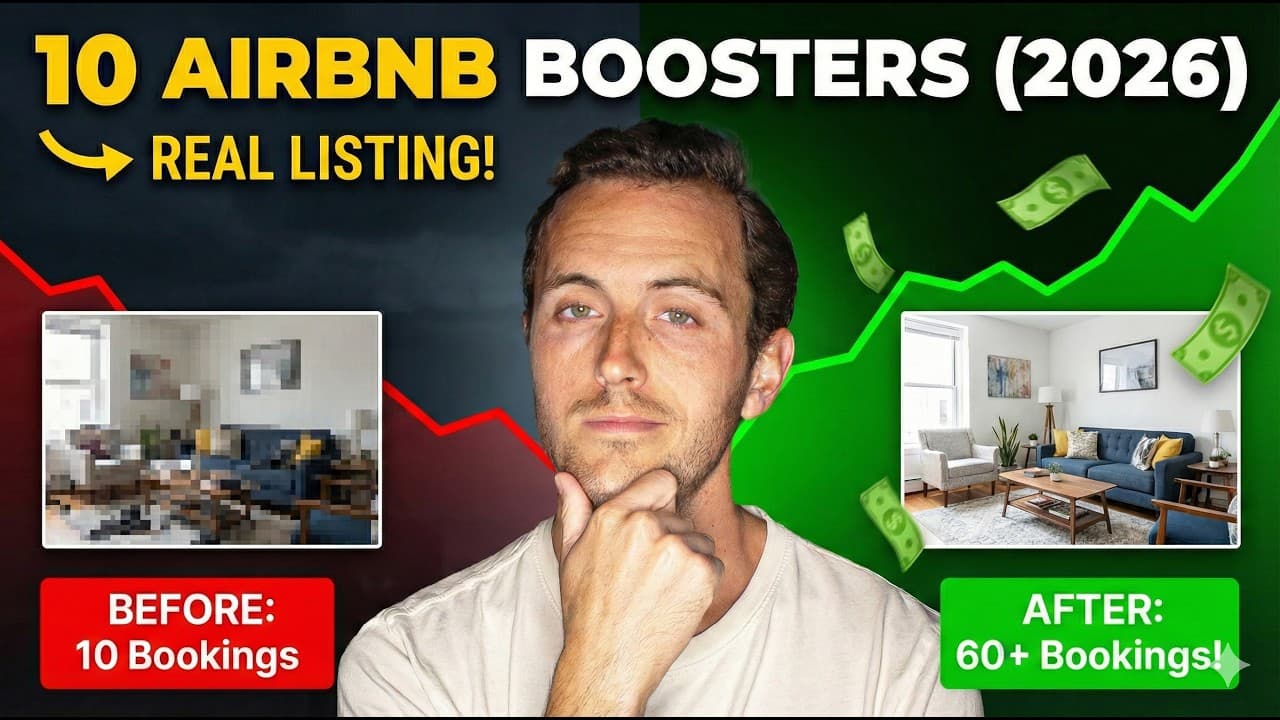
10 ESSENTIAL Steps to Improve Your Airbnb in 2026 (Real Listing Example!)
Most Airbnb listings lose bookings to the same fixable mistakes: bad photos, weak headlines, incomplete amenities, and missed seasonal opportunities. Here are 10 proven strategies to turn any underperforming listing into a consistent booking machine in 2026.
January 1, 2026 · 11 min read

10 Game-Changing Hacks to Improve Your Airbnb
What does it really mean to run a successful Airbnb in 2026? These 10 practical hacks — including a $15 sensor that prevented $44,000 in property damage — show exactly what separates top hosts from average ones.
January 16, 2025 · 9 min read

10 Tips to Get More Views on Airbnb
More views mean more bookings, and more bookings mean more revenue. This guide breaks down 10 actionable Airbnb listing optimization strategies that help hosts climb the search rankings and fill their calendars in 2026.
March 26, 2024 · 14 min read