Make $10K/Month Managing 10 Airbnbs (No Property Needed)
By James Svetec · September 7, 2021 · 8 min read
Part of our Airbnb Hosting 101 guide →
Key Takeaways
- The management fee model lets you earn 20-30% of rental revenue without owning or renting any property yourself
- Managing just five high-performing properties generating $10K/month each can hit the $10K income target
- Larger properties in high-demand vacation areas consistently outperform smaller urban units in total revenue
- Optimizing listings with amenities, pricing strategy, and occupancy tools like AirDNA can significantly boost a property's monthly revenue
- You can run this business with just a cleaning team and the right systems — no full-time staff required
If you've been searching for a real, actionable way to build a $10,000/month income stream from Airbnb, this blog video breaks down exactly how to do it — without buying a single property. The co-hosting model turns short-term rental management into a scalable business that anyone can start from scratch, and the math is simpler than most people expect.
Watch the full video above or keep reading for the complete breakdown.
How the Management Fee Model Works
The core idea behind this blog video is straightforward: you manage other people's Airbnb listings in exchange for a percentage of the revenue. No mortgage. No lease. No furnishing costs. You're providing a service — and getting paid well for it.
Here's the basic setup. You approach a property owner and offer to handle everything: scheduling cleaners, communicating with guests, managing pricing, and keeping the listing optimized. In exchange, you take 20–30% of the total monthly revenue as your management fee.
Why would a property owner agree to this? Two reasons.
- They don't want to do it themselves. Most landlords are real estate investors, not short-term rental operators. Guest communication, pricing adjustments, and coordinating turnovers take real time and attention they'd rather not spend.
- You can make them more money. A property currently generating $3,000–$4,000/month under self-management can often be pushed to $5,000 or more with better pricing and listing optimization. When you raise their revenue, your 20% fee essentially costs them nothing — the increase covers it.
This is the core value proposition, and it works in almost every market. For a deeper look at how this model compares to owning rentals outright, check out this comparison of Airbnb management vs. investing.
The Math to $10K/Month
Let's run the numbers, because this is where it gets interesting. At a 20% management fee, here's what different property revenue levels mean for your monthly income:
| Property Monthly Revenue | Your 20% Fee | Properties Needed for $10K |
|---|---|---|
| $2,500/month | $500 | 20 properties |
| $5,000/month | $1,000 | 10 properties |
| $10,000/month | $2,000 | 5 properties |
The math is clear: the higher the revenue per property, the fewer properties you need to manage. Managing 20 properties at $500/month each generates the same income as managing five at $2,000/month each — but five is a much easier portfolio to run solo.
This is why being selective about which properties you take on matters so much. It's not about volume. It's about quality.
If you want to see what earning potential looks like even at the single-property level, this post on earning $1K managing a single Airbnb puts it in perspective.
Picking the Right Properties
Not all Airbnb properties are created equal. The biggest lever you have in this business is choosing which properties to take on in the first place. Pick the wrong ones and you'll be doing a lot of work for mediocre returns. Pick the right ones and $10K/month with five or six properties is genuinely achievable.
Size Matters
As a general rule, larger properties generate more revenue. A four-bedroom vacation home can accommodate groups of six to eight people — and those groups are willing to pay premium nightly rates. When a $400/night rate is split between eight people, it's only $50 per person. That math makes groups much less price-sensitive than solo travelers or couples.
More capacity also means more demand. A property that sleeps eight can attract couples, families, friend groups, and corporate retreat parties. A studio that sleeps two has a narrow buyer pool by comparison.
Location: Vacation Over Business Districts
Business travel destinations can perform well, but they tend to attract individual travelers who book smaller, cheaper units. For maximum revenue, vacation and tourist destinations consistently outperform — especially for larger group accommodations.
Think cottage country, lake districts, mountain towns, and coastal areas. These locations attract the high-value group bookings that push properties into the $8,000–$15,000/month revenue range.
Don't overlook small towns either. Some of the best-performing Airbnbs sit in towns with populations under 5,000 — because they're the only option near a popular natural attraction, seasonal event, or regional destination. The low competition combined with strong demand creates surprisingly high revenue numbers.
For more guidance on identifying these markets, this guide to the best property types for Airbnb is worth reading alongside this one.
Using Data Tools to Find Winners
Guesswork is not a strategy. Tools like AirDNA allow you to identify specific properties in any market that are generating high monthly revenue. You can filter by bedroom count, location, and estimated annual income — essentially cherry-picking the top performers before you even reach out to an owner.
This data-driven approach removes the guesswork and helps you walk into a property owner conversation already knowing what their listing should be generating. That's a powerful position to negotiate from.
Optimizing Listings for Maximum Revenue
Finding a good property is half the battle. The other half is making sure it performs at its ceiling. Even strong properties often have significant room for improvement — and that's where your expertise as a co-host creates real value.
Free Tool
Grab the Airbnb Nightly Pricing Tool
Grab the exact spreadsheet James uses to set profitable nightly rates — plus a step-by-step setup cheatsheet.
Amenity Upgrades
Small upgrades drive outsized booking improvements. A few hundred dollars invested — by the property owner, not you — can meaningfully boost both occupancy and nightly rates. High-impact, low-cost additions include:
- Board games and activity kits for group guests
- A Netflix or streaming subscription
- A higher-quality TV in the main living area
- Outdoor seating, a fire pit, or a hot tub (for vacation properties)
- Clear, professional-quality photos showing these features
The amenities that matter most depend on the listing's ideal guest profile. A mountain cabin should emphasize cozy, outdoor, and adventure elements. A beach house should highlight proximity to water and outdoor entertainment. Knowing your target guest helps you recommend the right upgrades.
Pricing Strategy
Most self-managed hosts set a price and leave it. That's one of the biggest revenue leaks in Airbnb. Dynamic pricing — adjusting rates based on demand, seasonality, local events, and day of the week — can increase a property's revenue by 15–30% without changing a single thing about the listing itself.
This is a skill that takes time to develop, but it's learnable. And once you've optimized pricing across multiple properties, you're compounding that knowledge across your entire portfolio. For a tactical breakdown, these three Airbnb pricing hacks are a solid starting point.
Listing Optimization
The Airbnb algorithm rewards listings that convert well. Strong photos, a compelling title, detailed descriptions, and a consistent stream of five-star reviews all push a listing higher in search results — which means more bookings at higher rates. This is an area where a skilled co-host adds immediate, measurable value over a passive property owner managing their own listing.
Tools and Systems That Make It Scalable
Here's a question worth asking: how do you manage 10 properties without working 80-hour weeks? The answer is systems.
With the right setup, most of the day-to-day work is automated or delegated. Automated messaging handles check-in instructions, house rules, and follow-up review requests. Dynamic pricing software adjusts rates without manual input. Cleaning team coordination runs on a shared calendar that updates automatically when bookings are confirmed.
The co-host's actual time commitment — once systems are in place — often comes down to a few hours per week per property, mostly handling exceptions and performance reviews. That's what makes this model genuinely scalable. For a broader look at different ways to structure this business, the post on Airbnb business models covers the full picture.
Connecting with other hosts who've already built these systems is one of the fastest ways to shortcut the learning curve. The BNB Tribe community is exactly that — a space where active co-hosts and STR investors share what's working, troubleshoot problems, and keep each other accountable.
How to Get Started With Zero Capital
One of the most appealing aspects of the co-hosting model is the startup cost: zero. You don't need to buy or lease a property. You don't need to furnish anything. You don't need to hire staff on day one.
What you do need:
- A clear value proposition — Know exactly what results you can deliver and why an owner should trust you with their property.
- Basic STR knowledge — Pricing, listing optimization, guest communication standards, and platform policies are non-negotiable fundamentals.
- A prospecting system — Knowing how to find property owners who are either self-managing and struggling or not yet on Airbnb at all.
- A cleaning team — This is the one operational dependency you need in place before you take on your first property.
The hardest part for most people isn't running properties — it's landing the first client. Once you have one property performing well, the second and third become much easier to pitch.
For hosts who want a structured approach to building this from the ground up, BNB Mastery's Co-Hosting Program walks through the exact steps for finding, pitching, and onboarding co-hosting clients.
The Bottom Line
The $10K/month target with 10 Airbnbs isn't a fantasy — it's straightforward arithmetic. Manage properties that generate $5,000/month in revenue, take 20%, and you're at $1,000 per property. Do that 10 times, or find five properties generating $10,000/month each, and you're there. The blog video above lays out exactly how to make those numbers work in practice.
The two things that determine whether this actually happens are property selection and optimization. Get those right — using data tools, targeting the right markets, and knowing which upgrades move the needle — and $10K/month is a realistic near-term goal, not a distant one.
Start with one property. Nail the systems. Then replicate. That's the entire playbook.
Frequently Asked Questions
How much can you realistically make managing Airbnbs for other people?
At a 20% management fee, a property generating $5,000/month in revenue pays you $1,000/month. Managing 10 such properties puts you at $10,000/month. With five higher-performing properties generating $10,000/month each, you hit the same target with fewer clients.
Do you need money to start an Airbnb co-hosting business in 2026?
No upfront capital is required. You're providing a management service, not buying or renting property. Your main investment is time, knowledge, and the tools needed to optimize listings and find clients.
How many Airbnb properties do you need to manage to make $10K a month?
It depends on each property's revenue. Managing 10 properties at $5,000/month each gets you there at a 20% fee. But if you target high-revenue vacation properties generating $10,000/month, you can hit $10K with just five properties.
What types of Airbnb properties generate the most revenue for co-hosts?
Larger vacation properties in high-demand tourist areas consistently generate the highest revenue. Properties that can accommodate groups of four to eight people command premium nightly rates and attract more bookings than smaller urban units.
Is Airbnb co-hosting still a viable business model in 2026?
Yes. Demand for professional short-term rental management continues to grow as more property owners list on Airbnb but lack the time or skills to optimize their listings. Co-hosts who can demonstrably improve a property's performance have a strong value proposition in any market.
Building a co-hosting portfolio to $10K/month is absolutely achievable — but landing that first client is where most people get stuck. The BNB Mastery Co-Hosting Program gives you the exact scripts, systems, and strategies to find property owners, pitch your services, and onboard your first clients with confidence. If you want to accelerate the process and connect with others doing the same thing, the BNB Tribe community is full of active co-hosts sharing what's working right now.
Free Tool
Grab the Airbnb Nightly Pricing Tool
Grab the exact spreadsheet James uses to set profitable nightly rates — plus a step-by-step setup cheatsheet.
Ready to get started with Airbnb?
Join 240+ members in BNB Tribe — the community James built for hosts and investors who want real results.
Join BNB TribeMore Articles
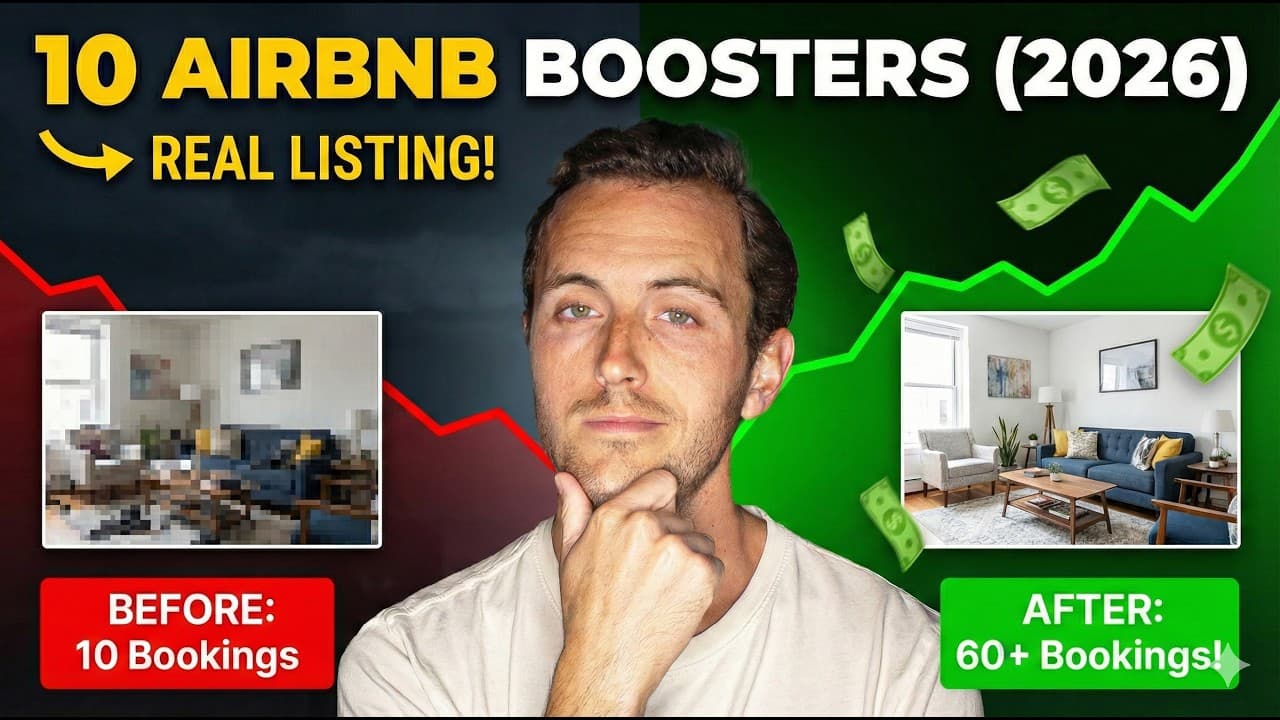
10 ESSENTIAL Steps to Improve Your Airbnb in 2026 (Real Listing Example!)
Most Airbnb listings lose bookings to the same fixable mistakes: bad photos, weak headlines, incomplete amenities, and missed seasonal opportunities. Here are 10 proven strategies to turn any underperforming listing into a consistent booking machine in 2026.
January 1, 2026 · 11 min read

10 Game-Changing Hacks to Improve Your Airbnb
What does it really mean to run a successful Airbnb in 2026? These 10 practical hacks — including a $15 sensor that prevented $44,000 in property damage — show exactly what separates top hosts from average ones.
January 16, 2025 · 9 min read

10 Tips to Get More Views on Airbnb
More views mean more bookings, and more bookings mean more revenue. This guide breaks down 10 actionable Airbnb listing optimization strategies that help hosts climb the search rankings and fill their calendars in 2026.
March 26, 2024 · 14 min read