$250K Return from One Airbnb in a Year: Full Numbers
By James Svetec · May 31, 2022 · 7 min read
Part of our Airbnb Hosting 101 guide →
Key Takeaways
- A single six-bedroom cottage near Toronto generated $151,000 in total gross bookings over 11 months, averaging roughly $13,000/month
- Net operating cash flow after all expenses came in around $80,000–$85,000 for the year — enough to replace a full-time income from one property
- Forced appreciation through strategic renovations contributed to a $150,000 jump in appraised value, enabling a cash-out refinance
- Total year-one return — combining cash flow, appreciation, and mortgage principal paydown — reached approximately $250,000
- The property was purchased for just 5% down on a $520,000 purchase price, making the cash-on-cash return exceptional
This blog video breaks down one of the most compelling short-term rental case studies BNB Mastery has published: a single Airbnb cottage property north of Toronto that generated close to a quarter million dollars in total return within its first year of operation.
If you've ever wondered whether STR investing can actually replace a full-time income — these numbers answer that question directly.
Watch the full video above or keep reading for the complete breakdown.
The Property: What Was Purchased and When
The property is a six-bedroom, two-bathroom cottage located north of Toronto, purchased for $520,000 with just a 5% down payment. After closing, approximately $60,000 in renovations were completed to improve the property's value and guest appeal — strategic upgrades, not cosmetic fluff.
An additional $20,000 went toward furnishings and amenities like a hot tub and sauna. That investment in guest experience didn't add appraised value to the structure, but it absolutely drove higher booking rates and premium nightly pricing.
The property went live on Airbnb in June 2021. The performance data covers approximately 11 months — through the end of April 2022. No management company was involved. James Svetec and his investing partner Riley managed the property themselves, keeping management fees at zero.
For investors comparing different approaches before buying, the turnkey vs. furnish-and-list vs. renovate-and-list comparison is worth reviewing before committing to a strategy.
Revenue Breakdown: $151,000 in 11 Months
The revenue picture looks like this:
- Gross Airbnb booking revenue: $131,000
- Direct bookings (outside Airbnb): $2,100
- Cleaning fees collected: $18,000
- Total gross revenue: $151,000
That works out to roughly $13,000 per month in total collections across the 11-month period. This is not a major metro market — it's a rural cottage market, which often gets underestimated by investors who default to looking at urban properties.
One nuance worth noting: the cleaning fee collected ($18,000) appears lower than what a management company would typically charge because, when you self-manage, cleaning fee revenue and cleaning expenses flow through the same account. The fee was priced competitively for the market rather than inflated to generate profit on top of the cleaning cost.
If a management company were handling this property, the cleaning fee line would look larger on paper — because property managers typically mark up cleaning fees as an additional revenue stream.
Expenses: What It Actually Cost to Operate
Running a six-bedroom cottage isn't free, and transparency matters here. The expense breakdown:
- Management fees: $0 (self-managed)
- Cleaning expenses (including laundry and sundry supplies): ~$29,725
- Carrying costs (mortgage, taxes, insurance, utilities, internet): Approximately $2,400/month, or roughly $26,000+ for the period
- Additional operating expenses (maintenance, yard supplies, software, accounting, legal): Included in the $82,000 total
- Capital expenses (property improvements): Tracked separately
The cleaners were paid approximately $450 per clean — a premium rate, intentionally. The goal was to stay completely hands-off. Being cheap with cleaning for a premium listing is a false economy. One bad review about cleanliness can cost far more than the savings.
It's also worth flagging that roughly $5,000 of the operating expenses were for supplies bought in bulk — enough to last well into the following year. So the true operating cost for that 11-month window was effectively about $5,000 lower than reported.
Total operating expenses (excluding capital): just over $82,000.
For a deeper look at what expenses typically look like across STR properties, the breakdown of additional costs for Airbnb hosts covers the categories that most new investors underestimate.
Net Cash Flow: The Real Take-Home Number
Subtract $82,000 in operating expenses from $151,000 in gross revenue and you get a net operating cash flow of approximately $69,000 through the end of April. With May factored in — a strong booking month — the full-year projection lands closer to $82,000–$85,000 in net operating cash flow.
After capital improvement expenses are also deducted, the actual net cash deposited into the bank account came to $56,000 year-to-date. Adjust for the bulk supply purchase and May's income, and the realistic full-year net cash figure approaches $68,000–$70,000.
To put that in context: many people need $70,000–$80,000 per year to feel comfortable leaving a nine-to-five job. This single property — bought with a 5% down payment — generated that in year one.
That's also why cash flow is the foundation of sound STR investing. If the property cash flows this strongly, the investor never faces a forced sale. Market volatility becomes irrelevant. The mortgage gets paid, the property stays in the portfolio, and the returns compound over time.
Hosts thinking about scaling beyond one property — whether through co-hosting or adding to a portfolio — can explore frameworks for doing that through this comparison of Airbnb management vs. investing approaches.
Free Tool
Grab the Airbnb Nightly Pricing Tool
Grab the exact spreadsheet James uses to set profitable nightly rates — plus a step-by-step setup cheatsheet.
Appreciation and the Cash-Out Refinance
Here's where the numbers get genuinely striking. After 11 months, the property was reappraised at $730,000 — up from the combined purchase-and-renovation basis of $580,000. That's $150,000 in appreciation in a single year.
A portion of that appreciation was forced — the result of deliberate, strategic renovations. The rest came from natural market movement. The team did a cash-out refinance, pulling equity out of the property while simultaneously building their equity stake from the original 5% up to 20%.
This is a key concept for real estate investors: appreciation isn't just a lucky bonus. When you renovate strategically before listing, you're engineering part of that value increase. The market does the rest.
It's also important not to treat appreciation as guaranteed income. As James notes in this blog video, if the property had reappraised at exactly $520,000 with zero appreciation, it wouldn't have mattered — because the cash flow alone justified the investment. Appreciation is the bonus, not the thesis.
Investors who want to stress-test deals before buying can get a structured approach through the BNB Investing Blueprint, which includes the exact deal analysis framework used to evaluate properties like this one.
How the Total Return Reached $250,000
Three return streams combined to produce the quarter-million figure:
- Net cash flow from operations: ~$80,000
- Property appreciation (cash-out refinance): $150,000
- Mortgage principal paydown (equity buildup): $10,000–$20,000
Total: approximately $240,000–$250,000 in first-year return on a property purchased with a 5% down payment on a $520,000 purchase price.
The cash-on-cash return — calculated against the actual cash invested — is extraordinary. This is one of the most powerful arguments for short-term rental investing over other asset classes: the combination of strong operational cash flow, forced appreciation, and leverage creates return profiles that are difficult to match elsewhere.
Key distinction: The appreciation component ($150,000) is real but non-recurring. It reflects specific market conditions. The cash flow component ($80,000) is what the investment was underwritten on — and it's repeatable year after year.
For investors curious how this compares to other STR return profiles, the 258% ROI vacation rental case study and the 130% ROI real estate investment breakdown offer additional data points worth reviewing.
What This Means for STR Investors in 2026
The market conditions in 2021–2022 that enabled some of this appreciation were specific to that moment in time. Investors in 2026 are operating in a different interest rate and valuation environment. That said, the core thesis hasn't changed.
STR properties in the right markets — particularly rural cottage and recreational markets with limited hotel supply — still generate outsized cash flow relative to long-term rentals. The key is buying on the cash flow, not the appreciation. If the numbers work without any appreciation assumption, the upside becomes pure gravy.
What has changed in 2026: competition in some cottage markets has increased as more investors entered the space. That makes market selection, property differentiation, and operational execution more important than ever. A strong listing, a great guest experience, and well-managed pricing still win — but they require intentional effort.
Investors who want to stay current on what's working in today's STR market — including emerging markets, pricing strategies, and regulatory shifts — can connect with active operators inside the BNB Tribe community, where hosts share real-time data and strategies.
Conclusion: One Property, Transformative Results
A single Airbnb property — bought with 5% down, renovated strategically, and managed with discipline — produced $151,000 in gross revenue, roughly $80,000 in net operating cash flow, $150,000 in appreciation gains, and a total first-year return approaching a quarter million dollars. The numbers are real, documented, and replicable under the right conditions.
What makes this blog video particularly valuable isn't the headline number. It's the transparency: every revenue line, every expense category, every assumption laid out clearly. That's how informed investment decisions get made — with actual data, not projections built on optimistic assumptions.
For investors ready to apply this kind of analysis to their own deal search in 2026, the starting point is understanding how to evaluate a property before buying. Run the numbers conservatively, buy for cash flow, and let appreciation be a bonus — not a requirement.
Frequently Asked Questions
How did one Airbnb property generate $250,000 in a single year?
The $250,000 total return came from three sources: approximately $80,000 in net operating cash flow, $150,000 in property appreciation captured through a cash-out refinance, and $10,000–$20,000 in mortgage principal paydown. The property was a six-bedroom cottage north of Toronto purchased for $520,000.
Is investing in an Airbnb cottage property still profitable in 2026?
Yes, rural and recreational STR markets can still produce strong cash flow in 2026, though competition has increased in popular cottage areas. Success depends on selecting the right market, differentiating the property with amenities, and executing strong operational management from day one.
What were the actual expenses for running this Airbnb property?
Total operating expenses came to just over $82,000 for 11 months. The biggest line items were cleaning costs (~$29,725), carrying costs like mortgage, insurance, taxes, and utilities (~$2,400/month), and additional operating expenses for maintenance and supplies. Management fees were zero because the property was self-managed.
What is a cash-out refinance and how does it work for Airbnb investors?
A cash-out refinance lets you refinance your mortgage based on the property's new appraised value, pulling out equity as cash while potentially adjusting your loan terms. In this case, the property appraised at $730,000 after purchase at $520,000, allowing the owners to extract significant equity while building their ownership stake from 5% to 20%.
How much down payment do you need to buy an Airbnb investment property?
This property was purchased with just 5% down on a $520,000 price — approximately $26,000. Requirements vary by country, lender, and whether the property is a primary residence or investment property. Many investors use smaller down payments to maximize cash-on-cash returns, as demonstrated by this case study.
The gap between a good STR deal and a great one almost always comes down to how thoroughly the numbers were analyzed before purchase. The BNB Investing Blueprint gives investors the exact framework for evaluating cash flow, expenses, and return scenarios — so you're not guessing when you make an offer. And for ongoing strategy, market data, and conversations with active STR investors, the BNB Tribe community is where that learning happens continuously.
Free Tool
Grab the Airbnb Nightly Pricing Tool
Grab the exact spreadsheet James uses to set profitable nightly rates — plus a step-by-step setup cheatsheet.
Ready to get started with Airbnb?
Join 240+ members in BNB Tribe — the community James built for hosts and investors who want real results.
Join BNB TribeMore Articles
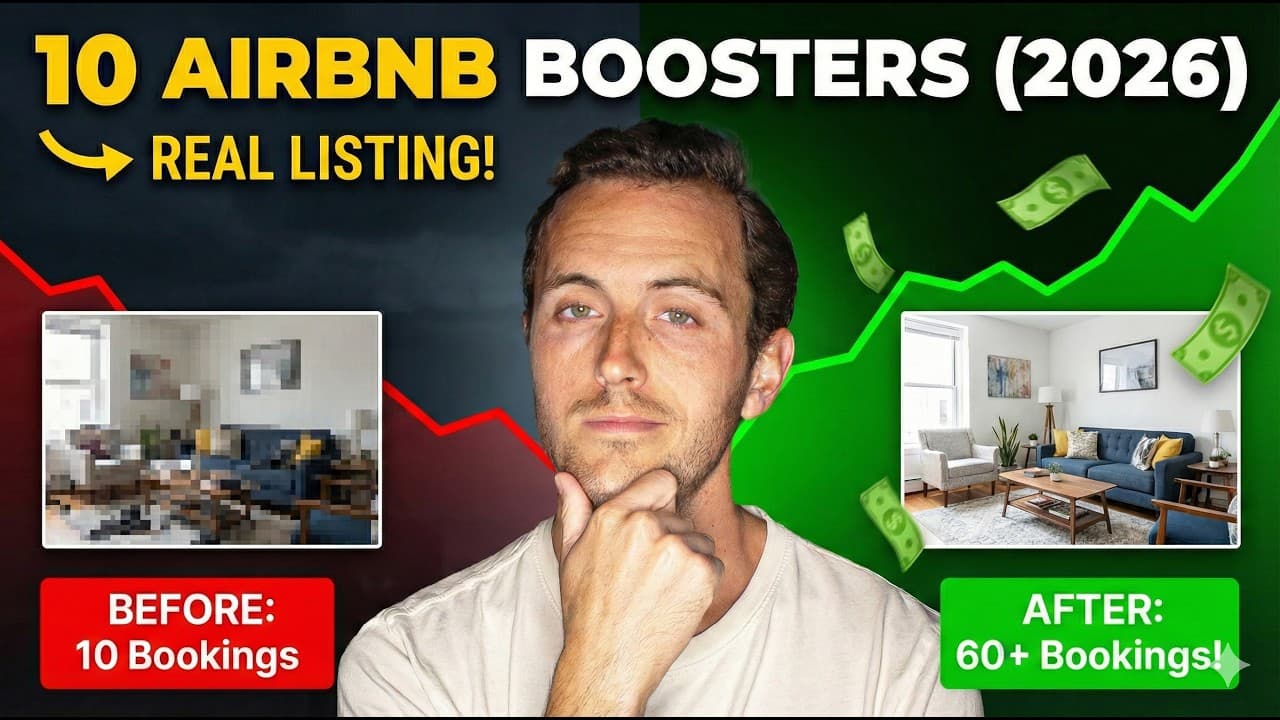
10 ESSENTIAL Steps to Improve Your Airbnb in 2026 (Real Listing Example!)
Most Airbnb listings lose bookings to the same fixable mistakes: bad photos, weak headlines, incomplete amenities, and missed seasonal opportunities. Here are 10 proven strategies to turn any underperforming listing into a consistent booking machine in 2026.
January 1, 2026 · 11 min read

10 Game-Changing Hacks to Improve Your Airbnb
What does it really mean to run a successful Airbnb in 2026? These 10 practical hacks — including a $15 sensor that prevented $44,000 in property damage — show exactly what separates top hosts from average ones.
January 16, 2025 · 9 min read

10 Tips to Get More Views on Airbnb
More views mean more bookings, and more bookings mean more revenue. This guide breaks down 10 actionable Airbnb listing optimization strategies that help hosts climb the search rankings and fill their calendars in 2026.
March 26, 2024 · 14 min read