Becoming a Realtor: 6 Pros and Cons to Consider in 2026
By James Svetec · July 9, 2020 · 7 min read
Part of our Airbnb Hosting 101 guide →
Key Takeaways
- Getting a real estate license is relatively fast compared to other high-paying careers, but the licensing exam requires serious preparation and upfront costs.
- Real estate agents earn commission-only income — unlimited upside, but little to no earnings in the early months or years.
- Flexible schedules often mean working evenings and weekends to accommodate clients, not the 9-to-5 freedom most people imagine.
- Real estate is an emotionally demanding business that requires handling high-stress client situations on a regular basis.
- Airbnb co-hosting and STR property management offer many of the same independence benefits without the licensing requirements or financial risk of starting as a realtor.
This article weighs the honest pros and cons of becoming a realtor — a question that comes up often among people drawn to real estate but unsure which path to take. For many aspiring real estate professionals, the choice isn't just about getting a license; it's about finding the right vehicle to build income and independence.
Watch the full video above or keep reading for the complete breakdown.
How Easy Is It to Become a Realtor?
Compared to other high-paying careers, becoming a licensed real estate agent is accessible. There's no four-year degree requirement. Many pre-licensing courses can be completed partially or entirely online, and most people finish their coursework within a few months.
That low barrier to entry is genuinely appealing — especially for career changers who don't want to spend years back in school.
The catch: The licensing exam is harder than most people expect. It tests a wide range of knowledge — property law, contracts, financing, agency relationships — and a significant number of first-time test-takers fail it.
Beyond the exam, upfront costs for licensing fees, exam prep, and association dues can run into the hundreds or even thousands of dollars before you've earned a single dollar of commission.
So while the path to becoming a realtor is short, it's not free or effortless. Anyone who walks in expecting a quick, cheap process is likely to be surprised.
Income Potential: The Upside and the Reality
Here's what draws most people to real estate sales: there's no income ceiling. Successful real estate brokers who build strong client bases can earn well over $100,000 per year. The more transactions you close, the more you earn — full stop.
Commission-based income rewards hustle. The agents who work hardest, build the best networks, and develop genuine expertise tend to rise to the top over time.
But the early years are brutal. New agents often go months without closing a deal. Without a salary or retainer, that means near-zero income during the critical ramp-up period. Most new realtors also don't receive benefits like health insurance, retirement contributions, or paid time off — those come entirely out of pocket as an independent contractor.
This is one of the most common reasons people leave the profession within their first two years. The potential is real, but it takes time to reach it.
Pro tip: If you're considering real estate specifically as a path to financial independence, it's worth comparing it against other property-related income streams. A look at Airbnb hosting vs. co-hosting vs. investing shows how different models stack up for people who want property income without commission-only risk.
Being Your Own Boss as a Real Estate Agent
Self-employment is a major draw for anyone considering a real estate license. As an independent agent, you set your own hours, choose your clients, and build the business you want. No micromanaging boss. No performance reviews. No cap on how many clients you can take on.
For people with an entrepreneurial mindset, this autonomy is genuinely energizing.
The flip side is that every operational responsibility falls on you. Marketing, lead generation, client communications, contract management, finances, taxes — all of it. There's no admin team handling the backend. In the beginning especially, agents wear every hat simultaneously.
Some people thrive in that environment. Others find it overwhelming. It's worth being honest with yourself about which category you fall into before investing time and money into getting licensed.
For those drawn to property management specifically, running an Airbnb co-hosting business offers a similar sense of ownership and autonomy. Co-hosting has been growing fast precisely because it lets people build a real business around properties they don't own.
The Emotional Side of Real Estate
Real estate transactions are among the biggest financial decisions people ever make. That emotional weight affects clients — and by extension, it affects agents.
On the positive side, helping someone find their dream home or successfully close a difficult deal is genuinely rewarding. Agents who handle the emotional complexity well build strong reputations and loyal referral bases.
But real estate also means walking into divorce sales, estate liquidations, failed deals, frustrated buyers, and clients who make decisions based on emotion rather than logic. Being able to stay composed and professional through high-stakes, emotionally charged situations is a real skill — and not everyone has it naturally.
If managing difficult personalities under pressure sounds draining rather than challenging, that's worth factoring into the decision. Emotional resilience isn't optional in real estate sales — it's a core job requirement.
Free Tool
Grab the Airbnb Nightly Pricing Tool
Grab the exact spreadsheet James uses to set profitable nightly rates — plus a step-by-step setup cheatsheet.
Flexible Schedule: The Truth Behind the Perk
The promise of a flexible schedule is one of the most cited reasons people consider becoming a realtor. No 9-to-5. Set your own hours. Work around your life.
The reality is more nuanced. Real estate agents do have schedule flexibility — but that flexibility usually means working when clients need you, not when it's convenient for you. Evenings and weekends are often the busiest times, because that's when buyers and sellers are available.
Open houses, property tours, offer negotiations — most of these happen outside traditional business hours. The agent who takes Sunday afternoons off consistently will lose clients to the one who doesn't.
Flexible doesn't mean few hours. Especially in the early years, most successful agents log long weeks building their pipeline. The schedule flexibility comes later, once the business is established and referrals flow more reliably.
Becoming a Realtor Is Hard Work — Is That a Problem?
Hard work isn't inherently a con — many people specifically want a challenging, high-stakes career. Real estate sales delivers that. Every deal is different. The market shifts constantly. Building a client base from scratch requires creativity, persistence, and consistent effort.
For competitive, driven people, that challenge is part of the appeal.
The issue is that the difficulty is front-loaded and financially risky. Breaking into real estate requires hustling hard during a period when income is low or nonexistent. Unlike salaried careers where compensation starts on day one, real estate rewards you after the groundwork is laid — sometimes months or years later.
Add the financial responsibilities of self-employment — quarterly taxes, self-funded benefits, business expenses — and the early grind can feel unsustainable without a financial cushion to draw on.
For anyone drawn to property-related work but wary of the commission-only financial structure, it's worth understanding the risks that often go undiscussed in real estate careers before committing.
A Strong Alternative: Airbnb Property Management
The transcript makes an important point that's easy to overlook: many of the reasons people pursue a real estate license are really about how they want to work — independently, in property, with earning potential tied to their own effort.
Airbnb co-hosting and short-term rental property management offer all of that without the licensing requirements, the commission-only income risk, or the need to build a sales pipeline from scratch.
Here's how the comparison looks in practice:
| Factor | Real Estate Agent | Airbnb Co-Host / STR Manager |
|---|---|---|
| Licensing required | Yes (state exam + fees) | No |
| Income structure | Commission only | Management fee (% of revenue) |
| Time to first income | Months (on average) | Weeks (once first property is onboarded) |
| Schedule flexibility | Moderate (client-dependent) | High (systems-driven) |
| Startup costs | High (licensing, association dues) | Low to moderate |
| Scalability | Limited by your time | High (systems and teams) |
Co-hosting — managing short-term rentals on behalf of property owners — lets you build a real business around properties you don't own or finance. Income is recurring, not event-based. And as the business grows, systems and automation reduce the time required per property significantly.
For hosts looking to build a full co-hosting business from scratch, BNB Mastery's Co-Hosting Program provides a step-by-step framework for landing clients, onboarding properties, and scaling operations — without needing a real estate license.
Connecting with experienced co-hosts and STR managers through a community like BNB Tribe can also accelerate the learning curve significantly, especially for those just deciding between career paths.
Final Thoughts: Is Getting a Real Estate License Worth It in 2026?
This article covered six key factors — and each one has a genuine upside alongside a real limitation. Becoming a realtor can absolutely be a rewarding, high-income career for the right person. The key word is can.
The people who thrive in real estate sales tend to share a few traits: they're emotionally resilient, comfortable with financial uncertainty in the short term, strong at relationship-building, and genuinely competitive. If that's you, the career has real upside.
If you're drawn to real estate for the independence and income potential — but less excited about commission-only risk and the emotional demands of sales — Airbnb property management deserves a serious look. In 2026, the short-term rental market continues to grow, and well-run co-hosting businesses are generating meaningful recurring income without the traditional barriers of real estate licensing.
Before committing to either path, it helps to understand the mindset shift most successful real estate entrepreneurs have to make — regardless of which vehicle they choose.
Frequently Asked Questions
How long does it take to become a licensed real estate agent in 2026?
Most pre-licensing courses can be completed in 1-3 months, often fully online. After passing the state licensing exam and completing any additional requirements, the full process typically takes 3-6 months from start to finish.
Is becoming a realtor worth it if I want flexible hours?
Technically yes, but the flexibility often means working evenings and weekends when clients are available. True scheduling freedom as a realtor usually comes after years of building a strong referral base, not at the start of your career.
What is the average income for a new real estate agent?
New agents often earn very little in their first year due to the commission-only structure and the time required to build a client base. Income varies widely, but many agents don't reach consistent earnings until their second or third year.
What are the alternatives to becoming a realtor for someone interested in property?
Airbnb co-hosting and short-term rental property management are popular alternatives. They offer independence and property-based income without licensing requirements or commission-only risk, and can generate recurring management fees relatively quickly.
Is real estate sales still a good career in 2026?
It can be, for the right person. The real estate market in 2026 remains active, but competition among agents is high. Success depends heavily on relationship-building skills, financial resilience during the ramp-up period, and consistent lead generation.
If the co-hosting path sounds more appealing than the commission-only grind of traditional real estate sales, the hardest part is usually landing that first client and building confidence managing someone else's property. BNB Mastery's Co-Hosting Program walks through exactly how to do that — from pitching property owners to running a scalable management operation. It's a practical alternative worth exploring before committing to a real estate license.
Free Tool
Grab the Airbnb Nightly Pricing Tool
Grab the exact spreadsheet James uses to set profitable nightly rates — plus a step-by-step setup cheatsheet.
Ready to get started with Airbnb?
Join 240+ members in BNB Tribe — the community James built for hosts and investors who want real results.
Join BNB TribeMore Articles
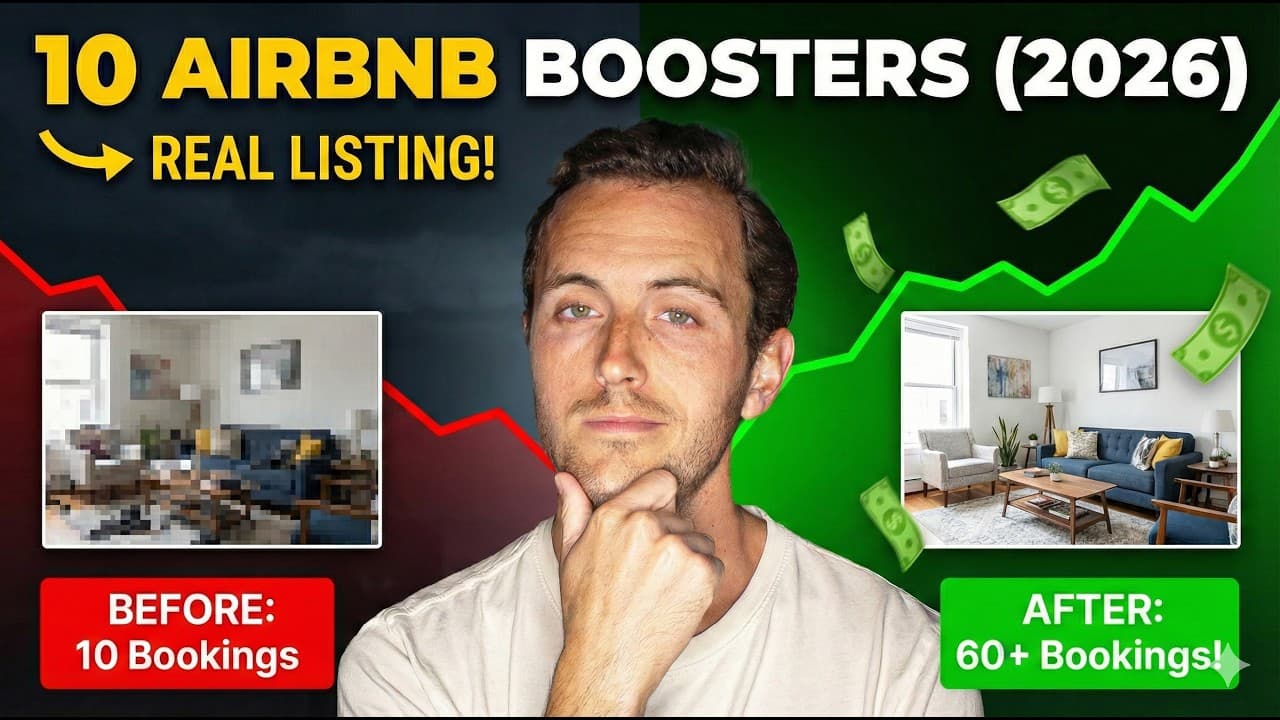
10 ESSENTIAL Steps to Improve Your Airbnb in 2026 (Real Listing Example!)
Most Airbnb listings lose bookings to the same fixable mistakes: bad photos, weak headlines, incomplete amenities, and missed seasonal opportunities. Here are 10 proven strategies to turn any underperforming listing into a consistent booking machine in 2026.
January 1, 2026 · 11 min read

10 Game-Changing Hacks to Improve Your Airbnb
What does it really mean to run a successful Airbnb in 2026? These 10 practical hacks — including a $15 sensor that prevented $44,000 in property damage — show exactly what separates top hosts from average ones.
January 16, 2025 · 9 min read
10 Tips to Get More Views on Airbnb
More views mean more bookings, and more bookings mean more revenue. This guide breaks down 10 actionable Airbnb listing optimization strategies that help hosts climb the search rankings and fill their calendars in 2026.
March 26, 2024 · 14 min read