3 Airbnb Business Tips to Make More Money in 2026
By James Svetec · July 21, 2020 · 6 min read
Part of our Airbnb Hosting 101 guide →
Key Takeaways
- Offering interior design services adds a direct income stream and increases management fees by boosting property performance.
- Pricing optimization is the single biggest lever for retaining clients long-term — happy clients refer friends and rarely leave.
- Being selective with your portfolio (applying the 80/20 rule) reduces headaches and raises your effective dollars-per-hour.
- One well-managed client who refers others can turn into nine clients — organic growth through performance is the most powerful growth strategy.
- Tracking your dollar-per-hour metric helps you identify which properties to keep, grow, and cut from your co-hosting portfolio.
Running a successful Airbnb business as a co-host or property manager comes down to three decisions made repeatedly: which services to offer, how well you optimize performance, and which properties you choose to take on.
This blog video breaks down each of those decisions with specific, actionable steps you can apply right now — whether you're managing one property or thirty.
Watch the full video above or keep reading for the complete breakdown.
Tip 1: Offer Interior Design Services
Most co-hosts think their job starts and ends with managing guest communications and coordinating cleaners. But there's a high-margin service sitting right in front of them that most never offer: interior design consultation.
When a property looks better — better photos, more thoughtful furnishings, a more inviting atmosphere — guests pay more for it, book it more often, and leave stronger reviews. A few hundred dollars spent on IKEA furniture and well-chosen decor can easily generate a few thousand dollars in additional annual revenue for the property owner.
That math matters for co-hosts specifically. If you're earning a 20% management fee and the property earns an extra $4,000 this year because you helped redesign the space, you just earned an extra $800 in management fees — on top of whatever markup you charged for the design service itself.
Two Ways to Add This Service
There are two practical routes here, and neither requires a design degree:
- Outsource it: Partner with a company that specializes in short-term rental staging and furnishing. You sell the service, they deliver it, you earn a markup. On larger projects — think full property outfits running $10,000 to $20,000 — that markup can mean $5,000 in additional profit per property onboarded.
- Learn and offer it yourself: If design is something you genuinely enjoy, learning STR-specific interior design principles is worth the investment. Airbnb design has different priorities than traditional interior design — it's about durability, photography appeal, and guest experience all at once.
Either way, the result is the same: a win for the guest who stays in a better space, a win for the property owner who earns more, and a win for you in both upfront design fees and higher ongoing management income.
For more ways to stack income as a co-host, the breakdown in this blog video on multiple income streams covers several other strategies worth adding to your service menu.
Tip 2: Master Pricing Optimization
Pricing optimization is not just about making more money per night. Done right, it's the most powerful client retention tool in your entire business.
Here's the logic. If you're on a percentage management model — say 20% of gross revenue — every dollar the property earns above its baseline puts money in your pocket. A property earning $2,000/month versus $4,000/month is the difference between $400 and $800 in monthly fees. That gap compounds over years.
But the bigger advantage isn't the management fee increase. It's what happens to your client relationship when you consistently outperform their expectations.
A client who sees strong results doesn't leave. They refer everyone they know.
BNB Mastery has seen this pattern play out repeatedly: one client who gets exceptional results refers the co-host to eight other property owners in their network. Real estate investors and property owners know other real estate investors and property owners. When you make someone a lot of money, they tell their friends about you.
What Pricing Optimization Actually Looks Like
Effective STR pricing in 2026 goes well beyond setting a nightly rate and leaving it alone. It involves:
- Dynamic pricing adjustments based on local demand, seasonality, and events
- Minimum stay strategies to reduce vacancy gaps without hurting occupancy
- Last-minute discount logic to fill open nights without training guests to wait for deals
- Competitive monitoring of similar listings in the market
Most hosts set their price once and forget it. Co-hosts who actively manage pricing — and can show property owners the before-and-after revenue difference — build a reputation that generates inbound clients without any marketing spend.
If you want a structured approach to mastering this, BNB Mastery's Co-Hosting Program covers pricing strategy in detail alongside the other systems needed to run a full property management operation.
For a closer look at how listing quality intersects with pricing power, this blog video on Airbnb listing tips covers the specific elements that directly affect what you can charge.
Free Tool
Grab the Airbnb Nightly Pricing Tool
Grab the exact spreadsheet James uses to set profitable nightly rates — plus a step-by-step setup cheatsheet.
Tip 3: Be Selective With Your Portfolio
The third tip is the one that most new co-hosts ignore because early on, the instinct is to take every property you can get. That instinct will cost you.
The 80/20 rule applies to co-hosting portfolios as cleanly as anywhere else in business: roughly 80% of your income comes from 20% of your properties. And on the other side, 80% of your problems — difficult owners, poor-performing units, endless troubleshooting — come from a different 20% of your portfolio.
Being selective means running both of those analyses regularly and acting on what you find.
What to Look For in a Good Property
Not all properties are worth managing. Before onboarding a new client, co-hosts should evaluate:
- Revenue potential: Use market data to estimate realistic monthly earnings before committing to a property.
- Owner alignment: Is the property owner willing to invest in quality furnishings, professional photos, and pricing flexibility? Resistant owners make everything harder.
- Location and property type: Properties in high-demand areas with amenities guests actively search for (private pools, hot tubs, unique character) outperform average listings significantly.
- Operational complexity: Some properties require disproportionate management time. A large house with constant maintenance issues might earn less per hour than a simple one-bedroom condo that runs itself.
Hosts who are just starting out often feel they can't afford to be selective. But the fastest path to a full-time income from co-hosting is actually getting a few high-quality properties right, not acquiring as many mediocre ones as possible.
Track Your Dollar-Per-Hour Metric
Here's a framing shift that changes how you manage your business: think in terms of dollars earned per hour invested.
Even at scale, a well-run co-hosting business requires some ongoing time — monitoring finances, reviewing performance, handling exceptions. If that amounts to five hours a month and you're earning $5,000, you're making $1,000/hour on your business. That's an excellent return.
Now add a problem property to that portfolio. One difficult unit might add three hours of troubleshooting to your monthly workload while contributing only $300 in management fees. That drags your effective hourly rate down dramatically.
Tracking this metric forces clarity. It turns the question of
Frequently Asked Questions
How do I make more money managing Airbnbs for other people?
The three biggest levers are offering add-on services like interior design, actively optimizing pricing on every property you manage, and being selective about which properties you onboard. Each one either adds a direct income stream or increases the value you deliver — which leads to better client retention and referrals.
Is co-hosting Airbnb properties still profitable in 2026?
Yes. Co-hosting remains a strong business model in 2026 because demand for professional short-term rental management continues to grow. Property owners who see strong results from professional co-hosts rarely leave, and they frequently refer other owners — creating a compounding growth effect.
What is the 80/20 rule in Airbnb property management?
In a co-hosting portfolio, roughly 80% of your income typically comes from 20% of your properties, and 80% of your problems come from a different 20%. Identifying and growing the high-performing group while removing the problematic ones dramatically improves profitability and reduces time spent.
How does interior design help an Airbnb business make more money?
Better-designed properties earn higher nightly rates, attract more bookings, and generate stronger reviews. For a co-host on a percentage fee model, a property earning $4,000/year more means $800 more in management fees annually — on top of any markup charged for the design service itself.
What does pricing optimization mean for Airbnb hosts?
Pricing optimization means actively adjusting nightly rates based on demand, seasonality, local events, and competitor listings rather than setting a static rate. Dynamic pricing strategies can significantly increase a property's annual revenue, which directly benefits co-hosts earning a percentage of that revenue.
The difference between a co-hosting business that plateaus and one that grows on autopilot usually comes down to the strategies in this blog video — design services, pricing discipline, and portfolio selectivity. If you want to connect with other hosts who are actively building and refining these systems, the BNB Tribe community is the right place to do it. And if you're ready to build the full co-hosting operation from the ground up, BNB Mastery's Co-Hosting Program walks you through every step — from landing your first client to scaling past a waitlist.
Free Tool
Grab the Airbnb Nightly Pricing Tool
Grab the exact spreadsheet James uses to set profitable nightly rates — plus a step-by-step setup cheatsheet.
Ready to get started with Airbnb?
Join 240+ members in BNB Tribe — the community James built for hosts and investors who want real results.
Join BNB TribeMore Articles
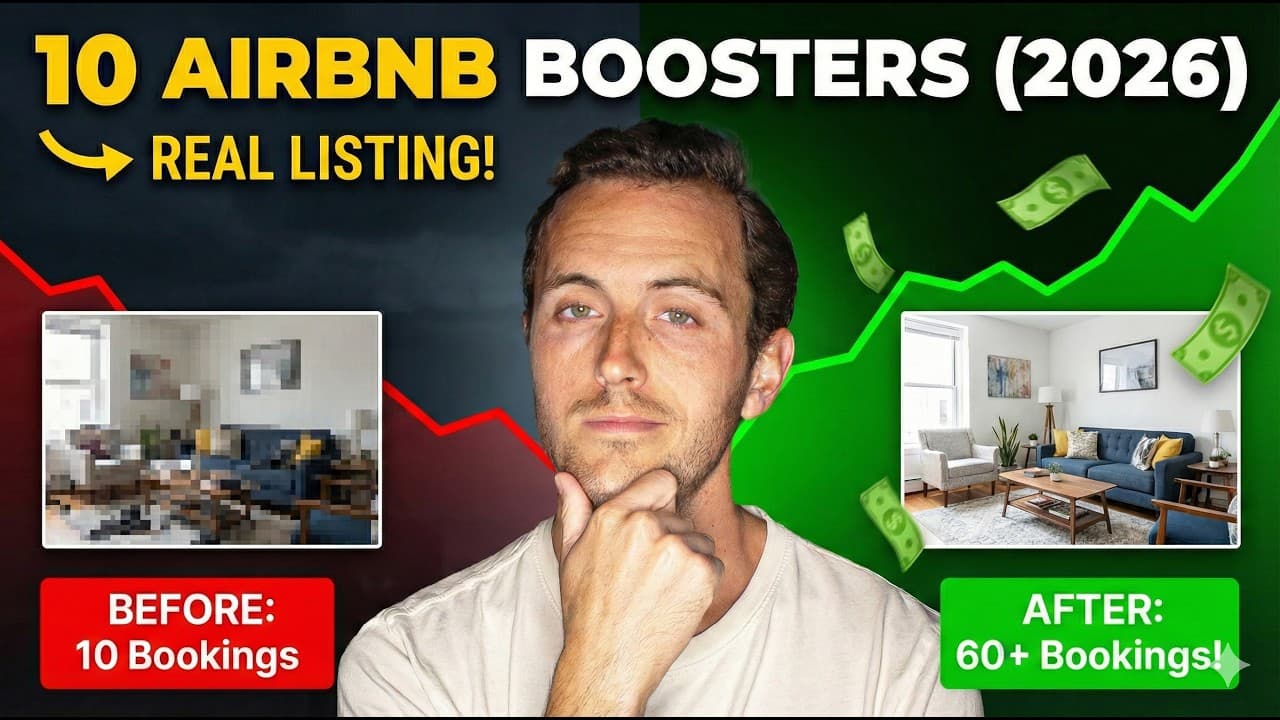
10 ESSENTIAL Steps to Improve Your Airbnb in 2026 (Real Listing Example!)
Most Airbnb listings lose bookings to the same fixable mistakes: bad photos, weak headlines, incomplete amenities, and missed seasonal opportunities. Here are 10 proven strategies to turn any underperforming listing into a consistent booking machine in 2026.
January 1, 2026 · 11 min read

10 Game-Changing Hacks to Improve Your Airbnb
What does it really mean to run a successful Airbnb in 2026? These 10 practical hacks — including a $15 sensor that prevented $44,000 in property damage — show exactly what separates top hosts from average ones.
January 16, 2025 · 9 min read

10 Tips to Get More Views on Airbnb
More views mean more bookings, and more bookings mean more revenue. This guide breaks down 10 actionable Airbnb listing optimization strategies that help hosts climb the search rankings and fill their calendars in 2026.
March 26, 2024 · 14 min read