3 Tips to Increase Airbnb Demand
By James Svetec · August 31, 2023 · 10 min read
Part of our Airbnb Hosting 101 guide →
Key Takeaways
- Lowering your price, even temporarily, is one of the fastest ways to unlock more demand — ego-driven pricing leaves real money on the table.
- Adjusting your minimum night stay is an advanced lever that can increase demand without requiring a price cut.
- Expanding to additional platforms like VRBO boosts overall demand, but only after your Airbnb listing is already well-optimized.
- Always diagnose *why* bookings are slow before assuming demand is the issue — traffic and conversion problems need different fixes.
- All three tactics can be used together: lower minimum stays can offset the need to drop prices significantly during slow seasons.
Every Airbnb host eventually hits a stretch of slow bookings — and the instinct is usually to panic. But applying the right Airbnb host tips to increase demand can turn a sluggish calendar into a consistently booked one, without gutting your nightly rate. The key is knowing which lever to pull and when.
Watch the full video above or keep reading for the complete breakdown.
Diagnose the Real Problem Before Chasing Demand
Here's something most Airbnb host tips articles skip entirely: low bookings don't always mean low demand. Before tweaking prices or expanding to new platforms, it's worth understanding why the calendar is empty.
There are generally three reasons a listing underperforms:
- Low traffic — the listing isn't showing up in search results
- Poor conversion — guests are seeing the listing but not clicking or booking
- Low demand — not enough potential guests are looking for that property type, location, or dates
Each of these requires a different fix. If the listing photos are weak or the description is vague, more demand won't save you — guests will see the listing and bounce.
If the listing isn't appearing in search at all, the problem might be a lack of reviews, a low response rate, or poor listing optimization. Check out these tips for getting more views on Airbnb to rule out traffic issues first.
Only once traffic and conversion are ruled out should demand become the focus. With that context in place, here are three tactics that genuinely work.
Tip 1: Lower Your Price Strategically
Lowering your price is the most obvious lever — and the one hosts are most reluctant to pull. But the economics here are simple: more people are willing to book a property at $120/night than at $220/night. By lowering the price, you access a larger pool of demand.
The hesitation usually comes from ego, not strategy. Many hosts anchor on what they believe their property is worth and refuse to price below that threshold — even when the alternative is sitting vacant. A night at $90 beats a night at $0 every time.
When to Lower Your Price
The goal is never to slash rates permanently. Smart pricing is dynamic — it moves with demand signals, seasonality, and local competition. Some specific situations where dropping price makes sense:
- Last-minute gaps — if a booking window is 3-5 days out and the dates are still open, lowering price often fills them
- Slow season — most markets have 1-3 months per year where demand naturally drops; pricing down to maintain occupancy beats holding firm on an empty calendar
- New listings — a fresh listing with no reviews needs a price advantage to compete with established properties
For a deeper look at how to price dynamically across the calendar, the post on Airbnb pricing hacks every host should know covers specific strategies in detail.
Pro tip: Don't just lower the base rate — check your weekend pricing, cleaning fee, and extra guest fees. A low nightly rate with a $150 cleaning fee still kills conversion on short stays.
The Right Mindset on Pricing
Price optimization isn't about racing to the bottom. It's about finding the price point that maximizes total revenue — not just nightly rate. A property earning $120/night at 85% occupancy outperforms one earning $180/night at 50% occupancy in most markets. Running that math for your specific property is the difference between guessing and actually optimizing.
Tip 2: Adjust Your Minimum Night Stay
This is a more nuanced lever, and one that intermediate-to-advanced hosts often overlook. Your minimum night stay setting directly controls how many potential guests your listing is visible to — and adjusting it can meaningfully shift demand without changing your price at all.
Think of it like a funnel. If 1,000 people are searching for 4-night stays in your area, maybe 2,500 are searching for 3-night stays, and 5,000 are searching for 2-night stays. A 4-night minimum cuts you off from 80% of that potential demand. A 2-night minimum exposes your listing to the entire pool.
What Minimum Stay Makes Sense?
For most properties, a 2-night minimum is the sweet spot. Here's the breakdown by property type:
| Property Type | Recommended Minimum Stay | Reasoning |
|---|---|---|
| Studio / 1-bed urban apartment | 1-2 nights | Hotel-equivalent; 1-night stays can work but watch for turnover costs |
| Standard home (2-3 beds) | 2 nights | Best balance of demand and operational simplicity |
| Large vacation home (4+ beds) | 3-5 nights | Longer minimums appropriate for higher-cost properties and lower-frequency turnover |
| Unique/luxury property | 2-3 nights | Depends on market; test with 2 and adjust |
One-night stays aren't universally bad, but they do introduce more wear and tear, more turnover costs, and a higher likelihood of problem guests. For most Airbnb hosts managing properties outside of major urban hotel corridors, 2 nights is the floor worth defending.
Using Minimum Stay as a Seasonal Tool
Here's where this tip becomes genuinely powerful: during slow seasons, lowering your minimum night stay can recover occupancy without requiring significant price cuts. Instead of dropping from $160/night to $110/night to attract bookings, a host with a 4-night minimum might simply drop to 2 nights — and suddenly attract an entirely new tier of demand at a comparable price point.
Two nights booked at $150 is $300 in revenue. Zero nights booked at $160 is nothing. That math is hard to argue with.
Example: A mountain cabin with a 4-night minimum in peak season might drop to a 2-night minimum in shoulder season. This attracts weekend travelers who weren't even seeing the listing before, often without any price adjustment at all.
This tactic works best for hosts who already have their pricing strategy dialed in. If you're still figuring out the basics of your listing, keep the minimum stay simple — set it at 2 nights and leave it alone until the fundamentals are solid.
Tip 3: Expand to Other Booking Platforms
The third lever for increasing demand is expanding beyond Airbnb to list on additional platforms — most notably VRBO, Booking.com, and Hipcamp (for outdoor/unique properties). Each platform has its own audience, and travelers on VRBO are not always the same travelers browsing Airbnb.
By listing on multiple platforms, you're essentially casting a wider net across the same market. More eyeballs on your property translates directly into more booking inquiries and, ultimately, higher occupancy.
When to Expand Platforms
This is where many hosts make a costly mistake: they expand too early. If your Airbnb listing isn't performing well — weak photos, low review count, inconsistent response rate — expanding to VRBO doesn't fix the problem. It multiplies it. You'll now be managing a broken system on two platforms instead of one.
The right time to expand is after:
- Your Airbnb listing is fully optimized (strong photos, detailed description, competitive pricing)
- You have a consistent review base (ideally 10+ reviews with a 4.8+ rating)
- Your operations are systematized — you're not manually handling every message and checkin
Once those conditions are met, expanding to VRBO is relatively low-risk and can meaningfully boost demand. Booking.com reaches a more international traveler base, which is valuable in destination markets. Hipcamp is worth considering for cabins, glamping sites, or properties with outdoor appeal.
Free Tool
Grab the Airbnb Nightly Pricing Tool
Grab the exact spreadsheet James uses to set profitable nightly rates — plus a step-by-step setup cheatsheet.
The Direct Booking Trap
Some hosts, looking to avoid platform fees, jump straight to building a direct booking strategy — setting up a website, running paid ads on Instagram or Google, and processing payments independently. This approach isn't without merit, but it carries significantly more risk than most new hosts anticipate.
When you take a booking outside of a major platform, you lose:
- Built-in payment processing protection
- Platform-backed guest screening
- Airbnb's AirCover host protection insurance
- Dispute resolution support
Paid advertising also requires real budget and expertise to generate positive ROI. A $500 ad spend that generates two bookings barely breaks even on fees saved. For a detailed breakdown of how to approach this the right way, the post on getting direct bookings for your short-term rental covers the risks and strategies in depth.
Bottom line: Start with VRBO. It's the most natural second platform for most STR hosts, with minimal additional risk and a large, booking-ready audience.
How to Use All Three Tips Together
These three tactics aren't mutually exclusive — in fact, they're most powerful when used in combination. Here's how a strategic host might layer them across the calendar:
Slow Season Strategy
- Drop minimum night stay from 4 nights to 2 nights (increases demand without a price cut)
- Lower nightly rate by 10-15% for specific slow weekends (fills remaining gaps)
- Ensure VRBO listing is active and priced competitively for the shoulder period
Peak Season Strategy
- Raise minimum night stay to 3-4 nights (protects calendar from short, low-revenue stays)
- Increase nightly rate to capture peak demand premium
- Turn off or reduce VRBO minimum stay settings to capture overflow demand
The interplay between price and minimum stay is particularly useful. When you lower your minimum stay, demand increases — which means you can often raise your nightly rate slightly and still fill the calendar. You're essentially increasing the supply of booking windows while pricing each one higher. Done correctly, total monthly revenue increases even though the per-booking duration is shorter.
For hosts managing multiple properties or looking to scale, connecting with others navigating these same decisions inside the BNB Tribe community can surface tactics that work in specific markets or property types — the kind of nuance that general advice rarely covers.
How Co-Hosting Changes the Demand Equation
If you're operating as an Airbnb co-host — managing properties on behalf of other owners — demand optimization becomes even more critical. Your income is typically tied to occupancy and revenue performance. A co-host who can consistently drive strong booking rates commands higher management fees and builds a stronger reputation with property owners.
The same three levers apply when working as a co-host, but the decision-making authority often sits with the property owner. Part of building a successful Airbnb co-host business is educating owners on why dynamic pricing and minimum stay adjustments matter — and making the case with data, not just intuition.
An Airbnb hosting service — whether it's a solo co-host or a full property management operation — differentiates itself by demonstrating measurable results. If you can show a property owner that adjusting the minimum night stay during shoulder season increased their revenue by 20%, that's the kind of proof that retains clients and generates referrals.
For hosts looking to build a full co-hosting business from scratch, BNB Mastery's Co-Hosting Program provides a step-by-step framework for landing clients and scaling operations — including how to position yourself on the demand optimization work that other managers ignore.
One note on access: if you manage a property on behalf of an owner, make sure your Airbnb host login and account permissions are set up correctly. Airbnb's co-host feature allows property owners to grant co-hosts specific levels of access — from full account management to limited messaging-only permissions.
Getting this right from the start avoids permission conflicts and keeps operations clean.
Common Mistakes Hosts Make When Demand Drops
When bookings slow down, hosts often reach for the wrong solutions. Here are the most common missteps — and what to do instead:
Mistake 1: Blaming the Market Immediately
Market slowdowns are real, but they're rarely the first explanation. Before assuming the market has softened, check your listing metrics: impressions, click-through rate, and conversion rate. If impressions are down, it's likely a search visibility issue. If impressions are fine but bookings are low, the problem is conversion — not demand.
Mistake 2: Slashing Price Without a Strategy
Dropping price by 40% out of panic rarely produces better long-term results than a measured 10-15% adjustment. Extreme price drops can also attract lower-quality guests who create problems beyond just low revenue. Price adjustments should be data-informed and incremental, not reactive.
Mistake 3: Expanding Platforms Before Optimizing
As covered above, listing on VRBO or Booking.com before your Airbnb listing is polished just spreads a weak operation thinner. Master one platform before adding complexity.
Mistake 4: Ignoring the Listing Itself
Demand optimization tactics can only do so much if the listing itself is weak. Photos are the single biggest driver of conversion — professional photography can increase bookings by 20-40% in competitive markets. Before adjusting pricing or platforms, make sure the listing is doing its job.
The post on maximizing your Airbnb property during peak seasons covers listing optimization in depth.
Mistake 5: Not Tracking Results
Hosts who test pricing or minimum stay changes without tracking results can't know what's working. Airbnb's host dashboard provides occupancy data, revenue stats, and comparison metrics. Use them. A change that improves occupancy by 15% but drops average revenue per booking by 25% is a net loss — but you'd only know that if you're tracking both numbers.
For STR investors analyzing whether a property is worth the trouble, running a proper cash-on-cash analysis can clarify whether the numbers actually work — or whether demand optimization is solving the wrong problem entirely.
Final Thoughts on Boosting STR Demand in 2026
The three core Airbnb host tips for increasing demand — strategic pricing, minimum night stay adjustments, and platform expansion — are proven tactics, but they work best when applied in the right sequence and at the right time. Pricing adjustments are the fastest lever and work for almost every host.
Minimum stay changes are more nuanced but can be powerful during slow periods. Platform expansion is a longer-term play that rewards patience and preparation.
What ties all three together is data. Hosts who track their metrics, understand their market's seasonal patterns, and test changes incrementally consistently outperform those who react emotionally when bookings slow. The goal isn't just to fill dates — it's to fill them at the best possible rate, with guests who treat the property well.
In 2026, with competition in most STR markets more intense than ever, the Airbnb hosts who win are the ones who treat their listing like a business. That means continuous optimization, not a set-it-and-forget-it approach. Use these tactics as a starting point — and keep testing.
Frequently Asked Questions
What are the best Airbnb host tips for getting more bookings in 2026?
The most effective tactics are strategic price adjustments, lowering your minimum night stay during slow periods, and expanding to platforms like VRBO once your Airbnb listing is fully optimized. Before any of that, diagnose whether low bookings stem from poor visibility, weak conversion, or actual demand issues — each requires a different fix.
How does adjusting minimum night stay affect Airbnb demand?
Lowering your minimum night stay opens your listing to a larger pool of travelers. A 2-night minimum reaches significantly more potential guests than a 4-night minimum. During slow seasons, this single change can recover occupancy without requiring any price reduction.
Should I list my short-term rental on multiple platforms?
Yes, but only after your Airbnb listing is well-optimized with strong photos, solid reviews, and consistent operations. VRBO is the most natural first addition. Expanding too early just spreads an underperforming listing across more platforms without fixing the root issues.
Is Airbnb co-hosting still a viable business model in 2026?
Absolutely. Co-hosting — managing properties on behalf of owners — remains one of the lower-barrier ways to build income in the STR space without owning property. Success depends on demonstrating measurable performance results to property owners, which includes demand optimization strategies like those covered here.
When should an Airbnb host lower their price?
Price reductions make sense in three scenarios: filling last-minute gaps within 3-5 days of the stay date, managing occupancy during predictable slow seasons, and boosting a new listing's competitiveness before it has reviews. Pricing decisions should always be data-driven, not panic-driven.
Demand optimization is one piece of the puzzle — but building a genuinely profitable STR business requires getting the full system right, from property selection to pricing to guest experience. Whether you're managing your own property or building a co-hosting operation, connecting with other experienced hosts inside the BNB Tribe community gives you access to market-specific strategies and real-world feedback that no single article can replicate. The hosts who compound their results fastest are the ones who stop optimizing in isolation.
Free Tool
Grab the Airbnb Nightly Pricing Tool
Grab the exact spreadsheet James uses to set profitable nightly rates — plus a step-by-step setup cheatsheet.
Ready to get started with Airbnb?
Join 240+ members in BNB Tribe — the community James built for hosts and investors who want real results.
Join BNB TribeMore Articles
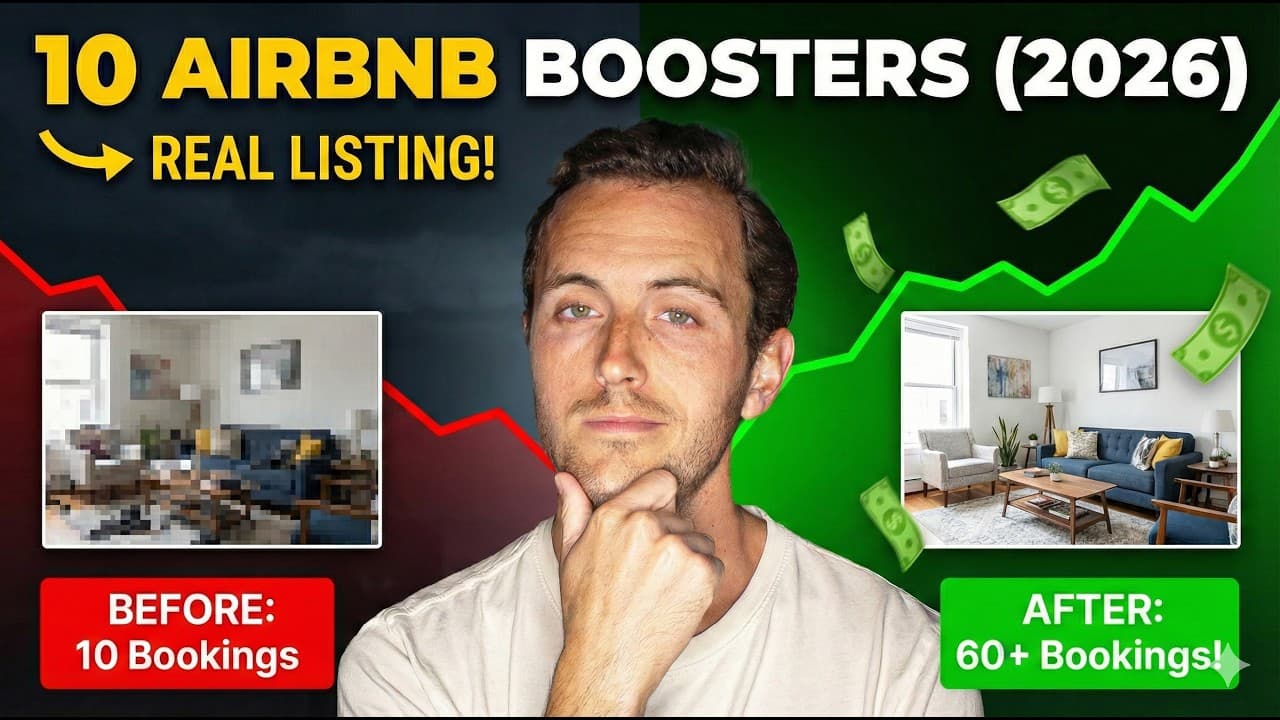
10 ESSENTIAL Steps to Improve Your Airbnb in 2026 (Real Listing Example!)
Most Airbnb listings lose bookings to the same fixable mistakes: bad photos, weak headlines, incomplete amenities, and missed seasonal opportunities. Here are 10 proven strategies to turn any underperforming listing into a consistent booking machine in 2026.
January 1, 2026 · 11 min read

10 Game-Changing Hacks to Improve Your Airbnb
What does it really mean to run a successful Airbnb in 2026? These 10 practical hacks — including a $15 sensor that prevented $44,000 in property damage — show exactly what separates top hosts from average ones.
January 16, 2025 · 9 min read

10 Tips to Get More Views on Airbnb
More views mean more bookings, and more bookings mean more revenue. This guide breaks down 10 actionable Airbnb listing optimization strategies that help hosts climb the search rankings and fill their calendars in 2026.
March 26, 2024 · 14 min read