Airbnb Pre-Check-In Management: Make Money Online in 2026
By James Svetec · December 15, 2020 · 8 min read
Part of our Airbnb Hosting 101 guide →
Key Takeaways
- Pre-check-in management covers everything before a guest arrives — listing optimization, pricing strategy, and multi-platform distribution — with no cleaning or maintenance responsibilities.
- Property investors are the ideal clients: they want optimized returns and already have cleaning and maintenance teams in place.
- Each property you manage can generate $300–$1,000/month in management fees at a standard 10–15% rate.
- The most valuable skill in this model is pricing strategy — knowing when to raise, lower, or hold prices across seasons and demand cycles.
- This model is fully remote, making it possible to manage properties anywhere in the world from a laptop.
The Airbnb pre-check-in management model is one of the most overlooked ways to build a remote income in the short-term rental industry in 2026. Unlike traditional co-hosting, this approach focuses exclusively on the digital side of Airbnb management — the part that requires the most expertise and delivers the most measurable financial results for property owners.
Watch the full video above or keep reading for the complete breakdown.
What Is Pre-Check-In Management?
Pre-check-in management is exactly what it sounds like: you manage every aspect of an Airbnb property up until the guest checks in. That includes creating and optimizing the listing, setting and adjusting pricing, managing the booking calendar, and distributing the property across multiple platforms like Booking.com, VRBO, and Airbnb itself.
Once a guest actually walks through the door, your job is done. The property owner — or their on-the-ground team — handles everything from that point forward. This clean division of responsibility is what makes the model so powerful for both sides of the equation.
Think of it as the strategic, high-leverage layer of Airbnb management separated from the operational, boots-on-the-ground layer. You're the expert who makes the property perform. The owner's team handles the physical execution.
What You're NOT Responsible For
One of the most appealing aspects of this model is what it excludes. Understanding the boundaries matters — both for managing your own time and for communicating your value to potential clients.
Here's what falls outside the scope of pre-check-in management:
- Property maintenance — repairs, inspections, and upkeep stay with the owner
- Cleaning and turnovers — the owner's cleaning team handles all of this
- In-stay guest communication — answering questions after check-in, handling issues during the stay
- Concierge services — local recommendations, emergency calls, key exchanges
- Physical presence at the property — ever
This is what makes the model genuinely remote. There is no geographic limitation. A host in Toronto can manage properties in Nashville, Scottsdale, or anywhere else in the world. As long as you have a laptop and reliable internet, you can run this business from anywhere.
For a broader look at the different ways to build income through Airbnb, the overview of Airbnb business models breaks down how pre-check-in management compares to full co-hosting and direct investing.
Why Property Investors Want This Service
The ideal client for pre-check-in management is a real estate investor who owns short-term rental properties. These people are not Airbnb enthusiasts — they're portfolio builders. Their goal is to maximize returns on each asset so they can reinvest and acquire more properties.
Here's why they're a perfect fit:
- They already have cleaning teams and maintenance contacts in place — they don't need you for that
- They don't want to spend hours studying market data and adjusting pricing — that's not their highest-leverage activity
- They do want someone who can squeeze the most revenue possible out of each listing
- If bringing you on at a 10–15% management fee means their net income stays the same or goes up, it's an obvious yes
The pitch practically makes itself. You're not asking an owner to restructure their operation. You're slotting in cleanly alongside what they already have, optimizing the one layer they've been neglecting, and often delivering more monthly revenue than they were generating on their own.
Connecting with other hosts who are actively pitching this model — and learning from their real-world experience — is one of the fastest ways to sharpen your approach. The BNB Tribe community is exactly that kind of resource, with experienced operators sharing what's working in today's market.
What the Work Actually Looks Like Day-to-Day
So what does a typical day actually look like running a pre-check-in management business? Less than most people expect.
Once a property is properly set up — listing written, photos selected, pricing strategy configured, and channel management software in place — the ongoing work is primarily about monitoring and adjusting. In practice, that often means:
- Reviewing and updating pricing based on demand signals, local events, and seasonal shifts
- Monitoring booking pace and adjusting availability windows accordingly
- Responding to booking inquiries and pre-arrival guest messages
- Updating listings across platforms when policies, photos, or amenities change
- Analyzing performance data and flagging opportunities to improve
Once systems are running, many operators report spending a few hours per day managing multiple properties simultaneously. That's the compounding advantage of a skill-based, systems-driven model — adding a second or third property doesn't double your workload.
For tips on maximizing listing performance once you're managing properties, the three must-do Airbnb listing tips covers the fundamentals every manager should have locked in.
How Much You Can Earn Per Property
This is where the model gets interesting from a pure income perspective.
The standard rate for pre-check-in management is 10–15% of gross booking revenue. On a property generating $3,000–$6,000/month in bookings — which is common for a well-performing STR — that puts your fee in the range of $300–$900 per property, per month. Higher-revenue properties can push that figure above $1,000.
Example: A two-bedroom cabin generating $5,500/month in gross revenue at a 12% pre-check-in management fee = $660/month from a single property.
Scale that to five properties and you're looking at $3,000–$5,000/month in management fees, working a few hours per day, with zero physical presence required at any of them.
The key distinction here: you're being paid for results, not hours. If your pricing expertise and listing optimization lift a property's monthly revenue by $800, you've earned your fee multiple times over — and the owner still comes out ahead.
For those interested in seeing what's possible when you combine management income with property ownership, the breakdown of earning $1,000 managing a single Airbnb is worth reading alongside this.
Free Tool
Grab the Airbnb Nightly Pricing Tool
Grab the exact spreadsheet James uses to set profitable nightly rates — plus a step-by-step setup cheatsheet.
Key Skills to Master in This Model
Pre-check-in management requires a specific and learnable skill set. It's not about technical complexity — it's about understanding what drives STR performance and applying that knowledge consistently.
Listing Optimization
A great listing does three things: it appears in search results, it gets clicked, and it converts browsers into bookings. That means understanding Airbnb's algorithm, writing compelling descriptions, selecting the right cover photo, and crafting a headline that stands out in a crowded market.
Pricing Strategy
Pricing is arguably the most valuable skill in this entire model. Setting static prices is easy — anyone can do that. What property owners actually need is someone who understands dynamic pricing: when to push rates up during high-demand periods, when to drop them to capture bookings during slow stretches, and how to use minimum stay requirements strategically.
This requires genuine market knowledge. There's no shortcut. But once you've learned a market, that knowledge compounds — every adjustment you make improves your instincts for the next one.
Multi-Platform Distribution
Most property owners are only listed on Airbnb. Expanding to VRBO, Booking.com, and other platforms can meaningfully increase occupancy — often without any additional cost to the owner. Knowing how to manage channel distribution through tools like Hospitable, Lodgify, or Guesty is a skill that immediately differentiates a professional manager from a casual one.
For those building toward a full property management operation beyond just pre-check-in work, BNB Mastery's Co-Hosting Program covers the full framework for landing clients and scaling to multiple properties.
How to Get Started Managing Airbnbs Remotely
The barrier to entry for this model is lower than most people assume. You don't need to own property. You don't need a real estate license. You don't need significant startup capital. What you need is knowledge, systems, and the ability to demonstrate value to prospective clients.
Here's a practical starting framework:
- Study the market — Pick one or two target cities and get deeply familiar with their STR landscape. What are average nightly rates? What occupancy looks like across seasons? Which property types perform best?
- Build your listing expertise — Study top-performing listings in your target market. What do they do differently? What language, photos, and pricing structures are they using?
- Set up your toolstack — Get comfortable with at least one dynamic pricing tool (PriceLabs or Wheelhouse are popular choices) and a channel management platform.
- Identify potential clients — Real estate investor Facebook groups, BiggerPockets forums, and local investor meetups are all places where STR property owners congregate.
- Make your pitch — Lead with results. Show how your optimization can generate more net revenue for the owner even after your management fee.
The learning curve is real, but it's finite. Most of the core concepts can be understood in a matter of weeks with the right guidance — and the income upside justifies that front-end investment of time.
Investors who want a structured framework for analyzing STR markets and properties before approaching owners as clients can also benefit from the BNB Investing Blueprint, which covers the financial side of STR performance in depth.
Is Pre-Check-In Management Right for You?
Airbnb pre-check-in management is one of the most practical remote business models available in 2026 for anyone who wants real income without owning property or managing physical operations.
The math is straightforward, the skills are learnable, and the demand from property investors is genuine — they want their listings performing better, and most of them don't have the time or expertise to make that happen.
The model works best for people who are analytical, detail-oriented, and genuinely interested in understanding what drives STR performance. If you find pricing strategy interesting rather than tedious, this could be a strong long-term business.
If you'd rather outsource that thinking entirely, traditional co-hosting or direct investing might be a better fit — and the comparison of Airbnb hosting, co-hosting, and investing breaks down exactly how those models stack up.
Either way, the opportunity is real. The question is whether you're willing to put in the upfront work to build the expertise that makes it valuable.
Frequently Asked Questions
What is Airbnb pre-check-in management?
Pre-check-in management involves handling all aspects of an Airbnb listing up until a guest checks in — including listing creation, pricing strategy, and multi-platform distribution. Once the guest arrives, the property owner's team takes over. This makes it a fully remote service that requires no physical presence at the property.
How much can you earn with Airbnb pre-check-in management in 2026?
Most pre-check-in managers charge 10–15% of gross booking revenue. On a property generating $4,000–$6,000/month, that's $400–$900 per property monthly. Managing five properties at this rate can produce $2,000–$5,000/month in relatively passive income.
Do you need to own property to do Airbnb pre-check-in management?
No. Pre-check-in management is a service you provide to property owners. You don't purchase or lease any real estate — you simply manage the digital side of their existing Airbnb listings in exchange for a percentage of booking revenue.
What skills do you need to manage Airbnb listings remotely?
The most important skills are pricing strategy, listing optimization, and multi-platform distribution. Understanding how to use dynamic pricing tools like PriceLabs, write compelling listing copy, and analyze STR market data are the core competencies that determine your results for clients.
Is Airbnb property management still a viable business model in 2026?
Yes. Demand for skilled STR managers remains strong in 2026, especially among real estate investors who want optimized returns without managing day-to-day listing operations. Markets have matured, which actually increases demand for expertise — property owners can no longer rely on low competition to fill calendars.
Pre-check-in management is a skill-based business — the faster you build real market expertise, the faster clients say yes. If you want to shortcut that learning curve and connect with others already running this model, the BNB Tribe community is the right place to start. And if you're ready to go deeper on the full co-hosting framework — from landing your first client to managing a portfolio of properties — BNB Mastery's Co-Hosting Program walks through every step in detail.
Free Tool
Grab the Airbnb Nightly Pricing Tool
Grab the exact spreadsheet James uses to set profitable nightly rates — plus a step-by-step setup cheatsheet.
Ready to get started with Airbnb?
Join 240+ members in BNB Tribe — the community James built for hosts and investors who want real results.
Join BNB TribeMore Articles
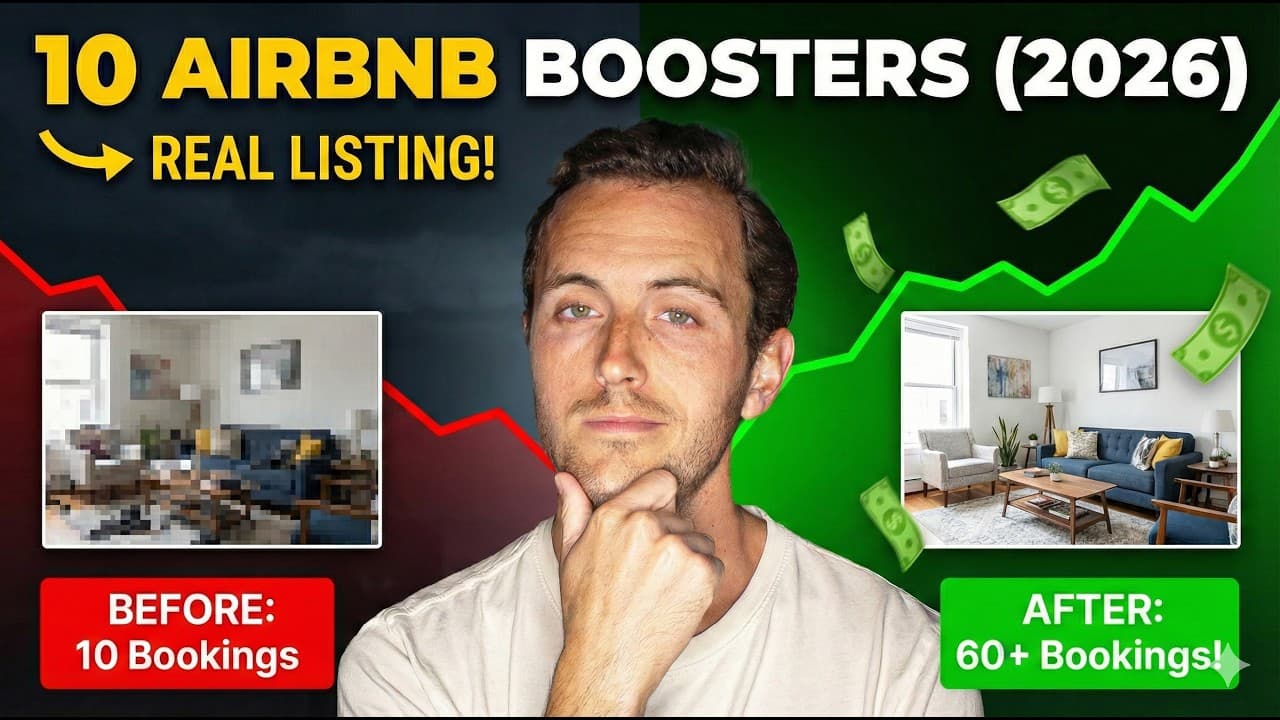
10 ESSENTIAL Steps to Improve Your Airbnb in 2026 (Real Listing Example!)
Most Airbnb listings lose bookings to the same fixable mistakes: bad photos, weak headlines, incomplete amenities, and missed seasonal opportunities. Here are 10 proven strategies to turn any underperforming listing into a consistent booking machine in 2026.
January 1, 2026 · 11 min read

10 Game-Changing Hacks to Improve Your Airbnb
What does it really mean to run a successful Airbnb in 2026? These 10 practical hacks — including a $15 sensor that prevented $44,000 in property damage — show exactly what separates top hosts from average ones.
January 16, 2025 · 9 min read

10 Tips to Get More Views on Airbnb
More views mean more bookings, and more bookings mean more revenue. This guide breaks down 10 actionable Airbnb listing optimization strategies that help hosts climb the search rankings and fill their calendars in 2026.
March 26, 2024 · 14 min read