Best Airbnb Locations Killing It in 2026: Blog Video
By James Svetec · October 22, 2020 · 7 min read
Part of our Airbnb Hosting 101 guide →
Key Takeaways
- Fringe markets on the outskirts of major cities are outperforming downtown cores as domestic travel dominates
- Properties near national parks — like Joshua Tree and Yosemite — are seeing exceptionally high demand with limited supply
- A data-driven pricing strategy is essential to avoid leaving money on the table in high-demand markets
- Systems and scheduling need to scale with your portfolio — whether you manage 1 property or 20
- Co-hosting managers who boost property owner revenue become nearly impossible to replace and generate strong referrals
Knowing which Airbnb locations are performing best is one of the most valuable insights any STR host or investor can have — and this blog video breaks it all down with hard market context and actionable strategy for 2026.
Watch the full video above or keep reading for the complete breakdown.
Why Location Still Defines STR Success
In the short-term rental world, a great host with a mediocre location will almost always underperform a decent host with a great location. Market selection is that powerful. The difference between a property generating $2,000 a month and one generating $5,000+ often comes down to where it sits on a map.
What makes this even more important in 2026 is that travel patterns have continued evolving. Domestic travel has remained the backbone of STR demand, and travelers are not all heading to the same places they were five years ago. The markets that are winning today look different from the traditional hotspots of the past.
For anyone evaluating whether to start managing Airbnbs or invest in a property, understanding which markets are actually generating strong numbers right now is the essential first step.
Downtown Core vs. Fringe Markets
For years, the conventional wisdom in STR investing was simple: buy in a major city center, near the convention center, close to the tourist attractions. Downtown properties in cities like New York, Los Angeles, and Chicago commanded premium nightly rates and near-constant occupancy.
That picture has shifted significantly. Downtown core markets — while still viable — are no longer the clear frontrunners they once were. The reason is straightforward: the bulk of active travelers right now are domestic, and domestic travelers already live in those major cities. They're not booking a downtown Chicago apartment when they live in Chicago.
Instead, demand has surged in what are called fringe markets — the smaller towns, lake communities, mountain escapes, and weekend-trip destinations within two to four hours of major metropolitan areas. Think the Catskills relative to New York, or Big Bear relative to Los Angeles.
- People working remotely want to escape the city for a week or two without flying
- Weekend getaway demand is strong and consistent year-round
- These markets often have less established STR supply, meaning less competition
- Pricing power increases when demand outpaces available inventory
For a deeper look at how the best Airbnb business locations have evolved, the breakdown of top STR business locations is worth reviewing alongside this post.
National Parks: The Hottest STR Hotspots
If there's one category of STR location consistently outperforming all others, it's properties near national parks. Outdoor travel has become one of the defining travel trends of this decade, and it shows no signs of reversing.
Places like Joshua Tree, Yosemite, and the Smoky Mountains have seen demand spike dramatically, while inventory hasn't kept pace. When demand exceeds supply, prices climb — and hosts who are prepared to capture that opportunity are generating exceptional returns.
Properties near national parks are getting booked consistently and at higher nightly rates, simply because travelers have far fewer options to choose from in those areas.
Why are these markets so strong? A few reasons:
- Universal appeal: Outdoor activities work for families, couples, solo travelers, and remote workers alike
- Low competition: These aren't markets that historically attracted heavy STR investment, so supply is limited
- Premium pricing tolerance: Guests will pay significantly more for a unique cabin or desert retreat than for a standard urban apartment
- Extended stays: Remote workers often book for weeks at a time, reducing turnover and operational overhead
For investors evaluating specific numbers on markets like these, the Airbnb investment analysis framework using real data provides a practical methodology for running accurate projections before committing to a market.
Hosts who want to connect with others already operating in high-demand rural and nature-adjacent markets can find that community in the BNB Tribe community, where experienced operators share what's working in specific regions right now.
What to Do If You're in a Hot Market
Identifying a hot market is only half the equation. The other half is knowing how to extract maximum value from it. A property in Joshua Tree with a mediocre listing and flat pricing will still underperform a well-optimized property in a secondary market.
So what does optimization actually look like in practice?
Audit Your Listing Quality
Hot markets attract more competition over time. A listing that converts well today — with professional photos, a compelling title, and detailed amenity descriptions — will maintain its edge as more properties enter the market. Listings that coasted on location alone tend to slip in rankings when the market matures.
The three must-do Airbnb listing tips cover the fundamentals every host should have locked in before relying on market demand to do the heavy lifting.
Respond Faster Than the Competition
Response time directly affects search ranking on Airbnb. In high-demand markets where multiple guests are searching simultaneously, the listings that respond quickly consistently win bookings. Automated messaging tools can handle initial inquiries in seconds, around the clock.
Free Tool
Grab the Airbnb Nightly Pricing Tool
Grab the exact spreadsheet James uses to set profitable nightly rates — plus a step-by-step setup cheatsheet.
Optimize for Extended Stays
National park and fringe market guests often want to stay longer. Offering weekly and monthly discounts — calibrated correctly — can increase total revenue while reducing cleaning and turnover costs. A guest staying 10 nights at a 15% discount is almost always more profitable than five 2-night bookings.
Nailing Your Pricing Strategy
Pricing is where most hosts in hot markets leave significant money on the table. When demand surges — around holidays, local events, peak seasons — properties with static or manually-adjusted pricing miss the window entirely.
A data-driven dynamic pricing strategy is non-negotiable for hosts who want to fully capitalize on a high-demand market. This means understanding your market's occupancy rates, monitoring competitor pricing, and adjusting nightly rates in response to actual demand signals — not gut feel.
Tools like PriceLabs, Wheelhouse, and DPGO pull real-time market data to automate these adjustments. But the strategy layer — knowing what minimum rate to set, how aggressive to be during peak periods, and when to lower rates to fill calendar gaps — still requires host judgment.
- Set a strong minimum price so automated tools can't undercut you in low-demand periods
- Raise rates earlier than you think necessary for known high-demand dates — you can always lower them
- Track your RevPAR (revenue per available room), not just occupancy, to get an accurate performance picture
For co-hosting managers, pricing expertise is one of the biggest value-adds you can offer a property owner. When you can demonstrably show a homeowner that properties managed with your strategy earn more than they would self-managing, retention and referrals take care of themselves.
The BNB Mastery Co-Hosting Program covers exactly this — how to develop a pricing approach that makes you indispensable to every owner you work with.
Building Systems That Scale
A hot market creates a good problem: more bookings than you might be ready to handle. Without solid operational systems, high demand can quickly turn into a management nightmare — missed check-ins, delayed cleaning turnovers, and frustrated guests leaving negative reviews.
The systems that work for one property don't automatically work for five. And the systems that work for five don't scale to twenty without intentional infrastructure.
Key Systems Every STR Operator Needs
- Automated guest messaging: Pre-check-in instructions, check-in day reminders, mid-stay check-ins, and checkout messages should all be automated
- Cleaning coordination: A reliable cleaning team with a standardized checklist and backup vendors is the operational backbone of any STR
- Maintenance tracking: A simple system for logging and following up on maintenance issues prevents small problems from becoming expensive ones
- Calendar and channel management: If you're listed on multiple platforms (Airbnb, VRBO, Booking.com), a channel manager prevents double-bookings and keeps rates synced
The Airbnb pre-check-in management guide is a practical starting point for hosts who want to tighten up the guest communication side of operations specifically.
For hosts managing multiple properties — whether their own or as a co-hosting service — investing time in these systems upfront pays dividends every single week. The goal is to spend less time reacting to problems and more time identifying the next market opportunity.
Where to Focus in 2026
The STR market in 2026 rewards hosts who pay attention. Fringe markets, national park adjacencies, and outdoor destination towns are generating some of the strongest returns in the short-term rental space right now. But location alone doesn't guarantee success — the hosts winning in these markets combine smart market selection with sharp pricing and airtight operations.
Whether you're investing in your first property or building a co-hosting portfolio across multiple markets, the core principle holds: find where demand exceeds supply, get your systems in place, and price with real data. Those three elements together are what separate consistently profitable STR operators from those who just got lucky on location.
For investors looking to run serious numbers on specific markets before committing capital, the BNB Investing Blueprint provides the analytical framework to evaluate any market objectively — so you're not guessing when it's time to make the call.
Frequently Asked Questions
Which Airbnb locations are performing best in 2026?
Fringe markets near major cities and properties close to national parks are among the strongest performers in 2026. Destinations like Joshua Tree, Yosemite, and similar outdoor recreation areas continue to see high demand and limited supply, driving up nightly rates and occupancy.
Are downtown Airbnb markets still profitable in 2026?
Downtown markets can still be profitable, but they're no longer the clear top performers they once were. Domestic travel dominates STR demand, and travelers already living in major cities tend to book outbound — favoring fringe and nature markets over urban centers.
What is a fringe market in short-term rentals?
A fringe market is a smaller town or destination located within a few hours of a major metropolitan area. These markets attract city residents looking for weekend getaways or remote-work escapes, and they typically have less STR competition than urban cores.
How do I maximize revenue in a high-demand Airbnb market?
Use a data-driven dynamic pricing strategy to adjust nightly rates based on real demand signals. Also optimize your listing with professional photos and strong copy, respond to inquiries quickly, and build operational systems that handle high booking volume without adding stress.
Is managing Airbnbs for other property owners a viable business in 2026?
Yes — co-hosting is a strong business model in 2026, especially in high-demand markets where owners want professional management. Managers who can demonstrably increase a property's revenue while saving the owner time build long-term, referral-generating client relationships.
Finding the right market is step one — knowing how to analyze it financially before you commit is what separates smart investors from hopeful ones. The BNB Investing Blueprint gives you a structured, data-driven process for evaluating any STR market so you can move forward with confidence. And if you want to stay plugged into what's working across different markets in real time, the BNB Tribe community connects you with operators who are actively testing and refining strategies across the country.
Free Tool
Grab the Airbnb Nightly Pricing Tool
Grab the exact spreadsheet James uses to set profitable nightly rates — plus a step-by-step setup cheatsheet.
Ready to get started with Airbnb?
Join 240+ members in BNB Tribe — the community James built for hosts and investors who want real results.
Join BNB TribeMore Articles
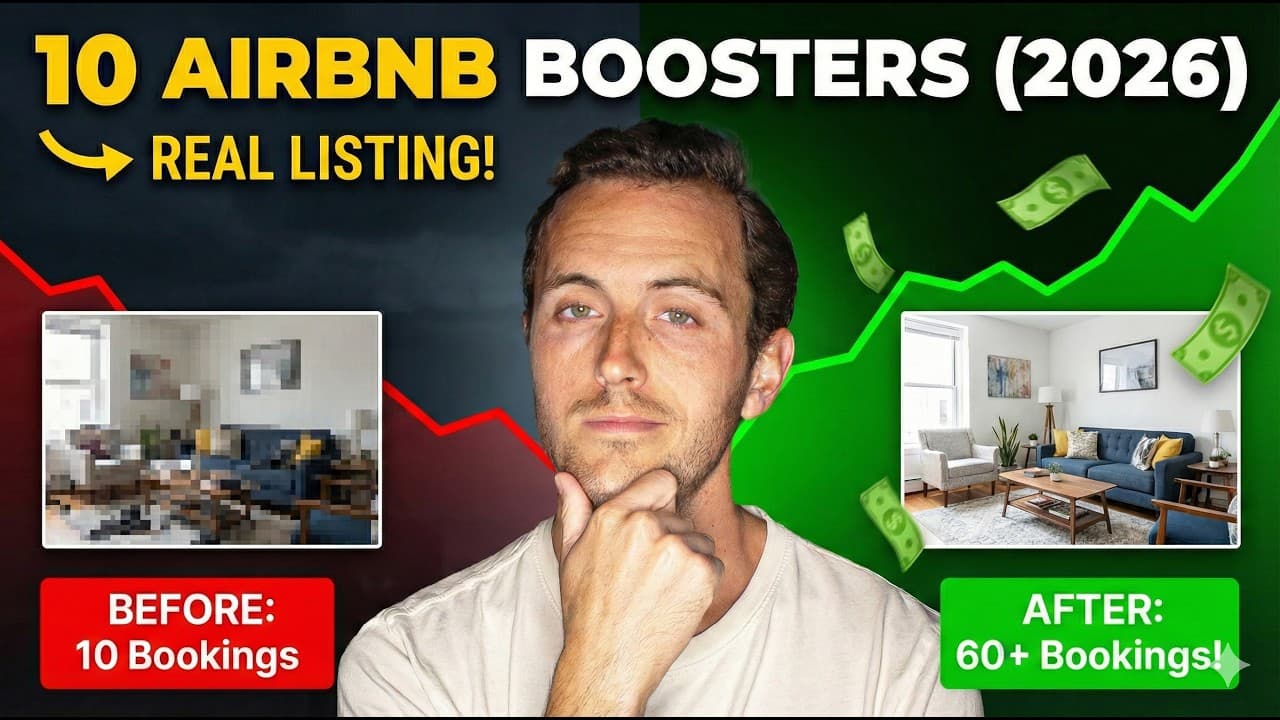
10 ESSENTIAL Steps to Improve Your Airbnb in 2026 (Real Listing Example!)
Most Airbnb listings lose bookings to the same fixable mistakes: bad photos, weak headlines, incomplete amenities, and missed seasonal opportunities. Here are 10 proven strategies to turn any underperforming listing into a consistent booking machine in 2026.
January 1, 2026 · 11 min read

10 Game-Changing Hacks to Improve Your Airbnb
What does it really mean to run a successful Airbnb in 2026? These 10 practical hacks — including a $15 sensor that prevented $44,000 in property damage — show exactly what separates top hosts from average ones.
January 16, 2025 · 9 min read

10 Tips to Get More Views on Airbnb
More views mean more bookings, and more bookings mean more revenue. This guide breaks down 10 actionable Airbnb listing optimization strategies that help hosts climb the search rankings and fill their calendars in 2026.
March 26, 2024 · 14 min read