Biggest Airbnb Opportunity in Over a Decade: Blog Video
By James Svetec · August 27, 2020 · 8 min read
Part of our Airbnb Hosting 101 guide →
Key Takeaways
- U.S. domestic Airbnb demand has surged while supply is at an all-time low — creating ideal conditions for new and existing hosts
- Americans historically spend $144 billion annually on international tourism; when that spending stays domestic, short-term rentals benefit enormously
- Airbnb supply dropped because over-leveraged hosts exited the market, meaning less competition for those who remain
- Co-hosting and property management are booming — property owners want professional help capitalizing on the surge
- Getting in early gives hosts a major advantage: six months of experience and bookings built up before the wider market catches on
The Airbnb opportunity unfolding right now in the United States is one that seasoned investors and new hosts alike should pay close attention to — a rare convergence of record demand, shrinking supply, and billions in redirected tourism spending that hasn't been seen in over a decade.
This blog video breaks that opportunity down in full, explaining what's driving it and how anyone can take advantage, with or without owning a property.
Watch the full video above or keep reading for the complete breakdown.
Why This Airbnb Opportunity Exists Right Now
This blog video documents a moment that James Svetec, founder of BNB Mastery, describes as the biggest opportunity on Airbnb in over ten years. That claim is backed by data, not hype.
Just months before the surge, Airbnb bookings were hitting all-time lows. The company laid off a significant portion of its workforce. Analysts were writing obituaries for the short-term rental industry. Then something flipped — and it flipped hard.
Recent booking data shows Airbnb reservations in the United States running ahead of the same period in 2019, which was previously considered the platform's peak. The cause isn't a mystery.
It comes down to two forces moving in opposite directions at the same time: demand is skyrocketing while supply is shrinking. That combination creates conditions that are almost impossibly favorable for hosts who are positioned correctly in 2026.
The $144 Billion Domestic Travel Shift
Here's the number that puts the scale of this opportunity in perspective: Americans spend approximately $144 billion on international tourism every year. That makes the U.S. the second-largest country in the world by annual tourism spending.
That $144 billion typically gets spread across dozens of countries — European cities, tropical resorts, international flights, foreign hotels. When Americans can't travel abroad, that money doesn't simply disappear. It gets redirected.
What's happening now is that Americans are spending those tourism dollars domestically. Road trips are surging. Drive-to destinations are booked solid. People who would normally be in Rome or Cancun are instead heading to the mountains, the coast, or the countryside a few hundred miles from home.
Key insight: Americans aren't canceling vacations — they're rerouting them. And short-term rentals are capturing the lion's share of that redirected spending.
Hotels aren't the primary beneficiary here. Travelers who once stayed in international boutique hotels or vacation villas are gravitating toward Airbnb for domestic trips — partly for the space and privacy, partly out of preference for avoiding crowded lobbies and shared facilities. This is a structural shift that benefits STR hosts directly.
For hosts who want a deeper look at how to position a property to capture this kind of demand, the 5 essential tips for Airbnb success offer a practical starting point.
Why Airbnb Supply Has Dropped to All-Time Lows
The demand surge would matter a lot less if supply had kept pace. But it hasn't — and the reasons why are worth understanding, because they reveal how durable this opportunity might be.
Two groups of hosts exited the Airbnb market in large numbers:
- Arbitrage operators who were renting properties and subletting them on Airbnb. When bookings dropped and landlords tightened lease terms, this model collapsed almost overnight for many operators.
- Over-leveraged owners who took on mortgages they could only afford if their Airbnb income stayed consistently high. When revenue dipped, those properties got converted to long-term rentals or sold outright.
The net result? Thousands of listings disappeared from the platform. In major U.S. markets, the number of active short-term rental listings dropped sharply, just as domestic demand was climbing. That's not a temporary dip — many of those properties won't come back to Airbnb quickly, because the owners either sold or signed long-term leases.
For hosts who stayed on the platform, or who list now, the math is straightforward: fewer competitors, more guests searching, and rates climbing to reflect the imbalance. Understanding which markets still have this dynamic is critical — finding the best Airbnb investing locations has never been more important than in this environment.
What This Means for Active Airbnb Hosts
For hosts who are already on the platform — or who list now — the numbers are telling a clear story. Average daily rates are climbing in most major domestic markets. Occupancy rates are high. Revenue per available night is up significantly compared to prior years.
BNB Mastery has seen students generate $16,000 in revenue from a single property in a single month, with 30 out of 31 nights booked. That wasn't luck. It came from knowing when to adjust pricing, how to prevent properties from filling up too far in advance at low rates, and how to optimize listings to capture demand as it spikes.
The hosts doing best right now aren't necessarily the ones with the nicest properties. They're the ones who understand dynamic pricing, know how to read demand signals, and aren't leaving money on the table by setting static rates.
A few things hosts should be doing in 2026 to take full advantage:
- Avoid locking in bookings too far in advance at flat rates. As demand spikes, prices should spike with it. Guests booking 90 days out at a low rate are taking spots that could go for 40–60% more closer to the date.
- Refresh listings immediately. New photos, updated descriptions, and competitive pricing signal to Airbnb's algorithm that a listing is active and relevant.
- Expand the consideration set for guests. Amenities like fast Wi-Fi, a dedicated workspace, and outdoor space matter more now than ever, as remote workers blend travel with work.
For specific tactics to improve listing performance, the three must-do Airbnb listing tips are worth reviewing before any host updates their page.
Free Tool
Grab the Airbnb Nightly Pricing Tool
Grab the exact spreadsheet James uses to set profitable nightly rates — plus a step-by-step setup cheatsheet.
The Co-Hosting and Property Management Boom
Here's where the opportunity gets interesting for people who don't own property — or don't want to. The same market conditions driving demand for Airbnb stays are also driving demand for professional co-hosts and property managers.
Most hosts on the platform right now are not professional operators. They're individual property owners who may have listed casually in better times and are now struggling to navigate a market that changes week to week. They need help. They need someone who knows how to price dynamically, optimize listings, manage guest communication, and coordinate cleaning and maintenance efficiently.
At the same time, a wave of property owners who weren't previously on Airbnb are now watching the demand surge and want in — but have no idea how to list, price, or manage a short-term rental. They're actively looking for someone to do it for them.
That's exactly what a co-host or STR property manager does. And right now, the demand for those services is as high as it's ever been.
For anyone looking to build a management business around this opportunity, how to explode your Airbnb management business covers the growth side of the equation. And for a structured path to landing clients and building a full co-hosting operation, BNB Mastery's Co-Hosting Program walks through the entire process from first pitch to managing a portfolio of properties.
How to Get Started — Even Without Owning Property
One of the most common misconceptions about Airbnb is that you need to own real estate to participate meaningfully. You don't. Co-hosting is a legitimate, scalable business model that requires no property ownership and relatively low startup costs.
Here's how the model works in practice:
- A property owner has a home, condo, or investment property they want to list on Airbnb.
- They don't want to manage it themselves — or don't know how.
- A co-host steps in, handles everything from listing creation to guest communication to pricing optimization.
- The co-host earns a management fee, typically 15–30% of revenue, depending on the scope of services and market.
On a property generating $5,000/month in gross revenue, a 20% management fee translates to $1,000/month per property. Managing five properties at that rate means $5,000/month in income — without owning a single asset.
The market conditions right now accelerate the timeline to get there. Property owners are actively seeking help. The pitch is easier when the host can point to a market where bookings are up and rates are rising.
The comparison of Airbnb business models breaks down how co-hosting stacks up against arbitrage and direct investing, which is worth reviewing before choosing a path.
Connecting with other hosts who are actively building this kind of business can also shorten the learning curve dramatically. The BNB Tribe community brings together hosts and co-hosts across markets who share strategies, troubleshoot problems, and stay current on where the opportunity is moving next.
Don't Wait for the Wave to Peak
The Airbnb opportunity documented in this blog video is real, it's happening now, and it has a time component. The hosts and co-hosts who move in the next few months will build up inventory, reviews, and operational experience before the market gets crowded again.
Six months from now, the opportunity won't have vanished — but the easy early-mover advantage will be harder to claim.
Whether the goal is to list a property, manage properties for others, or build a full co-hosting business, the conditions in 2026 are as favorable as they've been in over a decade. Lower competition, higher rates, and a massive pool of domestic travelers with money to spend make this a window worth acting on.
Start with one property. Master the fundamentals. Then scale. The framework exists — the question is whether you'll use it before the window narrows.
Frequently Asked Questions
Is Airbnb still a good opportunity in 2026?
Yes — 2026 continues to show strong domestic travel demand and reduced Airbnb supply in many U.S. markets, creating favorable conditions for both hosts and co-hosts. The hosts performing best are those using dynamic pricing and optimized listings to capture peak demand.
What is the $144 billion Airbnb opportunity James Svetec talks about?
It refers to the roughly $144 billion Americans spend on international tourism annually. When that spending gets redirected to domestic travel, short-term rentals capture a disproportionate share, creating a surge in Airbnb bookings and nightly rates.
Why has Airbnb supply dropped so significantly?
Many hosts who relied on rental arbitrage or over-leveraged mortgages exited the platform when revenues dipped. Properties were converted to long-term rentals or sold, reducing the number of active listings just as demand was climbing.
Can you make money on Airbnb without owning property?
Yes — co-hosting allows you to manage other people's properties on Airbnb and earn a management fee, typically 15–30% of revenue. It requires no property ownership and can scale to a full-time income with multiple properties under management.
How much can an Airbnb property manager earn per property?
It varies by market and service scope, but a co-host managing a property generating $5,000/month in revenue at a 20% fee earns $1,000/month from that single property. Managing multiple properties compounds that income significantly.
If co-hosting sounds like the right fit given these market conditions, the hardest step is landing that first client — everything else builds from there. The BNB Mastery Co-Hosting Program provides a step-by-step framework for doing exactly that, from finding property owners who need help to building a scalable management operation. And if you want to stay connected with hosts who are actively working through the same challenges, the BNB Tribe community is where those conversations happen.
Free Tool
Grab the Airbnb Nightly Pricing Tool
Grab the exact spreadsheet James uses to set profitable nightly rates — plus a step-by-step setup cheatsheet.
Ready to get started with Airbnb?
Join 240+ members in BNB Tribe — the community James built for hosts and investors who want real results.
Join BNB TribeMore Articles
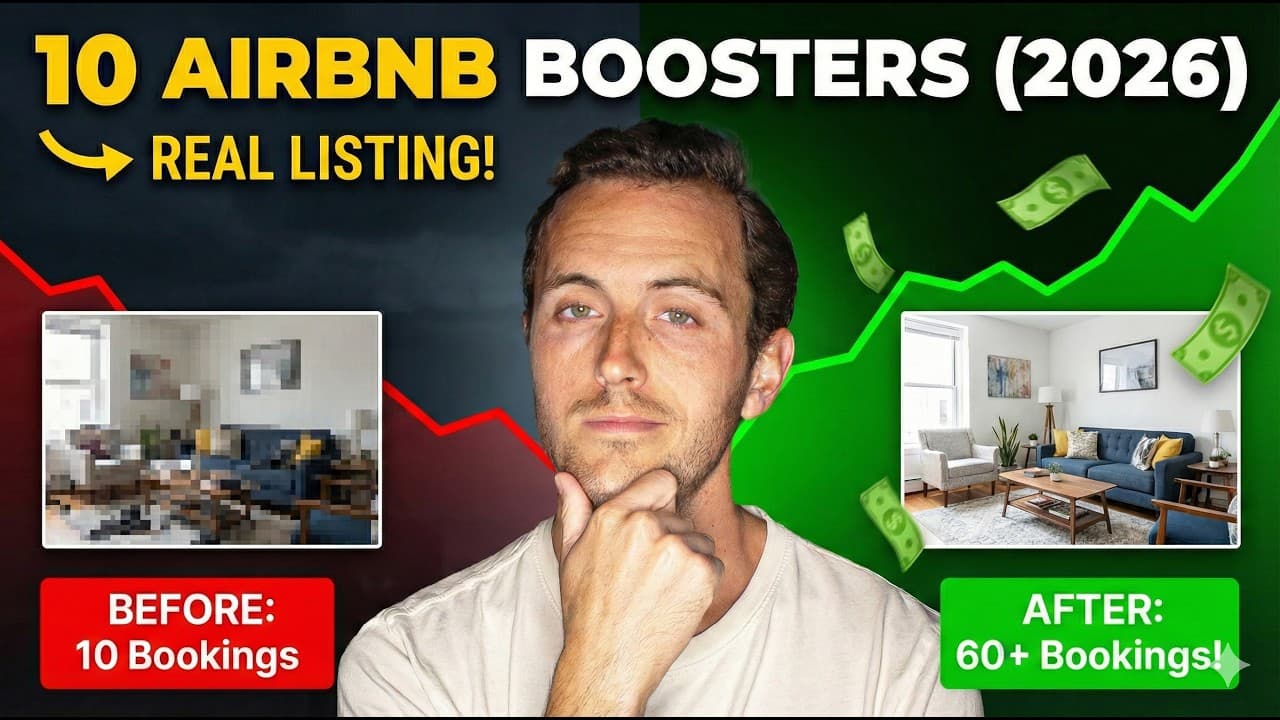
10 ESSENTIAL Steps to Improve Your Airbnb in 2026 (Real Listing Example!)
Most Airbnb listings lose bookings to the same fixable mistakes: bad photos, weak headlines, incomplete amenities, and missed seasonal opportunities. Here are 10 proven strategies to turn any underperforming listing into a consistent booking machine in 2026.
January 1, 2026 · 11 min read

10 Game-Changing Hacks to Improve Your Airbnb
What does it really mean to run a successful Airbnb in 2026? These 10 practical hacks — including a $15 sensor that prevented $44,000 in property damage — show exactly what separates top hosts from average ones.
January 16, 2025 · 9 min read

10 Tips to Get More Views on Airbnb
More views mean more bookings, and more bookings mean more revenue. This guide breaks down 10 actionable Airbnb listing optimization strategies that help hosts climb the search rankings and fill their calendars in 2026.
March 26, 2024 · 14 min read