Building an Airbnb Glamping Retreat: Full Blog Video Breakdown
By James Svetec · July 12, 2022 · 10 min read
Part of our Airbnb Hosting 101 guide →
Key Takeaways
- Always buy land with a main property that cash flows positively on its own — the ADUs are upside, not the foundation
- Geodesic domes can earn $40,000–$100,000 per year and cost as little as $15,000–$40,000 to set up
- Uniqueness is the key driver of bookings — guests booking glamping want an experience, not just a bed
- Combining the property with a built-in experience (maple farm, cannabis tours, ATV excursions) dramatically increases appeal
- Having 100+ acres gives you room to add multiple ADUs over time, compounding your cash flow without buying new land
Building an Airbnb glamping retreat has become one of the most talked-about strategies in the short-term rental space in 2026 — and for good reason.
Done right, a single plot of land with multiple auxiliary dwelling units (ADUs) can generate well over six figures a year while giving guests an experience they simply cannot get at a hotel.
This blog video breaks down exactly how James Svetec and BNB Mastery students are approaching glamping projects right now.
Watch the full video above or keep reading for the complete breakdown.
What Is an Airbnb Glamping Retreat?
A glamping retreat is a short-term rental property built around an immersive outdoor experience. The word "glamping" blends "glamorous" and "camping" — guests get the natural setting without sacrificing comfort.
The typical setup looks like this: you purchase a plot of land that already has a main house on it. That house becomes your primary STR listing. Then, using the surrounding acreage, you add a series of unique auxiliary dwelling units — geodesic domes, A-frames, converted Airstreams, treehouses, tiny homes — each listed separately on Airbnb.
The result? Multiple income streams from a single land purchase. Each ADU runs as its own listing, draws its own bookings, and generates its own cash flow. The main house anchors the investment while the ADUs multiply the returns.
This model has exploded in popularity because it sits at the intersection of two unstoppable trends: the demand for unique travel experiences and the rise of Airbnb as the go-to platform for those experiences.
If you want to understand the broader STR investing picture before committing to a glamping build, the post on 3 things you need to know about Airbnb investing is a solid starting point.
Why Cash Flow Must Come First
Before you think about domes, Airstreams, or treehouses, get the fundamentals right. The main property must cash flow positively on its own — before a single ADU is added.
This is not optional. It is the safety net that protects the entire investment.
Here's the logic: if the market softens, if bookings slow down, if a major expense hits — positive cash flow from the main house means you never have to sell at a loss. You hold, you weather the storm, and the property stays in your portfolio. The ADUs then become pure upside.
James Svetec recently purchased a property with 100 acres of land that already cash flows well just from the main house. The geodesic dome being built there — along with other planned ADUs — adds income on top of an already profitable base. That's the right order of operations.
One additional note: look for properties with existing structures that can be converted cheaply. The property above includes a large, fully detached garage that could become a tiny home with relatively modest investment. That's another ADU that's essentially already half-built.
For a deeper look at how to analyze these kinds of deals, the guide on achieving a 258% ROI on a vacation rental walks through the math in detail.
What to Look for in the Land Purchase
- Multiple acres — You need physical space to build ADUs without crowding them together. Five acres is a minimum; 20–100 acres gives you room to scale aggressively.
- An existing main structure — A livable house that can go on Airbnb immediately keeps income flowing while you build out ADUs.
- Zoning flexibility — Confirm local zoning allows short-term rentals and additional structures before you buy. This varies dramatically by county and state/province.
- Natural appeal — Water access, forest views, mountain settings, or unique terrain features give your listings a built-in story to tell.
- Conversion opportunities — Barns, garages, and outbuildings that can be converted into rentable units are hidden value most buyers overlook.
The Best ADUs to Build on Your Land
Not all ADUs are created equal. The single most important factor is uniqueness. Guests booking a glamping retreat are not looking for another bedroom — they want an experience that is genuinely different from anything they could book in a hotel or standard vacation rental.
The question to ask before building any ADU: "Is staying here an experience in itself?" If the honest answer is no, reconsider the concept.
Top-Performing ADU Types in 2026
- Geodesic domes — Clear panels create stunning views of the stars, forest, or mountains. They look extraordinary in photos, which drives click-through rates on Airbnb. Guests book them for the visual experience as much as the stay itself.
- A-frames — Classic, photogenic, and relatively simple to build. A well-designed A-frame in the right setting photographs beautifully and attracts consistent bookings.
- Converted Airstream trailers — The retro aesthetic is a natural fit for Instagram-savvy travelers. A renovated Airstream with quality furnishings can command strong nightly rates.
- Treehouses — Among the highest-earning ADU types on the platform. A true treetop experience is something guests will pay a serious premium for.
- Tiny homes — More flexible than most other ADU types. With the right design and finishes, a tiny home can feel like a boutique hotel room in the woods.
- Yurts and tipis — Lower build cost than most options, strong aesthetic appeal, and they perform well in the right outdoor settings.
The common thread is that each of these structures delivers an experience that feels special. Guests can tell when an ADU was built just to add square footage versus when it was designed to create a memory. Build for the memory.
Geodesic Dome Numbers: What to Expect
Let's get specific, because the financial case for geodesic domes is genuinely compelling.
A well-run geodesic dome on Airbnb typically generates between $40,000 and $100,000 per year in gross revenue. The range depends on location, market demand, and how well the listing is optimized.
Setup costs are surprisingly manageable:
- Smaller dome, basic setup: $15,000–$25,000 fully furnished and operational
- Larger dome, premium setup: Starting around $40,000
Run those numbers. A dome that costs $25,000 to set up and earns $50,000 per year is delivering a 200% return on the setup cost in year one alone. Even at the conservative end — $40,000 setup cost, $40,000 annual revenue — you're breaking even in the first year and generating pure profit from year two forward.
This is why the return on glamping ADUs is often dramatically better than the return on purchasing a standalone investment property. The land is already paid for. The infrastructure is already in place. You're adding revenue with a relatively small incremental investment.
For more context on how these numbers compare to other STR investment approaches, the breakdown of achieving 130% ROI on a real estate investment is worth reading alongside this.
Pro tip: Don't just furnish a dome — curate it. Star maps on the walls, quality telescopes, heated floors, a wood-burning stove. Every detail that photographs well is a direct driver of bookings and nightly rate.
Free Tool
Grab the Airbnb Nightly Pricing Tool
Grab the exact spreadsheet James uses to set profitable nightly rates — plus a step-by-step setup cheatsheet.
The Experience-Driven Strategy
Here is what separates a good glamping retreat from a great one: the built-in experience layer.
Airbnb's fundamental advantage over hotels is that it sells experiences, not rooms. Guests who book on Airbnb are overwhelmingly motivated by the idea of doing something, seeing something, or feeling something that they cannot get from a standard hotel stay.
A glamping retreat that taps into a unique local activity or attraction creates a feedback loop: the activity drives bookings, the bookings generate reviews that mention the activity, those reviews drive more bookings. The listing becomes self-reinforcing.
Think about what makes your land and location genuinely special. Is there snowmobiling in the winter? Rock climbing nearby? A river for kayaking? Fishing? Wildlife? A working farm with animals guests can interact with? Build the listing narrative around that experience, not just the structure itself.
This is also where adding multiple income streams to a single property starts to make serious financial sense — guided excursions, experience packages, and add-on services can all layer revenue on top of the base nightly rate.
Real Glamping Projects in Progress
Theory is useful. Real examples are better. Here are two glamping projects that BNB Mastery students are actively developing right now.
The Maple Farm in Ontario
A student working with BNB Mastery is building a glamping retreat on a maple farm a few hours north of Toronto. The main property will run as an Airbnb listing, and ADUs are being added to the acreage.
The unique angle: guests get access to a genuine maple syrup experience — tapping trees, learning the production process, eating fresh maple syrup straight from the farm. In winter, the property is positioned around snowmobiling and the rural Ontario experience.
The experience is the differentiator. How many Airbnb listings offer guests the chance to spend a few days on a working maple farm? Very few. That scarcity drives both demand and nightly rate.
The California Mountain Property
Another student has a California property with a striking physical layout: a beautiful cabin at the top of a hill with a sauna and panoramic views, and a large property at the base of the valley. The surrounding terrain opens up options for mountain biking, ATV excursions, and outdoor activities.
The cannabis cultivation angle is also part of the experience strategy — legal in California, and a legitimate draw for a certain guest segment interested in farm-to-table style cannabis experiences.
Both examples illustrate the same principle: the retreat itself is just the infrastructure. The experience is what guests are actually buying.
How to Get Started With Glamping Investing
The path from idea to operational glamping retreat is straightforward in concept, though it requires careful execution at each step.
- Define your market. Where are guests traveling for outdoor experiences near you? Look at Airbnb data for areas with high demand and limited supply of unique listings. Tools like AirDNA can show you occupancy rates and average daily rates for glamping-style properties in specific markets.
- Find land with an existing structure. The main house is your foundation. Run the numbers on it as a standalone STR before factoring in any ADU income. If it cash flows positively on its own, it passes the first test.
- Confirm zoning and permitting. This is where many investors stumble. Talk to the county planning office before you close. Understand what structures are permitted, what STR rules apply, and what utilities (water, septic, electrical) will be required for each ADU.
- Start with one ADU. Don't try to build five structures simultaneously. Build one dome or A-frame, get it running, optimize the listing, and use the cash flow to fund the next one. Staged development reduces risk and lets you learn from each build.
- Optimize every listing individually. Each ADU is its own Airbnb listing and should be treated as such. Separate photography, separate copy, separate pricing strategy. For tips on making listings perform at their peak, these three Airbnb listing tips cover the fundamentals well.
- Build the experience layer. What can guests do on or near your property that they cannot do anywhere else? Identify that, build it into your listing description, and use it as the core of your marketing.
Investors who want a structured approach to analyzing land deals, running ADU projections, and building a full STR portfolio can explore the BNB Investing Blueprint, which provides a step-by-step framework for exactly this kind of decision-making.
And if you want to connect with other hosts and investors who are actively building glamping retreats and STR portfolios, the BNB Tribe community is where those conversations are happening in real time — including students at every stage of the glamping build process.
Final Thoughts on the Blog Video
The glamping retreat model works because it solves a real problem for Airbnb guests: they want memorable outdoor experiences, and most of the supply on the platform is generic. A well-built glamping retreat with a unique ADU and a compelling experience layer stands out immediately — and that drives both occupancy and nightly rate.
The financial case is equally strong. With geodesic domes generating $40,000–$100,000 per year and setup costs starting around $15,000, the return on investment is among the best available in the STR space in 2026. When layered on top of a main property that already cash flows, the compounding effect is significant.
Start with the right land. Make sure the main house works on its own. Build one ADU at a time. Design every detail around the guest experience. That is the blog video breakdown — and the roadmap that BNB Mastery recommends for any investor serious about glamping.
Frequently Asked Questions
How much does it cost to set up a glamping retreat with ADUs?
Costs vary by ADU type. A geodesic dome can be set up for $15,000–$40,000 fully furnished. A-frames and tiny homes are in a similar range. Treehouses and more complex builds can run higher. The main land and property purchase is the largest expense, but ADU setup costs are often recovered in year one given strong revenue potential.
How much can a glamping Airbnb property earn per year in 2026?
A single geodesic dome typically earns $40,000–$100,000 per year as a short-term rental. A property with a main house plus two or three ADUs can realistically generate $150,000–$300,000+ annually, depending on location, occupancy, and nightly rate. Results vary significantly based on market and execution.
What types of ADUs perform best on Airbnb for glamping?
Geodesic domes, treehouses, and converted Airstreams consistently rank among the best-performing glamping ADUs. The key factor is uniqueness — structures that offer a genuinely different experience outperform generic tiny homes or standard cabin builds.
Do I need a lot of land to build a glamping retreat?
More land gives you more flexibility, but you don't need 100 acres to start. Even five to ten acres can support a main house and one or two ADUs. The critical factor is that your local zoning allows short-term rentals and additional structures on the property.
Is glamping on Airbnb still profitable in 2026?
Yes — glamping remains one of the highest-performing niches on Airbnb in 2026. Demand for unique outdoor experiences continues to grow, and supply of truly distinctive listings remains limited in most markets. Properties with a strong experience angle and well-designed ADUs consistently outperform standard vacation rentals on occupancy and nightly rate.
If the glamping retreat model resonates, the next step is running real numbers on a real deal. The BNB Investing Blueprint gives you the exact framework for analyzing land purchases, projecting ADU revenue, and stress-testing your cash flow before you commit. Pair that with the peer support and ongoing strategy discussions inside the BNB Tribe community — where investors actively building glamping retreats share what's working right now — and you have everything you need to move from concept to cash flow.
Free Tool
Grab the Airbnb Nightly Pricing Tool
Grab the exact spreadsheet James uses to set profitable nightly rates — plus a step-by-step setup cheatsheet.
Ready to get started with Airbnb?
Join 240+ members in BNB Tribe — the community James built for hosts and investors who want real results.
Join BNB TribeMore Articles
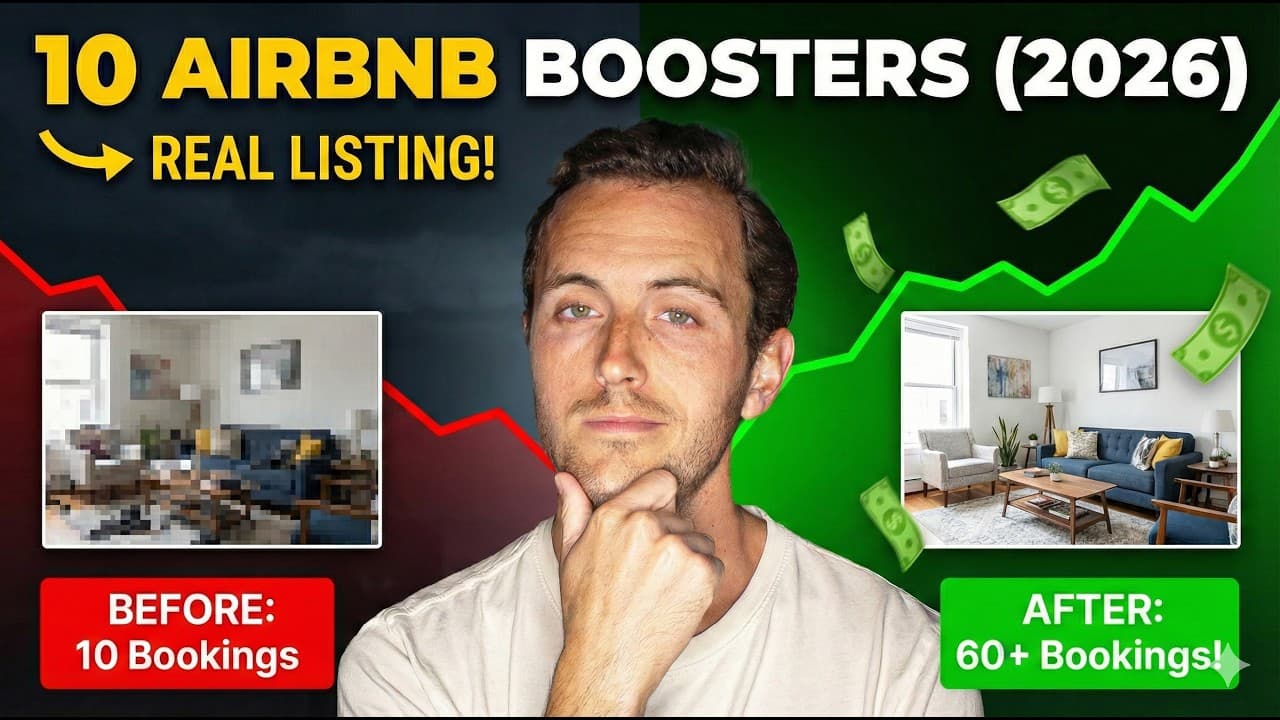
10 ESSENTIAL Steps to Improve Your Airbnb in 2026 (Real Listing Example!)
Most Airbnb listings lose bookings to the same fixable mistakes: bad photos, weak headlines, incomplete amenities, and missed seasonal opportunities. Here are 10 proven strategies to turn any underperforming listing into a consistent booking machine in 2026.
January 1, 2026 · 11 min read

10 Game-Changing Hacks to Improve Your Airbnb
What does it really mean to run a successful Airbnb in 2026? These 10 practical hacks — including a $15 sensor that prevented $44,000 in property damage — show exactly what separates top hosts from average ones.
January 16, 2025 · 9 min read

10 Tips to Get More Views on Airbnb
More views mean more bookings, and more bookings mean more revenue. This guide breaks down 10 actionable Airbnb listing optimization strategies that help hosts climb the search rankings and fill their calendars in 2026.
March 26, 2024 · 14 min read