How James Svetec Got Started on Airbnb: Blog Video
By James Svetec · October 8, 2020 · 8 min read
Part of our Airbnb Hosting 101 guide →
Key Takeaways
- You don't need hospitality, real estate, or sales experience to start managing Airbnbs for others — James had none of those when he started.
- Rental arbitrage carries real financial risk; co-hosting (managing for a percentage fee) eliminates the need for upfront capital.
- The win-win offer is everything — property owners sign on when they see clear, tangible value for themselves.
- James grew to consistently rank properties in the top 5–10% of over 15,000 Toronto listings by focusing on systems and optimization.
- Building automated systems for cleaning, guest communication, and maintenance is what creates lifestyle freedom — not just revenue.
This blog video covers one of the most-requested topics in the BNB Mastery community: how James Svetec actually got started managing properties on Airbnb. No prior hospitality experience, no real estate background, no startup capital — just a failed watch business, a one-way ticket to Thailand, and a business model he pieced together from scratch.
Watch the full video above or keep reading for the complete breakdown.
The Origin Story: From Debt to Thailand
James Svetec's path into Airbnb co-hosting didn't start with a clever business plan. It started with a failed watch business, a pile of debt, and a one-way flight to Thailand booked on the last available credit on his card.
He had designed and manufactured his own watches, trying to build a brand from China. The business was volatile — big sales one month, nothing the next — and the inventory costs bled him dry. When it collapsed, James was heavily in debt and wanted nothing to do with a traditional nine-to-five job.
Thailand became the unlikely setting for his next chapter. While staying at an Airbnb there, he started thinking: someone could probably help these property owners manage their listings more effectively. That single observation kicked off everything that followed.
This kind of unconventional start is more common than people think. Many successful co-hosts today began with zero industry experience. The business doesn't require credentials — it requires the right model and a willingness to figure things out.
Discovering the Co-Hosting Model
James's core insight was simple but powerful: you don't need to own property to make money on Airbnb. Traditional property management companies had been doing this for decades — managing assets for a percentage fee. The question was whether the same model could work for short-term rentals.
The answer was yes. Co-hosting, at its core, means managing someone else's Airbnb property in exchange for a management fee — typically 10–30% of revenue. The property owner keeps the asset and most of the income. The co-host handles the day-to-day operations: listing optimization, guest communication, cleaning coordination, pricing, and reviews.
For someone with no capital to invest, this model was a revelation. There's no lease to sign, no furniture to buy, no inventory sitting idle. The main investment is time and operational skill.
If you want to understand how this model stacks up against other approaches, the breakdown in Airbnb hosting vs. co-hosting vs. investing is worth reading before you decide which path fits your situation.
Why Rental Arbitrage Was a No-Go
Before landing on co-hosting, James looked at rental arbitrage — a popular model where you sign a 12-month lease on a property, then sublease it on Airbnb for more than the monthly rent.
On paper, it sounds appealing. In practice, it carries serious risks:
- Upfront capital required — first month's rent, last month's rent, furnishing costs, and deposits add up fast.
- Monthly income is unpredictable — a slow month on Airbnb means you're still on the hook for rent.
- Landlord agreements are tricky — many lease agreements prohibit subletting, and getting explicit written permission isn't always easy.
- Regulatory exposure — in many cities, arbitrage operators face increased scrutiny from both platforms and local governments.
For James, coming off a failed business with debt already stacking up, taking on fixed monthly obligations without guaranteed income was not an option. Co-hosting removed that risk entirely. If a property has a slow month, the co-host earns less — but owes nothing.
For a more detailed comparison, this full comparison of Airbnb investing vs. arbitrage covers the risk profiles of both models in depth. The risks of Airbnb arbitrage post also breaks down what hosts often overlook before signing a lease.
Landing the First Client
James flew back to Canada with a business model sketched out. What happened next wasn't a flawless launch — his first few property owner meetings were flat-out failures.
He didn't pitch the right things. He focused on what he wanted rather than what property owners cared about. Over several conversations, he started paying attention to what actually resonated: predictable income, no stress, hands-off ownership, and trust that their asset would be well cared for.
His first actual client was a friend who owned a downtown condo but lived outside the city on weekends. The friend wasn't using the property Friday through Sunday — so James offered to manage it on Airbnb in exchange for a 10% management fee to start, increasing to 20% once he proved the model worked.
That first property became his training ground. He made mistakes — underpriced listings, overpriced listings, a guest party that nearly ended his management contract before it started. But he refined his approach with each mistake, building a foundation that would eventually scale to dozens of properties.
Free Tool
Grab the Airbnb Nightly Pricing Tool
Grab the exact spreadsheet James uses to set profitable nightly rates — plus a step-by-step setup cheatsheet.
The Win-Win Offer That Changed Everything
The single biggest lesson James took from those early days? Your offer has to be a genuine win for the property owner, not just for you.
This sounds obvious, but it's where most aspiring co-hosts get stuck. They approach property owners thinking about their own income potential. The owners are thinking about something completely different: will this person protect my property? Will guests be screened properly? Will I actually make more money than I would with a long-term tenant?
When James reframed his pitch around the owner's outcomes — consistent monthly revenue, professional management, protection against bad guests — the conversations shifted. Owners stopped hesitating.
A win-win offer in co-hosting typically looks like this:
- The property owner earns more than they would from a long-term rental, with less effort.
- The co-host earns a percentage of that revenue for handling all operations.
- Both parties benefit from strong performance — the co-host is incentivized to optimize, not just collect fees.
This alignment of incentives is why co-hosting as a business model has real staying power. When your revenue grows only when your client's revenue grows, you're genuinely on the same team.
Hosts who want a structured system for building this kind of client relationship can explore BNB Mastery's Co-Hosting Program, which walks through the exact pitch frameworks and onboarding processes James developed over years of trial and error.
Scaling to Top Listings in Toronto
Once the offer was dialed in, growth came from two things: performance and referrals.
James focused obsessively on optimizing each property — pricing, listing copy, photography, guest experience. The results were measurable. His managed properties consistently ranked in the top 5–10% of all Airbnb listings in Toronto, a market with over 15,000 active listings at the time. Some properties reached the top 0.01% — literally top 10 listings in the entire city.
Strong performance meant happy property owners. Happy property owners refer their friends. Word-of-mouth growth is the most efficient acquisition channel a co-hosting business can have — and it costs nothing.
Eventually, demand outpaced capacity. James had a month-long waiting list of property owners who wanted to work with him. That's a good problem to have, but it forced a new challenge: how do you onboard clients faster without dropping quality? His team compressed the time from initial agreement to a live, optimized listing down to approximately one week.
For hosts who want to understand what separates top-performing listings from average ones, the post on must-do Airbnb listing tips is a practical starting point.
Building Systems for Freedom
Revenue was never the only goal. James wanted a business that gave him genuine freedom — the ability to work from anywhere, without being glued to his phone at midnight answering guest messages.
That meant systematizing everything:
- Guest communication — templated responses and eventually a virtual assistant to handle inquiries around the clock.
- Cleaning scheduling — a system where cleaners could self-schedule based on booking calendars, without James coordinating each turnover.
- Maintenance — a vetted list of contractors who could be dispatched by staff, not by James personally.
- Onboarding — a repeatable process for bringing a new property from signed agreement to live listing in under seven days.
Building these systems took roughly a year to 18 months. It wasn't fast, and it required making and fixing a lot of mistakes. But the result was a business James could work on rather than in — a critical distinction for anyone who wants real lifestyle flexibility from this model.
Connecting with other hosts who are actively building and refining similar systems can accelerate this process dramatically. The BNB Tribe community brings together co-hosts and STR operators who share what's working in real time — far faster than figuring it out through trial and error alone.
What This Means for You in 2026
The co-hosting model James stumbled into in Thailand is arguably more accessible today than it was when he started. The tools are better — dynamic pricing software, automated messaging platforms, and professional photography services are all widely available. The training resources exist. The market is mature enough that property owners understand Airbnb and are actively looking for trusted managers.
What hasn't changed: you still need a compelling offer, a system for delivering results, and the patience to learn from early mistakes.
James built his business without any of the shortcuts available now. In 2026, someone starting from scratch doesn't need a year and a half of trial and error to figure out what works. The blueprint already exists.
For anyone serious about building a co-hosting business, the same foundational advice applies now as it did then: focus on delivering exceptional value, treat every property owner as a long-term partner, and build systems that let the business run without you in every decision.
That combination — value, trust, and systems — is what turns a side income into a real business.
Frequently Asked Questions
How did James Svetec get started managing Airbnb properties?
James started co-hosting after a failed watch business left him in debt. While staying at an Airbnb in Thailand, he identified the property management model — managing listings for a percentage fee — as a low-risk way to earn income without owning real estate. His first client was a friend with a downtown condo he wasn't using on weekends.
Do you need experience in real estate or hospitality to start co-hosting on Airbnb?
No. James had no real estate, hospitality, or data analysis background when he started. Co-hosting requires operational skill, strong communication, and a willingness to learn — not industry credentials. Many successful co-hosts in 2026 started with no relevant experience.
What is the difference between Airbnb co-hosting and rental arbitrage?
Co-hosting means managing someone else's property for a percentage of revenue — no upfront capital required. Rental arbitrage involves signing a lease and subletting on Airbnb for a profit, which requires capital and carries fixed monthly costs. Co-hosting has significantly lower financial risk.
How much can an Airbnb co-host earn per property in 2026?
Co-hosts typically charge 10–30% of a property's monthly Airbnb revenue. A well-performing property generating $4,000/month would earn the co-host $400–$1,200 per month. Revenue scales with the number of properties under management and how well each listing performs.
How long does it take to build a full-time Airbnb co-hosting business?
James took roughly a year to 18 months to fully systematize his business and step out of daily operations. With structured training and proven systems available in 2026, many co-hosts land their first client within a few weeks and build a full portfolio within several months.
Co-hosting works because it aligns your income directly with your client's success — the better the listing performs, the more everyone earns. If you're serious about building this kind of business in 2026, the fastest path forward is learning from someone who has already made the mistakes. BNB Mastery's Co-Hosting Program provides the step-by-step framework James wishes he had when he started — covering everything from landing your first client to systematizing operations across multiple properties. And if you want ongoing support from a community of active hosts, the BNB Tribe is where those conversations happen daily.
Free Tool
Grab the Airbnb Nightly Pricing Tool
Grab the exact spreadsheet James uses to set profitable nightly rates — plus a step-by-step setup cheatsheet.
Ready to get started with Airbnb?
Join 240+ members in BNB Tribe — the community James built for hosts and investors who want real results.
Join BNB TribeMore Articles
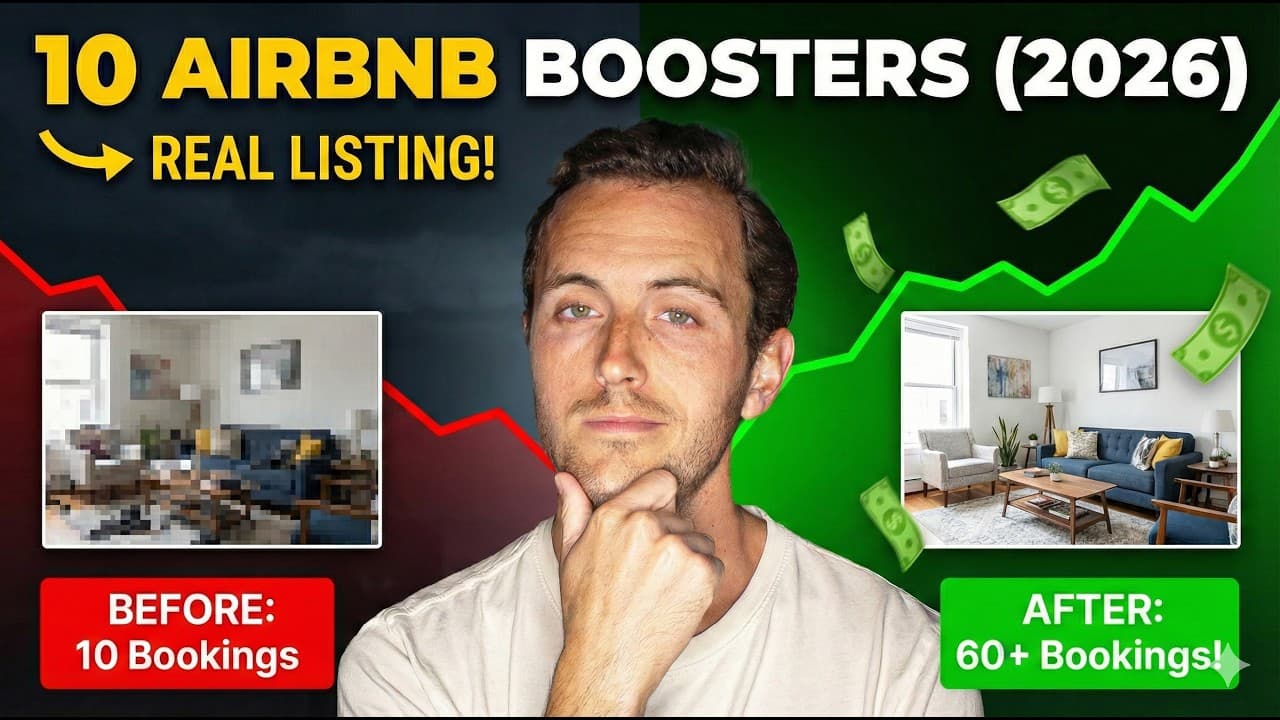
10 ESSENTIAL Steps to Improve Your Airbnb in 2026 (Real Listing Example!)
Most Airbnb listings lose bookings to the same fixable mistakes: bad photos, weak headlines, incomplete amenities, and missed seasonal opportunities. Here are 10 proven strategies to turn any underperforming listing into a consistent booking machine in 2026.
January 1, 2026 · 11 min read

10 Game-Changing Hacks to Improve Your Airbnb
What does it really mean to run a successful Airbnb in 2026? These 10 practical hacks — including a $15 sensor that prevented $44,000 in property damage — show exactly what separates top hosts from average ones.
January 16, 2025 · 9 min read

10 Tips to Get More Views on Airbnb
More views mean more bookings, and more bookings mean more revenue. This guide breaks down 10 actionable Airbnb listing optimization strategies that help hosts climb the search rankings and fill their calendars in 2026.
March 26, 2024 · 14 min read