How to Get Bookings on a New Airbnb Listing in 2026
By James Svetec · January 28, 2021 · 8 min read
Part of our Airbnb Hosting 101 guide →
Key Takeaways
- Airbnb's algorithm tests new listings in the first 2-4 weeks — your early performance determines your long-term search ranking.
- Launching with slightly lower prices generates more initial bookings, which trains the algorithm to show your listing to more guests.
- Never launch a listing before it's fully ready — weak early performance is harder to recover from than a delayed launch.
- Don't stress about revenue in the first two months. Focus on bookings, not nightly rate.
- By months three, four, and five, a well-launched listing should be hitting peak performance — that's when you raise prices.
Getting bookings on a new Airbnb listing is one of the most important skills any host or co-host can develop — and this blog video breaks down exactly how to do it right.
The first few weeks after a listing goes live are make-or-break, and most hosts don't realize it until they've already made mistakes that cost them months of lost revenue.
Watch the full video above or keep reading for the complete breakdown.
Why Early Bookings Matter More Than Early Revenue
Most new hosts focus on the wrong thing when launching a listing. They want to maximize nightly rate right out of the gate — which makes intuitive sense. But that approach tends to backfire badly.
The real goal in the first few weeks isn't to maximize how much each booking earns. It's to maximize the number of bookings. These are not the same thing, and confusing them is one of the most expensive mistakes a new Airbnb host can make.
Here's the core reason: Airbnb's algorithm is watching. When a new listing launches, Airbnb is gathering data to figure out whether guests actually want to book your property. The more people book, the more the platform surfaces your listing to future guests.
The fewer people book — even if it's because your price is too high — the more the algorithm deprioritizes you.
Think of it this way: a listing that earns $2,800 in its first month through consistent bookings at a modest rate will almost always outperform a listing that earned $3,200 from a handful of high-rate bookings — because the first listing builds search ranking momentum that compounds for months afterward.
How the Airbnb Algorithm Tests New Listings
Airbnb gives every new listing an initial traffic boost. This is well-documented among experienced hosts and aligns with how most two-sided marketplace platforms operate. When you go live, Airbnb essentially places your listing in front of a meaningful pool of potential guests to see what happens.
What happens next is what defines your listing's long-term trajectory.
- If guests book: Airbnb's algorithm registers demand. Your listing gets shown to more people. Rankings improve. Bookings compound.
- If guests scroll past: The algorithm interprets low conversion as weak demand. Your listing gets deprioritized. You lose the initial boost, and recovery is slow and difficult.
James Svetec describes this using a useful mental model: imagine being dropped halfway up a mountain. Your early performance determines whether you hold that position and climb higher, or slide back to the bottom and have to claw your way up from scratch.
That initial two-to-four-week window is your one chance to establish position. Squander it with a price that's too high or a listing that isn't fully dialed in, and you're fighting uphill for months. Nail it, and growth becomes much more natural from there.
For hosts managing multiple properties, understanding this dynamic is especially critical. Check out this breakdown of essential Airbnb listing tips for a deeper look at the setup side of this equation.
The Launch Pricing Strategy: Why Lower Is Smarter
The pricing strategy for a new listing is counterintuitive — and that's exactly why so many hosts get it wrong.
The recommendation is simple: launch with prices slightly below your target rate. Not dramatically lower. Not so low that you attract problematic guests or signal poor quality. Just low enough that your listing is competitively positioned to convert the traffic Airbnb sends your way.
How Much Lower Should You Go?
A common starting point is pricing 10-20% below comparable listings in your market. If similar properties are averaging $150/night, launching at $120-$135 is a reasonable starting point. Once you've accumulated reviews and established booking history, you can start nudging prices upward — gradually, not in one dramatic jump.
The math here is important. Say you're debating between $130/night and $160/night at launch. At $130, you might get 18 nights booked in month one. At $160, maybe 10. That's $2,340 versus $1,600. You earn more at the lower rate — and you're building algorithm momentum that pays dividends in months two, three, and beyond.
Pro tip: Use Airbnb's Smart Pricing tool cautiously during the launch phase. It can default to rates that are too conservative or too aggressive depending on your market. Manual pricing based on comp research tends to give you more control during this critical window.
For hosts who want to understand how to analyze pricing and returns more systematically, the BNB Investing Blueprint covers market analysis and financial modeling in detail — useful whether you're hosting your own property or evaluating a potential acquisition.
Set Up Your Listing Perfectly Before You Launch
This is non-negotiable. Do not launch early with mediocre photos, incomplete furnishing, or a placeholder description just to grab a few extra days of availability. The cost of doing so almost always exceeds the benefit.
Here's why: those early bookings you'd gain by launching one week sooner are low-stakes. The bookings you lose in months two, three, and four because your listing underperformed during the algorithm's testing window — those are high-stakes. The math doesn't favor rushing.
Free Tool
Grab the Airbnb Nightly Pricing Tool
Grab the exact spreadsheet James uses to set profitable nightly rates — plus a step-by-step setup cheatsheet.
What "Fully Ready" Actually Means
- Professional or high-quality photos: Natural lighting, wide-angle shots, every room represented. This is the single highest-impact element of any listing.
- Complete and compelling listing copy: Title, description, house rules, amenities — all filled out thoughtfully.
- Pricing set intentionally: Not default Airbnb Smart Pricing, but researched comps with a deliberate launch-rate strategy.
- The space fully staged and furnished: Guests should be wowed from the first photo. First impressions in search results are everything.
- Calendar open well in advance: More on this below.
Cutting corners on any of these elements degrades conversion rate, which directly hurts algorithm performance. A listing that looks "almost ready" will perform like a listing that is almost ready — which is not good enough during the testing phase.
For a detailed walkthrough of what an optimized listing looks like in practice, the Airbnb listing breakdown is worth reading alongside this post.
The First Two Months: What to Expect
One of the most common mistakes new hosts make is comparing their month-one or month-two performance to a fully mature listing. That comparison will always make you feel like you're failing — even when you're actually doing everything right.
Here's a structural reality of how Airbnb bookings work: when you first launch, your calendar is only visible to last-minute bookers. Someone searching for travel three months out won't see your listing as an option until your calendar has three months of availability open.
That means for the first 60 or so days, you're essentially competing only for short-lead bookings. The pool of potential guests is smaller. The booking volume will reflect that — and that's completely normal.
The practical implication: don't stress over low revenue in months one and two. Focus on what you can control — getting bookings, earning positive reviews, and responding to guests quickly. Those actions build the foundation. The revenue follows.
Connecting with other hosts who've been through this process can make the early uncertainty much easier to manage. The BNB Tribe community is a good place to ask questions, share launch experiences, and get feedback from hosts who've already navigated the early-listing phase.
Scaling to Peak Performance by Month Three
If you've followed the launch strategy — competitive pricing, fully optimized listing, calendar open far in advance — month three is when performance starts to compound meaningfully.
By this point, several things have changed in your favor:
- You have reviews, which dramatically increase conversion rate.
- Your calendar has real advance availability, so you're capturing long-lead bookers.
- The algorithm has registered consistent demand and is surfacing your listing more prominently in search.
- You have pricing data from real bookings to inform smarter rate decisions.
This is the moment to start increasing prices toward your target rate — methodically, not all at once. Watch your occupancy rate. If it stays strong as you increase rate, keep going. If it dips, hold steady for a few weeks before pushing higher again.
For hosts managing properties for other people, this three-month ramp-up is something to communicate clearly to property owners upfront. Setting expectations around the launch phase prevents misunderstandings and protects the relationship. For more on building a co-hosting business the right way, BNB Mastery's Co-Hosting Program walks through everything from landing clients to managing listings at scale.
It's also worth understanding how performance in the STR space compares to other rental models. Posts like this look at the differences between Airbnb management and investing — useful context for anyone deciding which path makes more sense for their situation in 2026.
Getting Your Airbnb Listing Right the First Time
The launch phase of a new Airbnb listing is not just about getting a few early bookings. It's about sending the right signals to Airbnb's algorithm during the window when those signals carry the most weight.
Every decision made in those first two to four weeks — pricing, listing quality, calendar availability — shapes how the listing performs for months afterward.
The core strategy from this blog video comes down to three things: launch fully prepared, price to convert, and play the long game. Hosts who treat the first two months as a foundation-building phase — rather than a revenue-maximizing phase — consistently come out ahead by month three and beyond.
Whether you're hosting your own property or building a co-hosting business managing listings for others, these principles apply equally. Getting the launch right isn't just a nice-to-have. Done correctly, it's worth thousands of dollars in additional revenue over the life of the listing.
"Frequently Asked Questions
How do I get my first bookings on a new Airbnb listing?
The most effective approach is to launch with competitive pricing — typically 10-20% below similar listings in your market — to generate bookings quickly and signal strong demand to Airbnb's algorithm. Make sure your listing is fully optimized with professional photos and a complete description before you go live. Early bookings build search ranking momentum that compounds over the following months.
How long does it take for a new Airbnb listing to get bookings?
Most new listings see their first bookings within days of launching, especially with competitive pricing and a well-optimized listing. However, the first two months are primarily driven by last-minute bookers since advance-search traffic takes time to accumulate. By month three, a well-launched listing should be performing at or near its full potential.
Does Airbnb give new listings a boost in search rankings?
Yes — Airbnb's algorithm typically gives new listings an initial visibility boost to gather data on guest demand. How well the listing converts that traffic into bookings determines whether the algorithm continues to show it prominently. Hosts who capitalize on this window with competitive pricing and a strong listing setup tend to maintain and improve their search position.
Should I use Airbnb Smart Pricing for a new listing in 2026?
Smart Pricing can be a useful tool, but it's generally better to set manual pricing during the launch phase so you have precise control over your nightly rate. Research comparable listings in your market and price intentionally below your target rate at launch, then increase gradually as bookings and reviews accumulate.
Is it worth waiting to launch an Airbnb listing until it's fully ready?
Yes — in almost every case, waiting a week or two to launch with a fully optimized listing outperforms launching early with mediocre photos or incomplete setup. The early algorithm testing window is too important to waste on a listing that isn't fully prepared. A weak launch can cost far more in long-term lost bookings than a short delay.
The launch phase is where most new hosts quietly lose thousands of dollars — not through bad luck, but through avoidable mistakes. If you're building a co-hosting business and need to get this right across multiple listings, BNB Mastery's Co-Hosting Program walks through the full system for launching, managing, and scaling Airbnb properties for other people. And if you want to compare notes with hosts who've already been through it, the BNB Tribe community is a practical resource worth joining.
Free Tool
Grab the Airbnb Nightly Pricing Tool
Grab the exact spreadsheet James uses to set profitable nightly rates — plus a step-by-step setup cheatsheet.
Ready to get started with Airbnb?
Join 240+ members in BNB Tribe — the community James built for hosts and investors who want real results.
Join BNB TribeMore Articles
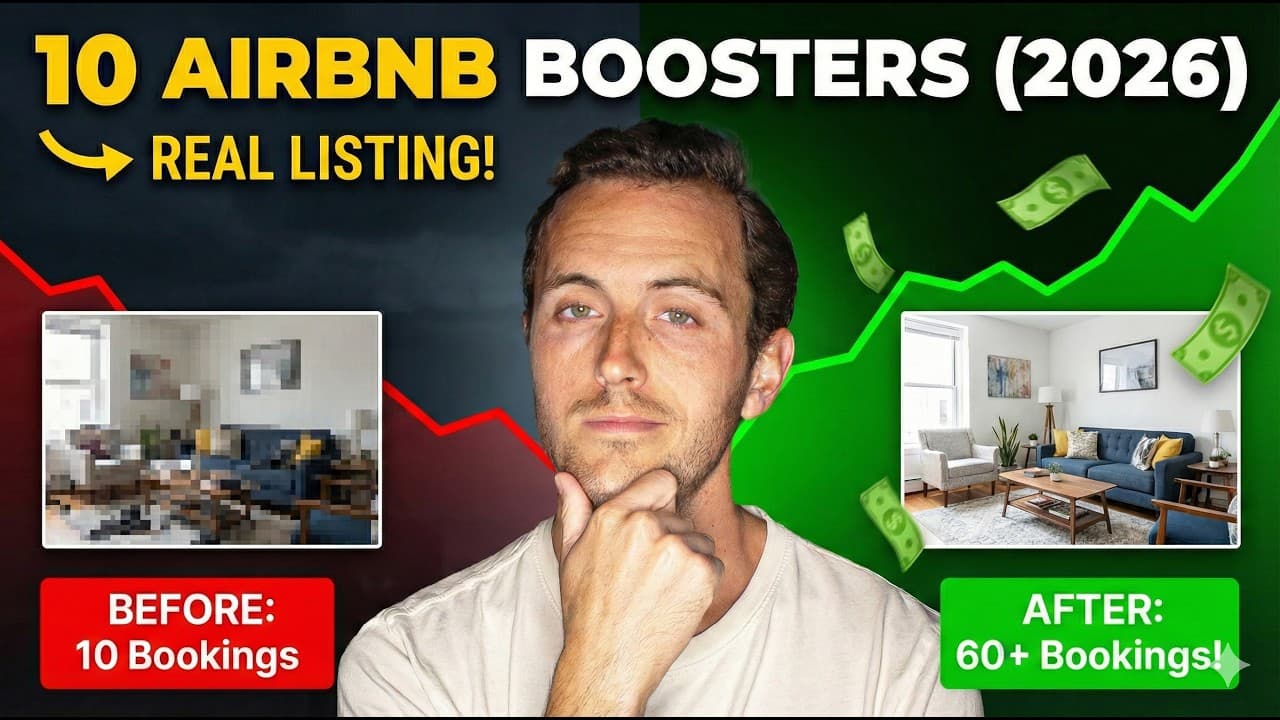
10 ESSENTIAL Steps to Improve Your Airbnb in 2026 (Real Listing Example!)
Most Airbnb listings lose bookings to the same fixable mistakes: bad photos, weak headlines, incomplete amenities, and missed seasonal opportunities. Here are 10 proven strategies to turn any underperforming listing into a consistent booking machine in 2026.
January 1, 2026 · 11 min read

10 Game-Changing Hacks to Improve Your Airbnb
What does it really mean to run a successful Airbnb in 2026? These 10 practical hacks — including a $15 sensor that prevented $44,000 in property damage — show exactly what separates top hosts from average ones.
January 16, 2025 · 9 min read

10 Tips to Get More Views on Airbnb
More views mean more bookings, and more bookings mean more revenue. This guide breaks down 10 actionable Airbnb listing optimization strategies that help hosts climb the search rankings and fill their calendars in 2026.
March 26, 2024 · 14 min read