How to Hack the Airbnb Algorithm for More Bookings in 2026
By James Svetec · January 27, 2022 · 9 min read
Part of our Airbnb Hosting 101 guide →
Key Takeaways
- Launch with a fully optimized listing — professional photos, a compelling title, and polished description — before going live, not after.
- Airbnb gives new listings a visibility boost in the first hours and days, so your conversion rate during launch determines your long-term ranking.
- Temporarily underprice your listing at launch to maximize early bookings and signal to Airbnb's algorithm that your property converts well.
- Use Airbnb's built-in 'new listing' discount feature to attract early guests and build your conversion history fast.
- Poor conversion rates trigger a downward spiral — fewer views lead to fewer bookings, which leads to even fewer views.
Understanding how to hack the Airbnb algorithm is one of the highest-leverage skills any short-term rental host can develop. In this blog video, James Svetec of BNB Mastery breaks down the exact launch strategy he's used and taught to help hosts generate significantly more bookings — not through shady tactics, but by working with how Airbnb's search system actually operates.
Watch the full video above or keep reading for the complete breakdown.
Why the Airbnb Algorithm Matters More Than You Think
Airbnb isn't just a listing directory — it's a search engine. Like Google, it decides which properties show up first, which get buried, and which hosts walk away with consistent bookings while others wonder why their calendar is empty.
The hosts who understand this dynamic operate in a completely different league. They don't just list a property and hope for the best. They engineer their launch, manage their conversion signals, and build ranking momentum that compounds over time.
Here's the core mechanic: Airbnb's algorithm is designed to show guests the properties most likely to get booked. That's it. Every decision Airbnb makes about search ranking comes back to one question — if we show this listing to 100 people, how much money does Airbnb make?
That calculation accounts for your click-through rate, your booking conversion rate, and the value of each booking. Nail all three, and the algorithm rewards you with more visibility. Miss any one of them, and you start sliding down the rankings.
Day Negative One: Build a Perfect Listing Before You Launch
Most hosts think about optimization as something they do after launching. They get the listing live, see how it performs, then tweak. That approach costs them — badly — because of how Airbnb treats brand-new listings.
James Svetec calls it Day Negative One: the work you do before your listing ever goes public. The goal is to have your listing as close to perfect as possible at the moment it goes live, not a week later after you swap out the iPhone photos for professional ones.
That distinction matters enormously. Here's what should be dialed in before launch:
- Professional photography — This is non-negotiable. A photographer costs a few hundred dollars. The difference in bookings it produces is not even close. Don't launch without it.
- A compelling title — Your title and cover photo are the first two things guests see in search results. They determine whether someone clicks through to your listing at all.
- A detailed, well-written description — Address guest questions before they ask them. Be specific about the space, the neighborhood, and what makes the property worth booking.
- Pricing set up correctly — More on this in a moment, but your initial pricing strategy should be intentional, not just whatever feels right.
- Complete profile and settings — Go through every section of your Airbnb host profile. Incomplete profiles erode guest trust and hurt conversion rates.
The temptation to launch fast is real — especially if you've already got a property sitting empty. Resist it. A rushed launch with a weak listing can permanently handicap your ranking in that market.
For a deeper look at what separates high-converting listings from average ones, the post on must-do Airbnb listing tips is worth reading before you publish.
How Airbnb's New Listing Boost Actually Works
Here's the part most hosts don't know about — and it changes everything about how you should approach your launch.
When a brand-new listing goes live on Airbnb, the platform deliberately gives it a visibility boost. Your listing gets pushed higher in search results and shown to more guests than it normally would be. This is by design.
Why would Airbnb do this? Simple business logic. Airbnb's growth depends on attracting new hosts. If new hosts come onto the platform, list their property, and get zero bookings, they leave. Airbnb can't afford that.
So they tip the scales in favor of new listings — temporarily — to give them a fighting chance against established properties with dozens of reviews.
This boost is your golden window. It lasts for the first few hours to the first few days of your listing being live. During this window, your listing will be seen by far more potential guests than it will be once the boost fades and the algorithm settles into its normal ranking logic.
The key insight: the boost gives you views. You have to turn those views into bookings. Airbnb can put your listing in front of more people, but it can't make your photos look good or your title compelling. That part is on you.
This is exactly why Day Negative One matters so much. If you've done the work upfront, you'll convert a meaningful percentage of that boosted traffic into actual bookings. If you haven't, the window closes and the algorithm starts to learn that your listing doesn't convert — which triggers a very different set of outcomes.
Conversion Rate Is Everything
Strip away all the complexity and here's what Airbnb's algorithm is actually measuring: conversion rate. Specifically, it's asking — when we show this listing to people, how often does it result in a booking?
That conversion happens in stages:
- A guest sees your listing in search results (impressions)
- They click through to view your full listing (click-through rate)
- They book the property (booking conversion rate)
Each step is influenced by different factors. Your title and cover photo drive step two. Your description, photos, reviews, and pricing drive step three. The algorithm is watching all of it.
When your conversion rate is strong, the algorithm interprets it as a signal: guests like this listing, it makes us money, show it to more people. That's the upward spiral every host wants to be in. More views → more bookings → higher ranking → even more views.
The downward spiral is just as powerful — and far more common. A listing with mediocre photos, a weak title, or pricing that's out of step with the market will have a poor conversion rate.
The algorithm notices, reduces visibility, the listing gets fewer views, gets fewer bookings, and the ranking falls further. Hosts in this spiral often can't figure out why their listing isn't getting traction.
Connecting with other hosts who've navigated these challenges in a community like BNB Tribe can help you spot these issues before they become serious ranking problems.
Free Tool
Grab the Airbnb Nightly Pricing Tool
Grab the exact spreadsheet James uses to set profitable nightly rates — plus a step-by-step setup cheatsheet.
Why You Should Underprice at Launch (And When to Stop)
This is the counterintuitive part of Airbnb's algorithm — and one of the most actionable pieces of advice in this blog video.
At launch, you should deliberately price your listing lower than your target rate. Not dramatically lower, but enough to make your property more attractive than comparable listings in your area. The goal is to maximize booking conversions during that initial visibility window.
Airbnb even has a built-in feature for this: a new listing discount that automatically applies a reduced rate for the first several guests. Turn it on. It's there for a reason, and hosts who use it consistently get more early bookings than those who don't.
The math here is simple. Yes, you'll earn slightly less per booking in the first week or two. But by building a strong conversion history during the boost window, you signal to the algorithm that your listing is valuable.
That pushes you up in search rankings, which drives more organic views and bookings at full price for months — potentially years — to come.
As James Svetec puts it: you're stepping over pennies now to pick up dollars later. Hosts who launch at maximum pricing are doing the opposite — sacrificing long-term ranking momentum to squeeze a little extra out of their first few bookings.
Once you've secured those initial bookings and started collecting reviews, you can gradually move your pricing toward your actual target rate. Monitor your occupancy and adjust from there.
For hosts who want to understand how to structure their pricing strategy over time, the post on five tips for Airbnb success covers this alongside other key performance levers.
Maintaining Long-Term Algorithm Health
Getting a strong launch is step one. Sustaining your ranking is an ongoing job.
Once the new listing boost fades, your position in search results is determined entirely by your historical performance. Airbnb's algorithm looks at your recent conversion rate, booking frequency, review score, and overall revenue per view. Keep all of those healthy, and your ranking holds or improves. Let any one of them slip, and you'll feel it in your calendar.
Here's what ongoing algorithm health actually looks like in practice:
- Keep your listing updated — Add new photos seasonally, refresh your description, and make sure your amenities list is accurate. Stale listings signal neglect.
- Price dynamically — Static pricing almost never optimizes revenue. Use a dynamic pricing tool or review your rates weekly based on local demand, events, and competitor pricing.
- Respond to inquiries fast — Response time is a direct ranking factor. Airbnb tracks it. Slow responses hurt your visibility.
- Maintain a high review score — A drop below 4.7 or 4.8 stars noticeably affects search placement. Guest experience isn't just a hospitality issue — it's an SEO issue.
- Avoid cancellations — Host-initiated cancellations are penalized heavily by the algorithm. Never cancel unless it's absolutely unavoidable.
Hosts managing multiple properties — or those thinking about managing properties for other owners — need systems to keep all of these factors optimized across their entire portfolio. Ad-hoc management doesn't scale. For anyone building a property management business, BNB Mastery's Co-Hosting Program provides the operational frameworks to manage listings at scale without dropping the ball on algorithm health.
And for those who want to understand how STR investing fits into the broader picture, the post on Airbnb hosting vs. co-hosting vs. investing lays out how each model compares.
The Bottom Line on Hacking the Airbnb Algorithm
Hacking the Airbnb algorithm isn't about tricks or shortcuts. It's about understanding the incentive structure Airbnb has built and working with it instead of against it. The platform wants to show guests listings that convert. Your job is to be that listing — especially during the critical launch window when the visibility boost is active.
Start on Day Negative One. Build a listing that's worth booking before you ever make it public. Use the new listing discount, price competitively at launch, and let early conversions do the work of establishing your ranking. Then maintain that ranking by keeping every performance metric healthy over time.
Hosts who get this right don't just get more bookings. They build a sustainable, compounding advantage in their market — one that's very hard for a competitor to knock them off once it's established. That's what algorithm mastery actually looks like in 2026.
Frequently Asked Questions
How does Airbnb's search algorithm decide which listings to show first?
Airbnb's algorithm prioritizes listings that convert views into bookings. It tracks click-through rates, booking rates, review scores, and overall revenue per impression. Listings that consistently convert well get more visibility, while poor-converting listings are shown to fewer guests over time.
Does Airbnb really give new listings a boost in search results?
Yes. Airbnb temporarily boosts new listings in search rankings to help them compete with established properties that have more reviews. This boost typically lasts the first few hours to days after launch, which is why having a fully optimized listing ready at launch is critical.
Should I underprice my Airbnb listing when I first launch it?
Yes, temporarily underpricing at launch is a smart strategy. Lower prices increase your booking conversion rate during Airbnb's new listing visibility boost, which signals to the algorithm that your property converts well. This builds long-term ranking momentum worth far more than a few extra dollars per booking upfront.
Is it still possible to hack the Airbnb algorithm in 2026?
Absolutely. The core algorithm logic — reward listings that convert, penalize those that don't — hasn't changed. In 2026, the fundamentals still apply: optimized listing, professional photos, strategic launch pricing, and consistent performance metrics are the levers that matter most.
What hurts your Airbnb search ranking the most?
The biggest ranking killers are poor conversion rates (caused by bad photos or weak titles), host-initiated cancellations, slow response times, and low review scores. Any of these signals tells the algorithm that showing your listing to guests isn't profitable for Airbnb.
Mastering the Airbnb algorithm is one piece of a larger puzzle. Whether you're optimizing your own listings or building a business managing properties for other owners, having the right framework makes the difference between a listing that struggles and one that dominates its market. The BNB Tribe community is where experienced hosts share what's working right now — including algorithm strategies, pricing tactics, and listing optimizations that are moving the needle in 2026.
Free Tool
Grab the Airbnb Nightly Pricing Tool
Grab the exact spreadsheet James uses to set profitable nightly rates — plus a step-by-step setup cheatsheet.
Ready to get started with Airbnb?
Join 240+ members in BNB Tribe — the community James built for hosts and investors who want real results.
Join BNB TribeMore Articles
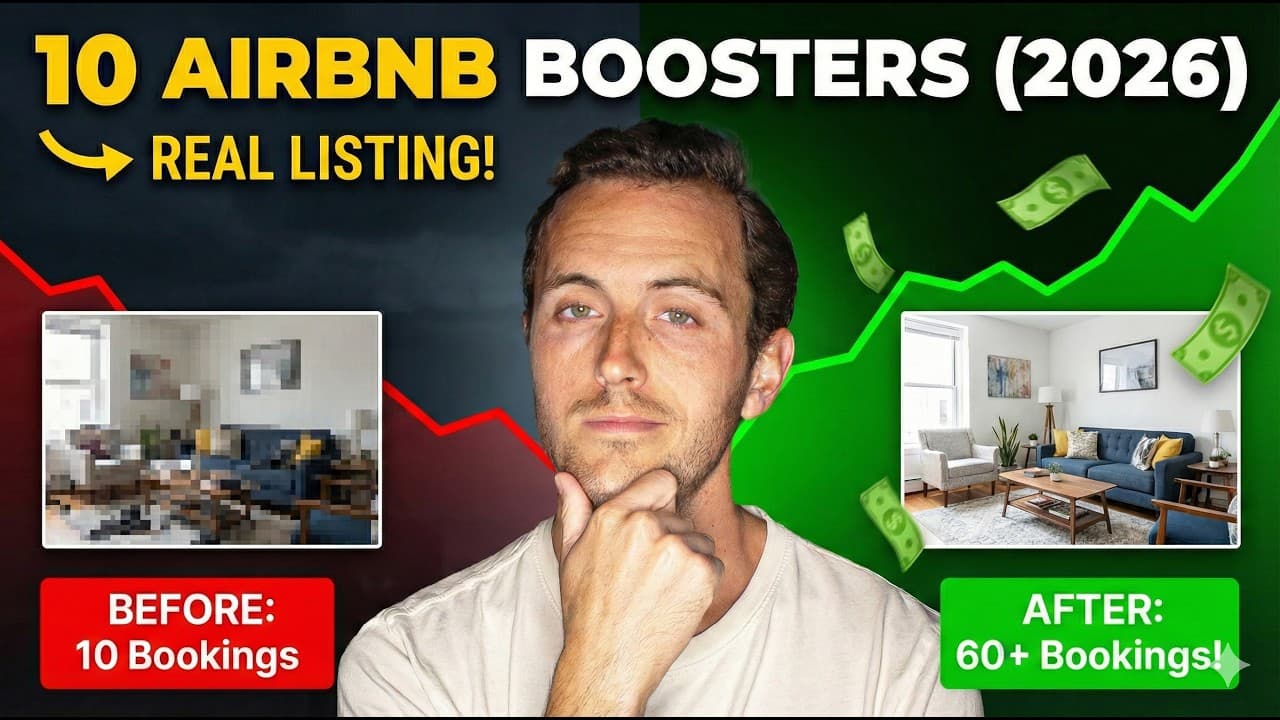
10 ESSENTIAL Steps to Improve Your Airbnb in 2026 (Real Listing Example!)
Most Airbnb listings lose bookings to the same fixable mistakes: bad photos, weak headlines, incomplete amenities, and missed seasonal opportunities. Here are 10 proven strategies to turn any underperforming listing into a consistent booking machine in 2026.
January 1, 2026 · 11 min read
10 Game-Changing Hacks to Improve Your Airbnb
What does it really mean to run a successful Airbnb in 2026? These 10 practical hacks — including a $15 sensor that prevented $44,000 in property damage — show exactly what separates top hosts from average ones.
January 16, 2025 · 9 min read
10 Tips to Get More Views on Airbnb
More views mean more bookings, and more bookings mean more revenue. This guide breaks down 10 actionable Airbnb listing optimization strategies that help hosts climb the search rankings and fill their calendars in 2026.
March 26, 2024 · 14 min read