How to Pitch Landlords on Airbnb: Get 80% to Say Yes
By James Svetec · April 4, 2020 · 9 min read
Part of our Airbnb Hosting 101 guide →
Key Takeaways
- Stop trying to 'convince' landlords — focus on creating a genuine win-win and 80% will say yes on their own
- Property owners are motivated by three things: more income, greater control, and better visibility into their property's condition
- A three-month trial period removes nearly all risk for the landlord and signals your confidence as a manager
- Use a data-driven profitability projection tool to show exactly how much more a property can earn on Airbnb vs. long-term rental
- Make your offer irresistible by lowering perceived risk and presenting conservative, data-backed income projections
Knowing how to pitch landlords on Airbnb is the single most important skill for anyone building a co-hosting business — and most people approach it completely wrong.
This blog video breaks down the exact process James Svetec and his team use to get over 80% of property owners they meet with to say yes, without requiring any upfront money for rent, furniture, or deposits.
Watch the full video above or keep reading for the complete breakdown.
The Biggest Mistake People Make When Pitching Landlords
Most people walk into a landlord meeting asking themselves, "How do I convince this person?" That framing is the problem. Convincing implies that you're pushing someone toward something that may not be in their best interest — and landlords can sense that energy immediately.
The right question is: "How do I show this property owner why working together is genuinely good for them?" That shift in mindset changes everything about how you show up in the conversation.
Great sales — of any kind — come down to delivering real value. If the deal is actually good for the property owner, your job isn't to persuade them. Your job is to make the value obvious. The goal is a win-win arrangement, not a won negotiation.
This is especially important in co-hosting because the relationship doesn't end after the handshake. You need the property owner to trust you, work with you long-term, and refer you to others. A sleazy pitch might land one property. A value-first approach builds a business.
Hosts who want to build that kind of business can explore BNB Mastery's Co-Hosting Program for a structured, step-by-step framework.
Why Property Owners Should List on Airbnb
Before you can pitch yourself as the manager, you sometimes need to pitch Airbnb itself. Many landlords still have properties in long-term rental — and they need a compelling reason to consider switching. There are three primary reasons most property owners respond to.
1. More Money
In virtually every major market across North America, Europe, and Australia, short-term rentals on Airbnb consistently outperform long-term leases on gross revenue. Yes, there's upfront cost to furnishing a property — but the ROI can be two to three times that investment within a single year.
This isn't speculation. It's data. And as this blog video explains, you can show property owners exactly how much more they could be earning using a profitability projection tool — more on that below.
2. More Control
Long-term tenants come with legal protections that can make landlords feel trapped. Depending on the jurisdiction, evicting a bad tenant can take months and cost thousands of dollars. Landlords can't always access the property for renovations, can't use it personally, and have limited recourse when things go wrong.
Short-term rental flips that equation. Between guest stays, the property owner has full control — they can schedule maintenance, use the space themselves, or pivot quickly if regulations change.
3. Visibility
This one is underrated. Property owners with long-term tenants often have no idea what's happening inside their property. With Airbnb, they can read every guest review, check in between stays, and get a real-time window into the condition of their investment. For owners who care about asset preservation, that visibility is genuinely valuable.
For more on why long-term rentals often fall short compared to short-term alternatives, the reasons long-term rentals underperform breakdown is worth reviewing before any landlord meeting.
Why Property Owners Should Want You to Manage It
Once a property owner is sold on Airbnb, the next question is: why should they hire you instead of doing it themselves? The answer comes down to two pain points that almost every self-managing host runs into.
Pain Point 1: Time
Managing an Airbnb is not passive. Guest messaging, cleaning coordination, pricing adjustments, maintenance requests, review management — it adds up fast. Most property owners who try to do this themselves quickly realize they've created a part-time job for themselves.
Your pitch here is simple: you handle all of it. They collect the income, you do the work.
Pain Point 2: Maximizing Returns
Even property owners who are already on Airbnb are rarely optimizing their listings. Pricing strategy, listing quality, photography, guest communication templates, seasonal adjustments — most self-managing hosts leave significant money on the table. In practice, this means you can almost always show a property owner how to earn more with professional management than they're currently making on their own.
According to James Svetec, only about 1–5% of the property owners he meets with are already truly optimizing their Airbnb performance. That means 95% of your conversations will be with owners you can genuinely help.
Connecting with a community of experienced co-hosts through the BNB Tribe community can help you sharpen these conversations and learn what's working for other managers in different markets.
The Three-Month Trial Period Strategy
Here's where the pitch gets tactical. One of the most effective tools in this blog video is the concept of a three-month trial period — and it's remarkably simple.
Instead of asking a property owner to sign a long-term management agreement, you propose a trial. The offer sounds something like this:
"I'd rather show you what I can do than ask you to take my word for it. Let's do a three-month trial. If at any point in those three months you're not happy with how I'm managing the property, just let me know and I'll hand it back to you. You'll only pay my management fee for the time I've been managing. No risk, no long commitment."
This approach does two powerful things simultaneously. First, it dramatically lowers the perceived risk for the property owner — the worst-case scenario becomes very mild. Second, it signals confidence. If you weren't good at this, you wouldn't be offering a no-strings-attached trial period.
Most co-hosts who make this offer find that the trial converts into a long-term relationship almost automatically — because if you're doing your job well, why would the owner ever want to go back to managing it themselves?
For hosts managing one property or multiple, understanding what good management looks like operationally is worth studying. The what Airbnb management actually involves breakdown is a useful reference for setting expectations before that first landlord meeting.
Free Tool
Grab the Airbnb Nightly Pricing Tool
Grab the exact spreadsheet James uses to set profitable nightly rates — plus a step-by-step setup cheatsheet.
Using Data to Show Earning Potential
Telling a property owner they can earn more money on Airbnb is one thing. Showing them — with actual numbers — is what moves the needle. This is where a profitability projection tool becomes your most valuable asset in any landlord conversation.
A well-built projection tool pulls data from comparable properties in the area and generates a realistic 12-month revenue estimate for the specific property. It accounts for seasonal fluctuations, typical occupancy rates, and average nightly rates for similar listings. Then it nets out your management fee to show the owner their actual take-home.
Here's why this works so well: the property owner already knows exactly what they're earning now (either from long-term rent or their own Airbnb management). You're showing them the gap — the additional income they're leaving on the table every month. That gap is your value proposition.
Pro tip: Stay conservative in your projections. If you promise $4,500/month and deliver $4,200, the owner is slightly disappointed. If you project $3,800/month conservatively and deliver $4,400, you're a hero. Conservative numbers also build credibility — owners know you're not just inflating figures to win their business.
Data-driven conversations also eliminate the guesswork that makes property owners nervous. This isn't a gamble — it's a documented, evidence-based opportunity. That's a very different conversation than "trust me, it'll do well."
For a deeper look at how to run these numbers accurately, the Airbnb investment analysis with proper data article covers the methodology in detail.
How to Build an Irresistible Offer
The goal of every landlord pitch is to create an offer where saying "no" would be the irrational choice. That's what James Svetec calls an irresistible offer — and it's built on two levers: minimizing risk and maximizing reward.
Minimize the Risk
The trial period handles most of the risk reduction. But you can reinforce it further by being specific about what happens if things don't work out. What does the handoff look like? What happens to existing bookings? Clear answers to these questions remove uncertainty, and uncertainty is what makes property owners hesitate.
The worst-case scenario for a landlord who works with a co-host on a three-month trial is: they paid a 20% management fee for a couple of months, didn't have to do any work during that time, and got their property back with a few upcoming bookings already in the calendar.
That's not a bad outcome. When you frame it that way, the downside almost disappears.
Maximize the Reward — Conservatively
Use your profitability projection to show a realistic upside. The key word is realistic. Inflated promises might win the meeting but lose the relationship three months later when reality doesn't match expectations.
When your projections are conservative and you still outperform long-term rental income — which happens in most markets — the property owner sees a clear, near-certain improvement. That's not a gamble. That's a logical business decision.
What This Looks Like in Practice
James Svetec's client Ray is a good example. After building a small portfolio of managed properties by nailing this pitch, Ray was onboarding 5–10 new properties every time they spoke — without doing any active outreach. Referrals from satisfied property owners were doing the work for him.
His growth bottleneck wasn't finding clients. It was onboarding properties fast enough to keep up with demand.
That's what happens when you build a co-hosting business on a value-first foundation. You don't have to keep pitching. The results pitch for you.
Hosts who want to understand all the business models available before committing to co-hosting should read the Airbnb hosting vs. co-hosting vs. investing comparison to find the right fit for their goals.
Putting It All Together
Pitching landlords on Airbnb successfully comes down to one principle: stop trying to win and start trying to help. When you genuinely understand why a property owner would benefit from Airbnb — more income, more control, more visibility — and you can clearly articulate how you solve their biggest pain points around time and optimization, the pitch writes itself.
Layer in a three-month trial period to eliminate risk, back your income projections with real market data, and keep those projections conservative. That combination creates an offer where a property owner who says "no" is the one leaving money on the table — not you.
The hosts who master this approach stop thinking about pitching at all. They focus on doing great work, and the clients follow naturally. In 2026, with more property owners than ever looking for hands-off income from their real estate, the opportunity to build a thriving co-hosting business has never been more accessible.
Frequently Asked Questions
How do I pitch a landlord to let me manage their property on Airbnb?
Focus on their benefits, not yours. Show the landlord why Airbnb outperforms long-term rental in income, control, and property visibility. Then offer a three-month trial period backed by data-driven income projections to minimize their risk and make the decision easy.
Do I need money to start co-hosting on Airbnb in 2026?
No. Co-hosting means managing properties that belong to someone else, so you don't need to pay rent, buy furniture, or purchase real estate. Your value is your time, systems, and expertise — not your capital.
What percentage of landlords say yes to Airbnb co-hosting pitches?
With the right approach — a value-first mindset, data-backed projections, and a trial period offer — experienced co-hosts report that roughly 80% of property owners they meet with agree to move forward. The key is targeting owners who will genuinely benefit.
What is a co-hosting trial period and why does it work?
A co-hosting trial period is typically a three-month arrangement where the property owner can exit the agreement at any time if they're unsatisfied. It works because it removes nearly all risk for the landlord and signals confidence from the co-host — making the offer far easier to accept.
How much can a co-host earn managing Airbnb properties in 2026?
Co-hosts typically charge 15–25% of gross rental revenue as a management fee. Managing even a single well-performing property can generate $700–$1,200 per month, with full-time co-hosting businesses often managing multiple properties across several markets.
If the landlord pitch process has been holding you back from starting your co-hosting business, the framework in this blog video is a proven starting point — but there's a lot more to building a sustainable management operation than one great meeting. BNB Mastery's Co-Hosting Program walks you through the full system, from landing your first client to scaling to a portfolio of properties. And if you want to compare notes with other co-hosts who are actively doing this work, the BNB Tribe community is where those conversations happen daily.
Free Tool
Grab the Airbnb Nightly Pricing Tool
Grab the exact spreadsheet James uses to set profitable nightly rates — plus a step-by-step setup cheatsheet.
Ready to get started with Airbnb?
Join 240+ members in BNB Tribe — the community James built for hosts and investors who want real results.
Join BNB TribeMore Articles
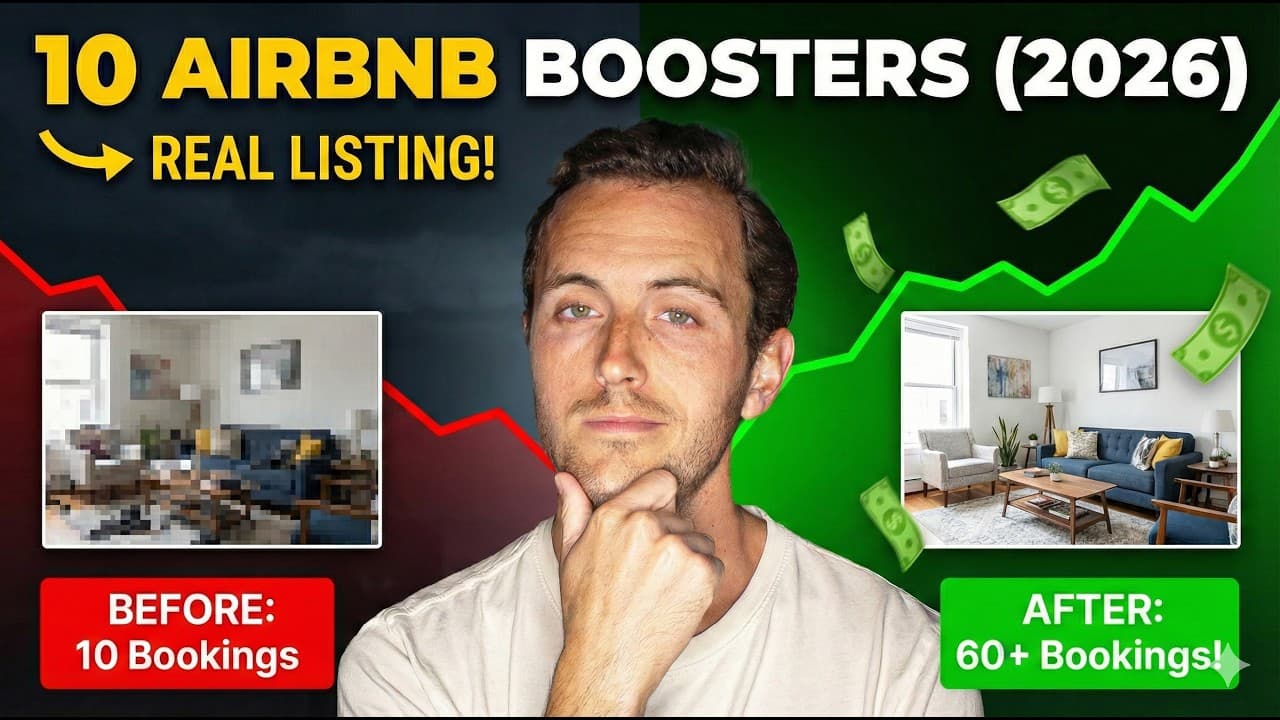
10 ESSENTIAL Steps to Improve Your Airbnb in 2026 (Real Listing Example!)
Most Airbnb listings lose bookings to the same fixable mistakes: bad photos, weak headlines, incomplete amenities, and missed seasonal opportunities. Here are 10 proven strategies to turn any underperforming listing into a consistent booking machine in 2026.
January 1, 2026 · 11 min read

10 Game-Changing Hacks to Improve Your Airbnb
What does it really mean to run a successful Airbnb in 2026? These 10 practical hacks — including a $15 sensor that prevented $44,000 in property damage — show exactly what separates top hosts from average ones.
January 16, 2025 · 9 min read

10 Tips to Get More Views on Airbnb
More views mean more bookings, and more bookings mean more revenue. This guide breaks down 10 actionable Airbnb listing optimization strategies that help hosts climb the search rankings and fill their calendars in 2026.
March 26, 2024 · 14 min read