Reacting to Shelby Church’s “Not Financial Advice”
By James Svetec · March 8, 2023 · 6 min read
Part of our Airbnb Hosting 101 guide →
Key Takeaways
- Anecdotal experience from one bad Airbnb property is not a valid reason to write off an entire asset class — look at market-level data instead.
- Interest rates and purchase prices move together — higher rates often mean lower prices, so the full picture matters more than one variable.
- Buying a property with lifestyle in mind ('if it breaks even, I'm happy') is consumer thinking, not investor thinking — and it leads to bad decisions.
- Use tools like AirDNA to evaluate specific markets with real data, not Twitter posts or YouTube anecdotes.
- Financial leverage, used properly, builds more wealth than buying in cash — don't let fear of interest rates push you into suboptimal strategies.
Reacting to Shelby Church's "Not Financial Advice" video is a useful exercise — not because her content is particularly insightful, but because it's a textbook example of how not to approach short-term rental investing. Understanding where her reasoning breaks down can save hosts and investors from making the same costly mistakes.
Watch the full video above or keep reading for the complete breakdown.
Who Is Shelby Church — and Why This Matters
Shelby Church is a YouTuber who bought a property in Palm Springs and listed it on Airbnb. She has since produced several videos arguing that Airbnb is a bad investment — this video being one of them.
The problem isn't that she had a bad experience. Plenty of people have bad experiences with individual investments. The problem is that she's presenting her one-property, one-market, one-person story as a universal argument against short-term rental investing as a whole.
That's like someone buying BlackBerry stock without doing any research, losing money, and then telling the world not to invest in equities. Warren Buffett and Ray Dalio didn't get wealthy by avoiding the stock market — they got wealthy by doing it properly. The same principle applies to STR investing.
BNB Mastery has covered Shelby's Airbnb journey across multiple videos. If you want more context, check out the expert reaction to Shelby Church losing money on Airbnb or the investor reaction to Shelby Church's Airbnb disaster — both provide additional background that makes this video's claims even clearer.
Anecdotal Experience vs. Actual Market Data
One of the biggest issues in Shelby's analysis is that she treats individual accounts as market signals. She points to a few hosts on Twitter who say bookings are down, cites specific markets like the Smoky Mountains and South Florida, and draws broad conclusions from those data points.
That's not research. That's pattern-matching from a tiny, self-selected sample.
Yes, some markets have seen declines in bookings. But other markets have seen increases. AirDNA — an actual short-term rental data platform — can show you exactly which areas have seen booking growth and which have softened.
A 24% year-over-year increase in Airbnb listings (which Shelby does cite correctly) absolutely affects supply and demand in certain markets. But that stat applies differently in different geographies.
Here's the critical point: you're not buying the entire US short-term rental market. You're buying one property in one market. Macro statistics give you directional context, but they cannot substitute for specific market research.
Looking at broad trends to make a decision about a single property is like looking at the S&P 500's performance to decide whether to buy shares in one specific company.
If you want to understand how to evaluate a specific market properly, this breakdown on how to analyze a short-term rental property is a better starting point than any YouTube commentary.
Interest Rates and Purchase Price: The Full Equation
Shelby makes the argument that rising interest rates have made Airbnb investing unviable. She uses her own Palm Springs property — purchased in 2020 for $750,000 at under 4% — as the baseline, then shows what a similar property would cost at 6%.
The math she runs isn't wrong. Monthly payments are higher at higher rates. But she makes a significant analytical error: she holds purchase price constant while raising the interest rate.
In reality, these two variables move together. When interest rates rise, purchase prices typically come down — especially in markets that experienced significant appreciation. In parts of the US and Canada, property prices fell meaningfully as rates climbed. The monthly payment difference looks alarming in isolation, but if you're paying less for the property itself, the picture changes substantially.
The calculation isn't: same price + higher rate = bad investment. The correct calculation is: adjusted price + current rate + realistic revenue = does this cash flow?
Shelby also references a Zestimate to estimate her property's current value. A Zestimate is an automated algorithm estimate, not a market appraisal. Using it to make investment conclusions says a lot about the rigor of the underlying research.
For a structured way to run actual numbers on an STR deal, the BNB Investing Blueprint walks investors through exactly how to account for all variables — purchase price, financing costs, projected revenue, expenses, and cash-on-cash return — before making a decision.
Free Tool
Grab the Airbnb Nightly Pricing Tool
Grab the exact spreadsheet James uses to set profitable nightly rates — plus a step-by-step setup cheatsheet.
Consumer Mindset vs. Investor Mindset
Perhaps the most revealing moment in Shelby's video comes near the end, when she says something along the lines of: if it just breaks even, I'd be thrilled with that.
No actual investor says that. Ever.
An investor looks at a potential acquisition and asks: what return does this generate? What's the cash-on-cash? What's the cap rate? How does this compare to other uses of this capital? Breaking even is not a success metric — it's a failure to generate any return on a significant capital outlay.
What Shelby describes is consumer behavior dressed up in investment language. She wants a property she loves, in a place she enjoys visiting, that might offset some costs. That's a vacation home. There's nothing wrong with buying a vacation home — but calling it an investment is misleading, both to her audience and to herself.
This distinction matters a lot for people watching her content. Lifestyle creep into investing is one of the most common reasons hosts underperform. When you justify a poor property purchase because you love the location or want to use it yourself, you're not investing — you're rationalizing consumption. Good investment decisions start with the numbers. Any lifestyle benefit comes after.
For a deeper look at the common mistakes that lead to this kind of thinking, this post on the biggest Airbnb investing mistakes is worth reading before making any purchase decisions.
Why Buying in Cash Is Usually the Wrong Move
Shelby argues that one scenario where Airbnb investing might still make sense is if you can buy the property in cash — so that interest rates are irrelevant.
This advice sounds conservative and safe. It's actually financially suboptimal in most cases.
Here's the basic math. If you have $100,000 to invest, you have two options:
- Option A: Buy one property in cash. You own one asset, you get one cash flow stream, you build equity in one property.
- Option B: Use $100,000 as down payments (at 20%) across five properties. You now own five assets, five cash flow streams, five properties appreciating in value — and you're building equity in each of them simultaneously.
Even after accounting for interest costs, the wealth-building math heavily favors Option B. Financial leverage — borrowing money to acquire assets that generate more than the cost of borrowing — is one of the most powerful tools in real estate investing. Avoiding it out of fear of interest rates is a mindset issue, not a strategy.
The exception is narrow: if you're already financially independent and simply want to park money in an appreciating asset without taking on any debt risk, a cash purchase may make sense. But as blanket advice to a general audience,
Frequently Asked Questions
Is Airbnb still a good investment in 2026?
Yes, but it depends entirely on the specific market and property, not broad trends. In 2026, well-researched STR properties in markets with controlled supply and strong demand can still generate strong cash-on-cash returns. The key is doing proper market analysis using tools like AirDNA rather than relying on anecdotal accounts.
Why did Shelby Church lose money on her Airbnb?
Based on her videos, Shelby didn't account for operating expenses beyond the mortgage, didn't conduct proper market research before buying, and applied a consumer mindset to an investment decision. The property was likely not financially viable as an STR from the start.
Should I trust YouTubers for Airbnb investing advice?
Trust anyone who shows you actual data, verifiable numbers, and transparent methodology — not just personal anecdotes. The fact that someone makes money on YouTube doesn't make them untrustworthy, but a single person's experience with one property is never sufficient basis for broad investment conclusions.
How do I research an Airbnb market properly before investing?
Use platforms like AirDNA to look at occupancy rates, average daily rates, revenue trends, and supply growth for your specific target market. Combine that with local permit data, comparable property analysis, and a full cash-flow model that includes all operating expenses — not just the mortgage.
Does buying an Airbnb property in cash make sense?
In most cases, no. Financial leverage allows investors to spread capital across multiple properties, generating more total cash flow and equity than a single cash purchase. Buying in cash only makes sense in specific scenarios, such as when an investor is already financially independent and prefers simplicity over optimization.
If you want to build a real STR portfolio — one based on data, proper cash-flow analysis, and long-term thinking — the BNB Investing Blueprint gives you the exact framework to evaluate deals the right way. And if you want to connect with other serious investors who are doing this successfully right now, the BNB Tribe community is where those conversations happen daily.
Free Tool
Grab the Airbnb Nightly Pricing Tool
Grab the exact spreadsheet James uses to set profitable nightly rates — plus a step-by-step setup cheatsheet.
Ready to get started with Airbnb?
Join 240+ members in BNB Tribe — the community James built for hosts and investors who want real results.
Join BNB TribeMore Articles
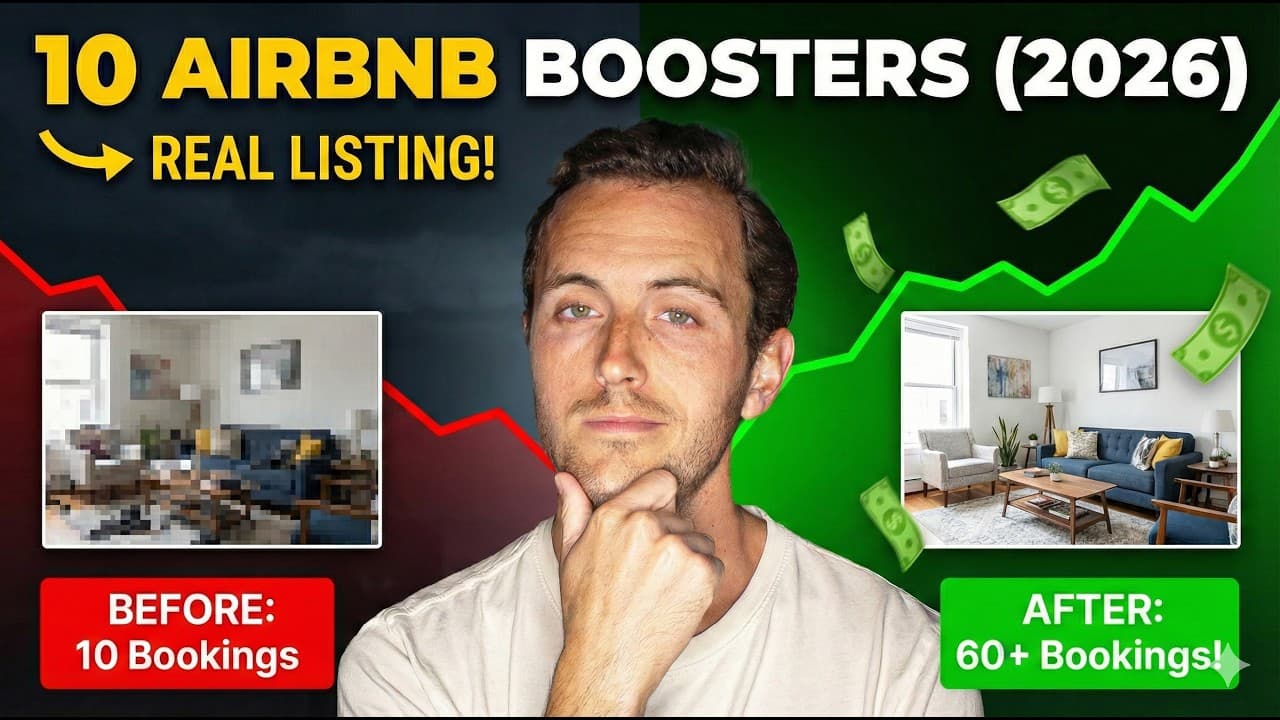
10 ESSENTIAL Steps to Improve Your Airbnb in 2026 (Real Listing Example!)
Most Airbnb listings lose bookings to the same fixable mistakes: bad photos, weak headlines, incomplete amenities, and missed seasonal opportunities. Here are 10 proven strategies to turn any underperforming listing into a consistent booking machine in 2026.
January 1, 2026 · 11 min read

10 Game-Changing Hacks to Improve Your Airbnb
What does it really mean to run a successful Airbnb in 2026? These 10 practical hacks — including a $15 sensor that prevented $44,000 in property damage — show exactly what separates top hosts from average ones.
January 16, 2025 · 9 min read

10 Tips to Get More Views on Airbnb
More views mean more bookings, and more bookings mean more revenue. This guide breaks down 10 actionable Airbnb listing optimization strategies that help hosts climb the search rankings and fill their calendars in 2026.
March 26, 2024 · 14 min read