Earn $10,000/Month on Airbnb Without Owning Property
By James Svetec · June 28, 2022 · 8 min read
Part of our Airbnb Hosting 101 guide →
Key Takeaways
- Managing just 5 high-revenue Airbnb properties can generate $10,000/month in management fees — no property ownership required
- Rural markets and unique properties like geodesic domes, A-frames, and large cabins routinely earn $100,000+ per year
- As a co-host, you earn a percentage of revenue — so higher-earning properties mean bigger management fees with fewer clients
- Rural markets are severely underserved by quality property managers, creating a significant competitive opportunity in 2026
- This business model can be run entirely remotely, giving hosts full freedom over their location and schedule
This blog video breaks down one of the most overlooked income strategies in the short-term rental space: earning $10,000 per month on Airbnb without owning a single property. James Svetec, co-author of Airbnb Unlocked and founder of BNB Mastery, walks through the exact math and market strategy that makes this possible in 2026 — managing as few as five properties.
Watch the full video above or keep reading for the complete breakdown.
The Co-Hosting Model: What It Is and How It Works
Co-hosting — also called Airbnb property management — means managing someone else's short-term rental property in exchange for a percentage of the revenue it generates. The property owner handles the asset. You handle the operations: listing optimization, guest communication, pricing, cleaning coordination, and reviews.
The biggest advantage? Zero upfront capital required. No buying property. No furnishing units. No lease agreements. You build a management business using other people's assets, and you earn a cut of every dollar those properties make.
For anyone looking to build a location-independent income stream, co-hosting is one of the most accessible entry points in real estate today. You're not locked out by high interest rates or down payment requirements — you just need systems, skills, and the right properties to manage.
For hosts looking to build a full co-hosting business from scratch, BNB Mastery's Co-Hosting Program provides a step-by-step framework for landing clients, onboarding properties, and scaling operations without buying a single listing.
The Math: How 5 Properties Equals $10,000/Month
Here's where this blog video gets specific — and the numbers are compelling. If you manage a property that generates $100,000 per year in gross rental revenue, your management fee (typically around 20-25%) comes out to roughly $20,000 to $25,000 per year from a single property. That's $1,666 to $2,083 per month.
Students in BNB Mastery's co-hosting program are reporting management fees of up to $2,000 per month from a single high-performing property. That means:
- 5 properties × $2,000/month = $10,000/month
- Annual income: $120,000 per year
- Properties required: just five
Compare that to managing a dozen budget city apartments bringing in $800/month each. The higher the property's annual revenue, the larger your management fee — and the fewer properties you need to manage to hit your income target. That's a meaningful difference in workload and complexity.
So the core strategy is simple: target high-revenue properties, not high-volume portfolios. Quality over quantity makes this business far more manageable — and far more profitable per hour worked.
Picking the Right Markets for Maximum Revenue
Market selection is the single most important decision a co-host can make. Not all markets are equal. And in 2026, some of the most lucrative opportunities are in places most people would never think to look.
The conventional wisdom has always been to chase major metropolitan areas — New York, Miami, LA. But the data tells a different story. Rural markets, cottage country, and nature-adjacent destinations are consistently outperforming expectations in terms of gross annual revenue per property.
James notes that when analyzing data for North Carolina, he found a geodesic dome — essentially a premium, uniquely designed dwelling — that generated $97,000 in a single year. Not a penthouse. Not a downtown condo. A dome in rural North Carolina.
What makes a strong co-hosting market in 2026? Look for:
- High demand for nature, outdoors, or unique experiences — hiking, lakes, skiing, glamping
- Low supply of professional property management — rural areas are consistently underserved
- Unique or large properties that command premium nightly rates
- Vacation property owners who weren't planning to rent — they're the easiest clients to convert
Understanding how to analyze market data before committing is critical. The post on Airbnb investment analysis using proper data covers how to evaluate revenue potential across different markets before you make a move.
The Property Types That Generate $100K+ Per Year
Not every property type earns equally. One-bedroom urban apartments might pull in $30,000 to $50,000 per year. High-performing rural properties can triple that. The difference comes down to guest experience, uniqueness, and sleeping capacity.
The property types consistently breaking the $100,000 annual revenue threshold include:
- Large cabins and A-frames (4-6+ bedrooms) that accommodate groups and families
- Geodesic domes and glamping structures — unique experiences command premium pricing
- Waterfront or mountain-view properties with strong seasonal demand
- Bungalows and cottages in established vacation destination areas
To illustrate: James's own property — a 3,000-square-foot bungalow (1,500 sq ft above grade) in a rural cottage country area — generated over $150,000 in its first 12 months as an Airbnb. Nothing architecturally dramatic. Just the right property in the right market, managed correctly.
As a co-host managing that property, a 20% management fee would generate $30,000 per year — or $2,500 per month — from a single listing. That's a meaningful slice of the $10,000/month target from just one client relationship.
For a deeper look at how property types affect ROI, the analysis in this post on the best property types for Airbnb is worth reviewing before you start targeting specific listings.
Free Tool
Grab the Airbnb Nightly Pricing Tool
Grab the exact spreadsheet James uses to set profitable nightly rates — plus a step-by-step setup cheatsheet.
Why Rural Markets Are Severely Underserved
Here's the competitive opportunity hiding in plain sight: most property management companies are focused on cities. That's where the traditional industry has always concentrated. But the highest-revenue opportunities in 2026 are increasingly outside city limits.
When James went looking for a property manager for his own $150,000/year cottage property, the only option he found was a company that didn't even list on Airbnb. No OTAs. No dynamic pricing. Just a dated website — and a revenue estimate of $60,000 to $70,000 per year for a property that went on to generate more than double that.
That gap — between what outdated operators deliver and what a skilled co-host can produce — is your opportunity. Property owners in these markets are often:
- Buying vacation homes with no intention of renting them out
- Happy with any income since the property was planned to sit vacant
- Underserved by existing management options or not even aware professional management exists
Low competition. Motivated clients. High-revenue properties. That combination creates an unusually favorable environment for anyone willing to focus on these markets.
Connecting with other co-hosts who are actively working in these markets can sharpen your approach quickly. The BNB Tribe community is a good place to compare notes, get feedback on specific markets, and learn from hosts who are already operating at this level.
Getting Clients and Landing Properties
The question most people have when they hear about co-hosting is: how do I actually find property owners willing to let me manage their Airbnb? It's a fair question — and the answer is more straightforward than most people expect.
In rural vacation markets specifically, many property owners are not actively looking for management. They bought a cottage or cabin for personal use. But once they understand they could be generating $80,000 to $150,000 per year from that asset — with no additional effort on their part — the conversation changes quickly.
Effective approaches for landing co-hosting clients include:
- Direct outreach to vacation property owners in target areas — Facebook groups, local forums, and even neighborhood apps are full of them
- Positioning as a revenue maximizer, not just a manager — show them what comparable properties are earning versus what they're currently making (often nothing)
- Offering a performance-based pitch — if the property doesn't earn, you don't earn. This removes the risk perception for the owner
- Targeting existing underperforming listings where you can make an immediate, demonstrable improvement in bookings and revenue
The key is finding owners whose properties have strong earning potential but weak current management. That's your value proposition in one sentence.
For more on different Airbnb business models and which might be the best fit for your situation, the breakdown on Airbnb hosting vs. co-hosting vs. investing is a useful starting point.
Running the Business Remotely
One of the most attractive features of the co-hosting model is that it doesn't require you to be local. With the right systems in place, this business can be managed entirely remotely — which means geographic freedom and no dependency on any single market.
Remote co-hosting relies on a few core infrastructure pieces:
- A reliable local cleaning team — this is your boots on the ground and your most important hire
- Automated guest communication tools — scheduled messages, pre-check-in sequences, and review requests
- Dynamic pricing software — tools like PriceLabs or Wheelhouse adjust nightly rates automatically
- A property management system (PMS) — centralizes calendars, tasks, and team communications across multiple listings
With these systems running, many co-hosts manage 5 to 10+ properties without ever visiting them in person. The business scales around processes and people, not your personal time and presence.
This is the model James describes for his own cottage property — managed remotely with a skilled local team handling on-the-ground operations. The result is a hands-off income stream that scales predictably as new properties are added.
Is Co-Hosting on Airbnb Still Worth It in 2026?
The short answer is yes — particularly for anyone targeting rural, high-revenue markets. The opportunity described in this blog video hasn't narrowed; if anything, it's expanded as more vacation property owners enter markets that are still underserved by quality management.
The math is clear. Five properties earning $100,000+ per year each produces $10,000/month in management fees. The barriers to entry are low. The competition in rural markets is thin. And the property owners are often motivated, easy to work with, and grateful for any income beyond what they'd planned for.
The harder part is execution — knowing which markets to target, how to find and pitch clients, and how to set up systems that run without your constant involvement. That's where structured guidance makes a real difference. Start by reading up on how Airbnb management businesses scale and what separates operators who grow quickly from those who plateau.
Frequently Asked Questions
How much can you make co-hosting Airbnb properties in 2026?
Co-hosts managing high-revenue rural properties can earn $1,500 to $2,500 per month per property. With five well-chosen listings, $10,000/month — or $120,000/year — is achievable without owning any real estate.
How do you start managing Airbnb properties without owning them?
Start by identifying high-revenue markets, then pitch vacation property owners on a co-hosting arrangement. You manage the listing, guests, and operations; they keep ownership. You earn a percentage of the revenue — typically 15-25%.
What types of Airbnb properties earn the most for property managers?
Large cabins, A-frames, geodesic domes, and waterfront cottages consistently generate $80,000 to $150,000+ per year. These property types command premium nightly rates and attract group bookings, making them ideal for co-hosts targeting high management fees.
Is rural Airbnb property management a good opportunity in 2026?
Yes. Rural vacation markets are significantly underserved by quality property managers. Most management companies focus on cities, leaving rural areas with little professional competition — and properties that are consistently underperforming their revenue potential.
Can you run an Airbnb management business remotely?
Yes. With the right tools — automated messaging, dynamic pricing software, a property management system, and a local cleaning team — most co-hosts manage their entire portfolio without visiting properties in person.
If co-hosting sounds like the right model, the hardest part is usually landing that first property owner and knowing which market to target. BNB Mastery's Co-Hosting Program walks through the entire process — from market research to client pitches to remote management systems — so you're not figuring it out by trial and error. And if you want to connect with other co-hosts already operating in high-revenue rural markets, the BNB Tribe community is where those conversations are happening daily.
Free Tool
Grab the Airbnb Nightly Pricing Tool
Grab the exact spreadsheet James uses to set profitable nightly rates — plus a step-by-step setup cheatsheet.
Ready to get started with Airbnb?
Join 240+ members in BNB Tribe — the community James built for hosts and investors who want real results.
Join BNB TribeMore Articles
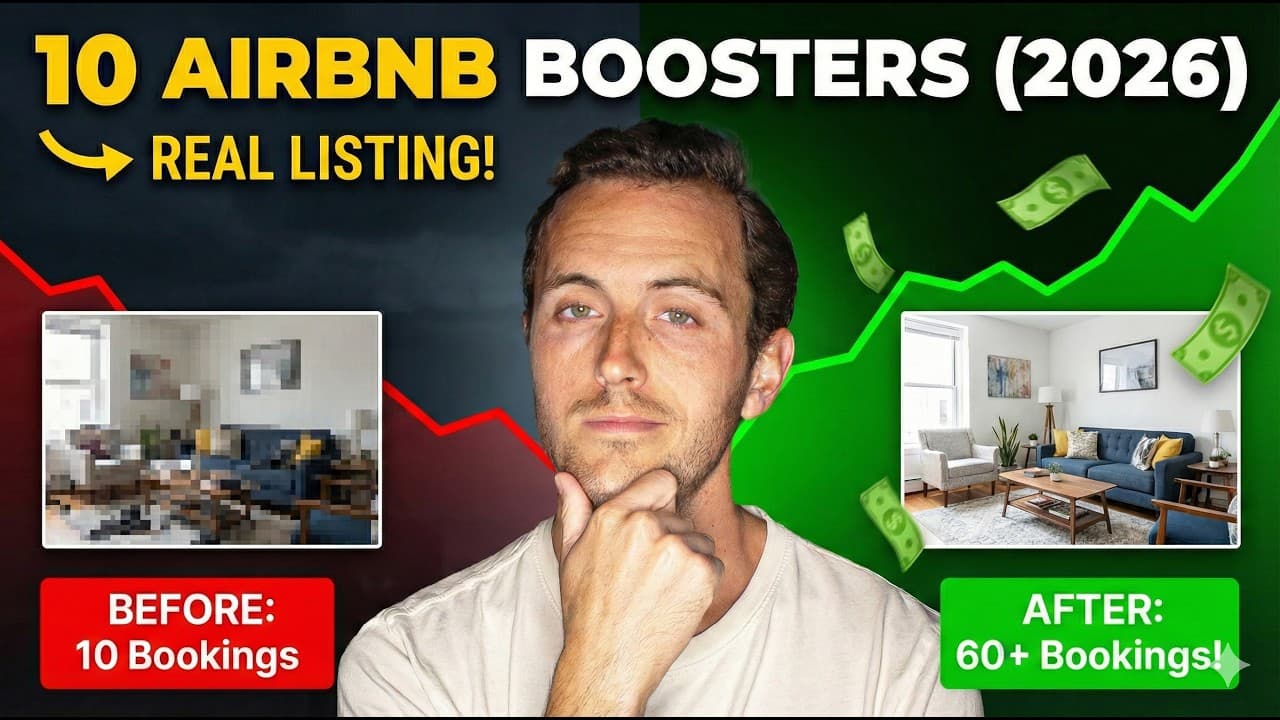
10 ESSENTIAL Steps to Improve Your Airbnb in 2026 (Real Listing Example!)
Most Airbnb listings lose bookings to the same fixable mistakes: bad photos, weak headlines, incomplete amenities, and missed seasonal opportunities. Here are 10 proven strategies to turn any underperforming listing into a consistent booking machine in 2026.
January 1, 2026 · 11 min read

10 Game-Changing Hacks to Improve Your Airbnb
What does it really mean to run a successful Airbnb in 2026? These 10 practical hacks — including a $15 sensor that prevented $44,000 in property damage — show exactly what separates top hosts from average ones.
January 16, 2025 · 9 min read

10 Tips to Get More Views on Airbnb
More views mean more bookings, and more bookings mean more revenue. This guide breaks down 10 actionable Airbnb listing optimization strategies that help hosts climb the search rankings and fill their calendars in 2026.
March 26, 2024 · 14 min read