The BEST time to get started on Airbnb
By James Svetec · April 27, 2023 · 9 min read
Part of our Airbnb Hosting 101 guide →
Key Takeaways
- The STR market follows a repeating supply-demand cycle — knowing where you are in it gives you a real edge.
- Top 10–20% of Airbnb hosts remain profitable through every phase of the cycle because of dialed-in listing, pricing, and property strategies.
- There's no universally 'bad' time to enter the Airbnb market — but entering without the right skills is almost always a mistake.
- Three pillars drive consistent Airbnb performance: a standout property, an optimized listing, and a sharp pricing strategy.
- Market downturns actually create opportunity for prepared hosts — less competition means more bookings for those who stayed in.
Understanding best Airbnb management practices isn't just about cleaning schedules and guest communication — it's about understanding the market forces that determine whether your property thrives or stalls.
Whether you're an Airbnb host managing your own property or building a portfolio, the hosts who consistently win are the ones who understand the cycle the market runs on and position themselves accordingly.
Watch the full video above or keep reading for the complete breakdown.
The Airbnb Market Cycle Explained
The short-term rental market moves in predictable waves. It has done so repeatedly, and once you've observed it for a few years, the pattern becomes unmistakable. Understanding it is one of the most underrated aspects of smart Airbnb hosting.
Here's how the cycle plays out:
- Returns are strong. A segment of well-prepared hosts is generating excellent revenue. Word spreads.
- New hosts flood in. Attracted by the returns, a wave of new listings enters the market — many underprepared and underequipped.
- Average returns drop. With more competition for the same pool of demand, hosts without differentiated strategies see their numbers slide.
- Weaker hosts exit. Those who entered without proper systems, pricing strategies, or listing optimization can't hit their financial targets and leave the platform.
- Demand concentrates again. With fewer listings competing, the remaining hosts — especially top performers — capture more bookings and see returns climb again.
- The cycle repeats.
This pattern mirrors what happens in other markets — stock booms, crypto cycles, real estate rushes. The mechanism is always the same: profit signals attract entrants, oversaturation compresses margins, weak players exit, and the cycle resets.
For a deeper look at how market conditions affect STR performance, this analysis of short-term rental market pressures breaks down exactly what happens when supply outpaces demand.
Top Performers vs. Average Hosts
Here's the critical insight: market downturns don't hit all hosts equally. The top 10–20% of Airbnb hosts tend to weather every phase of the cycle with minimal damage. The bottom 70–80% bear almost all of the pain.
Why? Because when a market has, say, 20 listings competing for the same demand that used to be split among 5, guests naturally gravitate toward the best options first. The listings with professional photography, compelling descriptions, accurate pricing, and the right amenities get booked. The average listings wait.
Think about what this means practically. A host with:
- A well-staged, professionally photographed listing
- A pricing strategy calibrated to capture demand without leaving revenue on the table
- The right amenities for the target guest profile
- A strong review history built on consistent guest experience
...is going to absorb demand ahead of everyone else in that market, almost regardless of how many new listings enter.
The hosts who struggle are those running comparable, undifferentiated listings. They look similar to the wave of new entrants. There's nothing that filters demand toward them specifically, so increased competition hits them hard.
For context on what separates winning properties from losing ones, this guide on dominating your local Airbnb market covers the specific levers that drive top-of-market performance.
When Should You Enter the Airbnb Market?
This is one of the most common questions new hosts and investors ask. And the honest answer is: the timing matters far less than the preparation.
Entering the market during a downturn — when competition is thinner and weaker hosts are leaving — gives underprepared hosts a temporary buffer. But when the next wave of entrants arrives, those same hosts will face the same pressure they avoided before. Without the skills to compete, they'll eventually exit too.
Conversely, hosts who enter at the peak of a hot market with the right strategies, the right property, and solid systems in place have consistently performed well through the subsequent correction.
BNB Mastery founder James Svetec has pointed to properties he purchased during peak periods — when demand was high and new listings were flooding in — that continued performing strongly because the fundamentals were right from day one.
The takeaway is straightforward: if you enter the market with top-tier skills and strategies, there's no bad time to start. If you enter without them, no timing advantage will save you long term.
For investors evaluating specific markets, this breakdown of the best Airbnb markets provides a useful framework for identifying where demand conditions are favorable right now.
Investors who want a structured methodology for analyzing properties and markets before committing capital can explore the BNB Investing Blueprint, which walks through deal analysis, market selection, and ROI frameworks in detail.
The Three Pillars of Best Airbnb Management
Regardless of where the market sits in its cycle, the best Airbnb management outcomes consistently come back to three fundamentals. These aren't complicated, but they're routinely overlooked — especially by hosts who over-index on the property acquisition and underinvest in everything else.
1. A Standout Property
The physical property and how it's presented is the foundation. Many hosts spend their entire budget acquiring a property and then furnish it on the cheap — a mistake that shows up immediately in guest perception and reviews.
Thoughtful design, the right amenities for the target guest, and a property that photographs well are what separate bookings from empty calendars. Adding a hot tub, a well-stocked kitchen, or even high-quality linens can measurably shift occupancy rates. It's not about spending more; it's about allocating the budget correctly.
For specific ideas on what drives the most value, this guide on finding and using the best Airbnb amenities is a practical starting point.
Free Tool
Grab the Airbnb Nightly Pricing Tool
Grab the exact spreadsheet James uses to set profitable nightly rates — plus a step-by-step setup cheatsheet.
2. An Optimized Airbnb Listing
A great property with a mediocre listing will underperform. The listing — photos, title, description — is what converts a searcher into a booking. Most hosts underestimate how much this matters.
Professional photography is non-negotiable for top performers. Beyond that, the listing title needs to surface the property's most compelling features immediately, and the description needs to answer the questions guests are silently asking before they click away.
An Airbnb hosting service or co-host can often manage this optimization piece, which is one reason managed properties frequently outperform self-managed ones in the same area. If listing optimization isn't your strength, outsourcing it or getting proper training makes sense.
For photography strategy specifically, this breakdown of the best Airbnb photo approach covers what actually moves the needle.
3. A Sharp Pricing Strategy
Pricing is where most hosts lose money quietly. Setting rates too high kills occupancy. Setting them too low fills calendars but destroys revenue. The goal is dynamic pricing that responds to demand signals — local events, seasonal shifts, competitor availability, day-of-week patterns.
Manual pricing is increasingly difficult to do well at scale. The top-performing hosts in competitive markets use dynamic pricing tools that adjust rates automatically based on real-time data. This alone can add thousands of dollars annually to a single property's revenue without any additional effort.
Connecting with experienced hosts through a community like BNB Tribe is one of the fastest ways to get practical pricing advice — and to hear what's working in specific markets right now in 2026.
Co-Hosting and the Airbnb Management Opportunity
Not every Airbnb host owns the property they manage. The Airbnb co-host model has grown significantly as property owners recognize the performance gap between managed and self-managed listings.
An Airbnb co host typically handles the full operational side — guest communication, pricing, listing management, cleaning coordination, and reviews — in exchange for a percentage of revenue. For property owners who don't want to be hands-on, this arrangement delivers professional management without the overhead of a traditional property management company.
For hosts looking to build this as a business — taking on multiple properties and growing a co-hosting operation — the demand is real. Property owners who tried to self-manage during the competitive crunch of the past few years are actively looking for qualified managers who can improve their numbers.
Those serious about building a co-hosting business should look at BNB Mastery's Co-Hosting Program, which covers everything from landing the first client to managing a portfolio of properties at scale.
For a grounded overview of how co-hosting compares to direct hosting and investing, this comparison of Airbnb hosting, co-hosting, and investing lays out the tradeoffs clearly.
Tools and Strategies for Staying Ahead in 2026
The hosts who perform at the top of the market in 2026 aren't necessarily working harder — they're working with better tools. A few categories matter most.
Dynamic Pricing Software
Manual pricing can't compete with algorithm-driven tools that process demand signals across thousands of data points in real time. Platforms like PriceLabs, Wheelhouse, and Beyond have become standard equipment for serious operators. Using one consistently is one of the highest-leverage moves a host can make.
For a direct comparison of options, this review of the best Airbnb pricing software covers the key differences.
Channel Management
Listing across multiple platforms — Airbnb, Vrbo, direct booking — increases reach and reduces dependence on any single platform. A channel manager keeps calendars synced and prevents double bookings. For hosts managing more than one or two properties, this is essentially required infrastructure.
The Airbnb host login and dashboard is just one piece of a multi-platform management setup for serious operators.
Market Data and Analysis
Understanding occupancy rates, average daily rates, and seasonal demand patterns in your specific market is the difference between informed decisions and guesswork. Tools like AirDNA provide granular market data that helps hosts set pricing and identify opportunities. For a walkthrough on how to analyze a market properly, this two-part market analysis guide is a strong foundation.
Guest Experience Systems
Consistent five-star reviews don't happen by accident. Top hosts build repeatable systems — automated messaging sequences, standardized cleaning checklists, proactive communication — that deliver a predictable guest experience every time. This is what turns a good property into a highly-rated one, and a highly-rated listing into a self-reinforcing booking machine.
Conclusion: Position Yourself for the Long Game
The best Airbnb management outcomes aren't determined by market timing — they're determined by skill, systems, and positioning. The cycle will keep repeating. New hosts will flood in, competition will tighten, weaker operators will exit, and demand will concentrate again among those who stayed and stayed sharp.
The practical implication is simple: focus relentlessly on being in the top 10–20% of your market. Nail the property presentation. Optimize the listing. Build a pricing strategy that responds to demand. Do those three things consistently, and the noise of market fluctuations becomes largely irrelevant to your bottom line.
In 2026, the opportunity is real for hosts who treat this as a business, not a passive income experiment. The market has shaken out a significant number of underprepared operators. For those who are prepared — or who get prepared now — that's a signal worth acting on.
Frequently Asked Questions
What makes Airbnb management truly effective in 2026?
Effective Airbnb management in 2026 comes down to three core pillars: a well-presented property with the right amenities, a fully optimized listing with professional photos and a compelling description, and a dynamic pricing strategy that responds to real-time demand. Hosts who nail all three consistently outperform their market regardless of competition levels.
Is it still a good time to start hosting on Airbnb in 2026?
Yes — 2026 is actually a strong entry point for prepared hosts. A wave of underprepared operators exited the market over the past 12–18 months, which means less competition and more available demand for hosts who enter with solid strategies. The key word is 'prepared' — entering without proper training and systems rarely works out long-term.
What is an Airbnb co-host and how does the arrangement work?
An Airbnb co-host manages a property on behalf of the owner, handling guest communication, pricing, cleaning coordination, and listing management. In exchange, they typically receive a percentage of the rental revenue. It's a popular model for property owners who want professional management without hiring a traditional property management company.
How do top Airbnb hosts stay profitable when the market gets competitive?
Top hosts stay profitable during competitive periods because they've differentiated their listings in ways that attract bookings first. Strong photography, accurate dynamic pricing, great amenities, and a high review rating mean that available demand flows to them before it reaches average listings. This insulates their revenue from market-wide downturns.
What tools do the best Airbnb hosts use to manage their properties?
The best Airbnb hosts typically use dynamic pricing software (like PriceLabs or Wheelhouse), channel managers to list across multiple platforms, market analytics tools like AirDNA, and automated guest messaging systems. These tools reduce manual work and improve performance simultaneously — a combination that's hard to replicate without them.
If you're serious about being in the top tier of Airbnb hosts — not just surviving the next market cycle but thriving through it — the right community makes a real difference. Joining BNB Tribe puts you alongside experienced hosts and investors who are actively sharing what's working in specific markets, pricing approaches, and property setups right now. That kind of real-time insight is hard to find anywhere else.
Free Tool
Grab the Airbnb Nightly Pricing Tool
Grab the exact spreadsheet James uses to set profitable nightly rates — plus a step-by-step setup cheatsheet.
Ready to get started with Airbnb?
Join 240+ members in BNB Tribe — the community James built for hosts and investors who want real results.
Join BNB TribeMore Articles
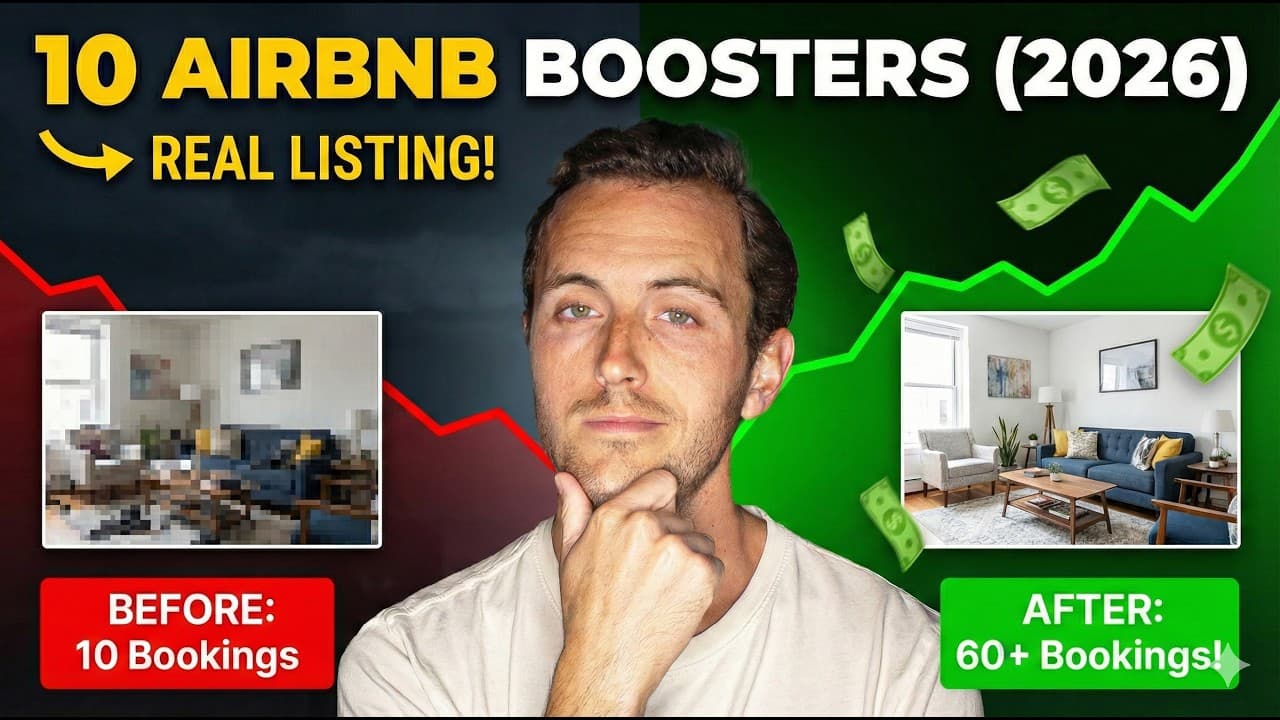
10 ESSENTIAL Steps to Improve Your Airbnb in 2026 (Real Listing Example!)
Most Airbnb listings lose bookings to the same fixable mistakes: bad photos, weak headlines, incomplete amenities, and missed seasonal opportunities. Here are 10 proven strategies to turn any underperforming listing into a consistent booking machine in 2026.
January 1, 2026 · 11 min read

10 Game-Changing Hacks to Improve Your Airbnb
What does it really mean to run a successful Airbnb in 2026? These 10 practical hacks — including a $15 sensor that prevented $44,000 in property damage — show exactly what separates top hosts from average ones.
January 16, 2025 · 9 min read

10 Tips to Get More Views on Airbnb
More views mean more bookings, and more bookings mean more revenue. This guide breaks down 10 actionable Airbnb listing optimization strategies that help hosts climb the search rankings and fill their calendars in 2026.
March 26, 2024 · 14 min read