Why I Only List My Airbnb Properties on One Platform
By James Svetec · February 3, 2022 · 8 min read
Part of our Airbnb Hosting 101 guide →
Key Takeaways
- Listing on a single platform lets you master its algorithm, pricing, and optimization — instead of spreading effort thin across multiple OTAs.
- Airbnb's commission is essentially paying for their marketing engine — running your own paid ads to replace it costs time, risk, and learning curve.
- A property generating $150,000/year on Airbnb alone is already an exceptional return — chasing extra revenue through direct bookings may not be worth the tradeoff.
- Collecting guest email addresses is a low-effort way to build a direct booking backup without committing to a full marketing operation.
- For most STR investors, simplicity and focus beat optimization and complexity — especially when starting out.
For new and experienced hosts alike, the question of where to list a short-term rental property comes up constantly — and this blog video makes a compelling case that more platforms doesn't always mean more money.
James Svetec, co-author of Airbnb Unlocked and founder of BNB Mastery, explains exactly why he lists his own investment properties exclusively on Airbnb, and why that decision is driven by strategy, not laziness.
Watch the full video above or keep reading for the complete breakdown.
The Multi-Platform Myth
There's a persistent belief in the short-term rental world that every host should be listed everywhere — Airbnb, VRBO, HomeAway, Booking.com, and whatever else exists. The logic seems sound: more exposure, more bookings, more revenue. But this blog video challenges that assumption directly.
spreading a listing across every available platform creates complexity without proportional reward — at least for most investors. You're not just listing a property; you're managing calendars, messaging systems, pricing tools, and review profiles across multiple ecosystems. That's a real operational burden, and it compounds quickly as you scale.
For context, James currently owns investment properties listed only on Airbnb. Not VRBO. Not Booking.com. And he's not focused on direct bookings either. This isn't a permanent stance — it's a deliberate strategic choice based on where his time and attention generate the best return.
The Focus Argument: Why One Platform Wins
The core reason behind the single-platform approach is focus. Over the last six to seven years, James has concentrated the vast majority of his energy on understanding how Airbnb specifically works — its algorithm, its guest demographic, its listing optimization levers, and its pricing dynamics.
That level of platform-specific expertise compounds over time. Understanding exactly how Airbnb ranks listings, what triggers the algorithm to push a property higher in search results, and how to convert views into bookings is genuinely valuable knowledge. It's also knowledge that takes years to develop — and diluting attention across three or four platforms slows that development considerably.
Think of it this way: a generalist who knows five platforms moderately well will almost always underperform a specialist who knows one platform exceptionally well. The same principle applies here.
If you're building a co-hosting or property management business and want to develop that level of platform mastery, BNB Mastery's Co-Hosting Program provides a structured framework for learning exactly how to optimize properties on Airbnb and land management clients.
What Deep Platform Knowledge Actually Gets You
- Algorithm fluency: Knowing what Airbnb rewards — response rate, acceptance rate, listing completeness, review velocity — lets you optimize proactively rather than reactively.
- Listing optimization: Titles, photos, descriptions, and amenities all interact differently on Airbnb than on VRBO or Booking.com. Mastering one platform's nuances matters.
- Pricing precision: Airbnb's dynamic pricing environment, seasonal patterns, and demand signals are unique. You learn to read them better over time.
- Guest expectations: Airbnb's guest demographic has specific expectations around communication, check-in, and experience. Understanding that demographic pays off.
For a deeper look at how to set up listings that actually convert, the tips covered in these essential Airbnb listing tips are worth reviewing alongside this blog video.
The Real Cost of Direct Bookings
One of the most honest moments in this blog video is the acknowledgment that yes, Airbnb makes a lot of money from your listing. If a property generates $150,000 in a year and Airbnb charges hosts and guests a combined 10–20%, that's a meaningful cut. In theory, capturing that directly could add $20,000–$50,000 annually.
So why not do it?
Because the cost isn't free. Running direct bookings means running paid advertising — Facebook, Google, Instagram, or other channels. That means ad spend, testing, a learning curve, and real risk. It also means building funnels, managing a direct booking website, handling payment processing outside Airbnb's protection, and dealing with no-shows without Airbnb's dispute resolution as a backstop.
You're not saving the commission — you're trading money for time, risk, and complexity.
For investors who want a more passive operation, that trade doesn't pencil out. Getting $70,000 in annual cash flow from a single property on autopilot is an exceptional investment return. Chasing an additional $30,000 by building a marketing operation is a different business entirely — one that most STR investors didn't sign up for.
This connects directly to the co-hosting vs. investing distinction. If you want to understand the strategic differences between these two paths, the breakdown in Airbnb management vs. investing covers exactly that.
The Smart Backup Plan: Guest Email Collection
Committing to Airbnb as the primary booking channel doesn't mean being completely dependent on them. There's a smart middle ground: collecting guest email addresses at the time of booking.
This is described in the video as low-hanging fruit — a strategy that takes minimal time and energy now but creates optionality later. A growing list of past guests who have already stayed at and enjoyed the property is enormously valuable. Here's what it enables down the road:
- Repeat booking campaigns: Email past guests with seasonal promotions or last-minute availability to drive direct bookings without relying entirely on Airbnb's algorithm.
- Custom audiences for paid ads: Platforms like Facebook allow advertisers to upload email lists and build lookalike audiences — dramatically improving ad targeting efficiency.
- Reduced platform dependency over time: As the list grows, so does the insurance policy against algorithm changes, fee increases, or policy shifts from Airbnb.
The key insight here is that building the email list now costs almost nothing, but having it later could be worth a great deal. It's the kind of strategic thinking that separates casual hosts from serious operators.
Free Tool
Grab the Airbnb Nightly Pricing Tool
Grab the exact spreadsheet James uses to set profitable nightly rates — plus a step-by-step setup cheatsheet.
Passive vs. Active: What Kind of Investor Are You?
This blog video ultimately comes down to a fundamental question every STR investor needs to answer: how active do you want to be?
There's a spectrum. On one end, you have completely passive investors who want a well-run property generating consistent cash flow with minimal involvement. On the other end, there are hosts who treat their rental like a full-time marketing business — running ads, optimizing funnels, testing platforms, and extracting every dollar of potential revenue.
Neither is wrong. But they require different strategies, different skill sets, and different time commitments. The mistake many new hosts make is starting with a passive mindset but accidentally signing up for an active strategy by listing everywhere and trying to drive their own traffic.
One of the biggest misconceptions about Airbnb investing in 2026 is that it has to be time-consuming. It doesn't — if the right systems are in place. A well-run STR with a reliable team, solid Airbnb listing, and smart pricing can operate with very little day-to-day involvement from the owner.
Investors who want to understand what passive STR ownership actually looks like in practice should check out the BNB Investing Blueprint, which covers property selection, deal analysis, and how to set up operations that don't require constant attention.
How STR Compares to Long-Term Rentals on Time Investment
A common reason investors shy away from short-term rentals is the assumption that they're far more management-intensive than long-term rentals. That assumption deserves scrutiny.
With the right team — a reliable cleaner, a co-host or property manager, and automated messaging — an Airbnb can require less active management than a long-term rental dealing with maintenance issues, lease renewals, and tenant disputes.
The cash flow comparison isn't even close in most markets. Short-term rentals routinely generate two to three times the monthly revenue of equivalent long-term rentals. If you're comparing the two, the piece on why long-term rentals fall short covers this contrast in detail.
When Multi-Platform Listing Actually Makes Sense
To be clear, this blog video isn't a universal argument against VRBO, Booking.com, or direct bookings. There are situations where a multi-platform strategy makes sense:
- High-volume operators: If you're managing 20+ properties, the incremental revenue from cross-listing starts to add up meaningfully — and you have the team to manage the complexity.
- Underserved Airbnb markets: In some destinations, VRBO or Booking.com has stronger brand awareness and traveler traffic. Knowing your specific market matters.
- Properties with unique appeal: A large group retreat or luxury villa may attract guests who prefer booking through VRBO or directly. Niche properties sometimes need niche channels.
- Experienced marketers: If you have a genuine background in paid advertising and digital marketing, the ROI math on direct bookings looks different than it does for the average investor.
The honest answer is that for most hosts — especially those who are newer to the space or managing just a handful of properties — adding platforms adds complexity faster than it adds revenue. Master one channel first.
The Takeaway for STR Hosts in 2026
The single most important insight from this blog video is that focus is a competitive advantage. Mastering Airbnb — its algorithm, its guest expectations, its listing dynamics — is worth more than spreading effort thin across every available booking platform.
A property generating strong, consistent revenue on a single platform with a minimal time commitment is the goal, not a consolation prize.
In 2026, the STR market rewards operators who are disciplined about where they invest their time and attention. Build a guest email list early. Get great at Airbnb. Add complexity only when the returns clearly justify it.
Connecting with experienced hosts who have already worked through these strategic decisions can dramatically shorten your learning curve. The BNB Tribe community is exactly that kind of resource — a place to ask real questions and get answers from people actively running STR businesses in today's market.
Frequently Asked Questions
Should I list my Airbnb property on multiple platforms in 2026?
For most hosts, starting with a single platform like Airbnb and mastering it fully is more effective than spreading thin across VRBO, Booking.com, and others. Multi-platform listing adds operational complexity that often outweighs the incremental revenue, especially for hosts managing fewer than 10 properties.
Is it worth building a direct booking website instead of using Airbnb?
It depends on your goals and skill set. Direct bookings eliminate Airbnb's commission, but require paid advertising, funnel management, and marketing expertise to replace Airbnb's traffic. For most investors seeking passive income, the time and risk cost outweighs the savings.
How much can a single Airbnb property earn in a year?
In strong markets, a well-optimized short-term rental can generate $70,000 to $150,000 or more annually on Airbnb alone. Returns depend heavily on location, property type, pricing strategy, and listing quality — but STRs consistently outperform equivalent long-term rentals on cash flow.
How do I reduce my dependence on Airbnb without running my own ads?
Collecting guest email addresses is the most practical low-effort strategy. Building a list of past guests creates the ability to run re-marketing campaigns and build paid ad audiences later, without the immediate cost and complexity of a full direct booking operation.
Is Airbnb investing still a good strategy in 2026?
Yes — short-term rentals continue to outperform long-term rentals on cash flow in most markets. The key in 2026 is selecting the right market, analyzing deals carefully, and setting up systems that allow the property to operate with minimal active management.
If the single-platform focus strategy resonates, the next step is making sure that one platform is fully optimized — and that the underlying investment actually pencils out. The BNB Investing Blueprint walks through exactly how to analyze deals, pick the right markets, and set up operations that don't require constant involvement. For ongoing strategy discussions with hosts who are actively building STR portfolios, the BNB Tribe community is where those conversations happen every day.
Free Tool
Grab the Airbnb Nightly Pricing Tool
Grab the exact spreadsheet James uses to set profitable nightly rates — plus a step-by-step setup cheatsheet.
Ready to get started with Airbnb?
Join 240+ members in BNB Tribe — the community James built for hosts and investors who want real results.
Join BNB TribeMore Articles
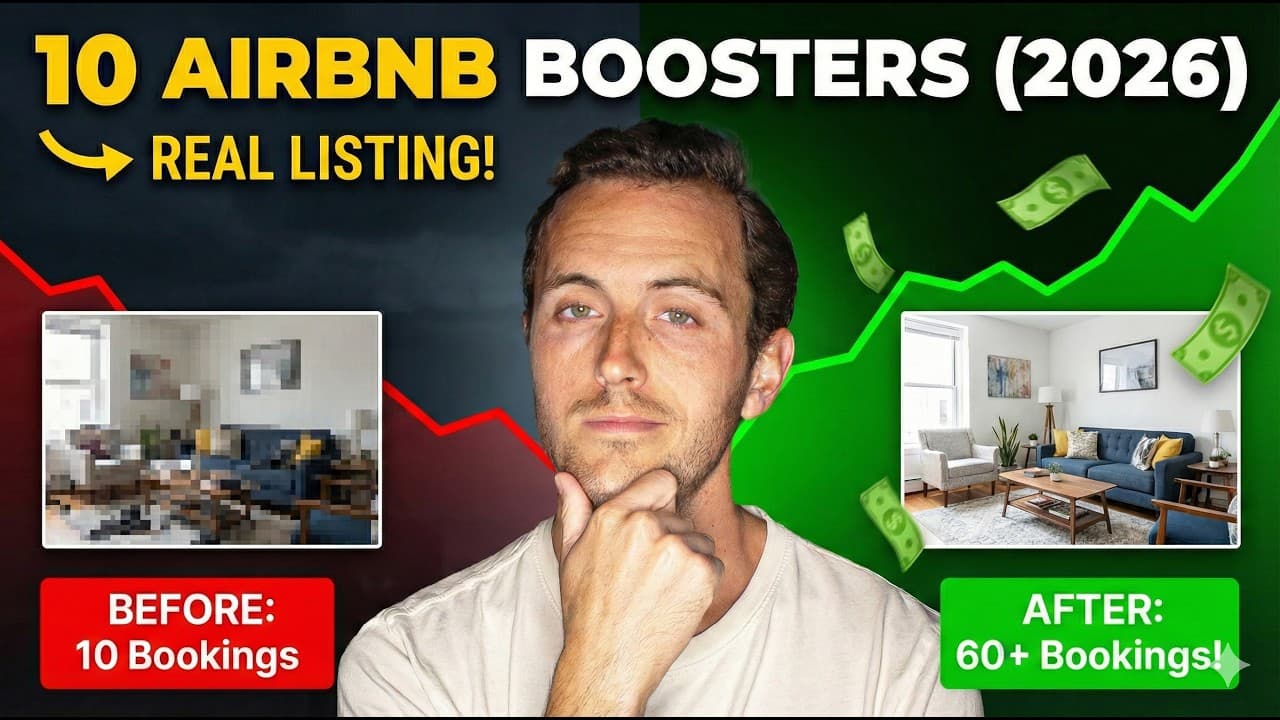
10 ESSENTIAL Steps to Improve Your Airbnb in 2026 (Real Listing Example!)
Most Airbnb listings lose bookings to the same fixable mistakes: bad photos, weak headlines, incomplete amenities, and missed seasonal opportunities. Here are 10 proven strategies to turn any underperforming listing into a consistent booking machine in 2026.
January 1, 2026 · 11 min read

10 Game-Changing Hacks to Improve Your Airbnb
What does it really mean to run a successful Airbnb in 2026? These 10 practical hacks — including a $15 sensor that prevented $44,000 in property damage — show exactly what separates top hosts from average ones.
January 16, 2025 · 9 min read

10 Tips to Get More Views on Airbnb
More views mean more bookings, and more bookings mean more revenue. This guide breaks down 10 actionable Airbnb listing optimization strategies that help hosts climb the search rankings and fill their calendars in 2026.
March 26, 2024 · 14 min read