Airbnb quietly updated their cancellation policies... here's what you need to know
By James Svetec · May 14, 2026 · 12 min read
Part of our Getting Started + Tools guide →
Key Takeaways
- Airbnb eliminated the strict cancellation policy in October 2025, making the 'firm' policy — which gives guests a full refund up to 30 days before check-in — the most protective option for most hosts.
- Reserve Now, Pay Later allows guests to hold your calendar without paying anything upfront, which Airbnb has publicly acknowledged increases cancellation rates.
- If you were grandfathered into the strict cancellation policy before October 2025, do not change it — switching away will almost certainly cost you access to it permanently.
- Third-party dynamic pricing tools like PriceLabs, Beyond Pricing, and Wheelhouse are now essential for recovering revenue lost to last-minute cancellations.
- Platform diversification across Vrbo, Booking.com, and direct bookings is no longer optional — Vrbo in particular offers cancellation policies that give hosts far more control than Airbnb currently allows.
To truly define Airbnb in 2026, you need to understand more than just the platform's basic premise — you need to understand how its policies shape your income as a host, and how dramatically those policies have shifted in the past year.
The October 2025 cancellation policy overhaul is the single biggest change to hit Airbnb hosts in the platform's history, and if you're not paying attention, it could cost you tens of thousands of dollars.
Watch the full video above or keep reading for the complete breakdown.
What Is Airbnb? Defining the Platform in 2026
Airbnb is an online marketplace that connects people who want to rent out their homes, apartments, or unique spaces with travelers looking for short-term accommodations. Founded in 2008, it has grown into one of the world's largest hospitality platforms, with millions of listings across virtually every country on earth.
For hosts, Airbnb offers a way to generate income from property — whether that's a spare bedroom, a standalone vacation home, or an entire portfolio of short-term rentals. For guests, it offers flexible, often more affordable alternatives to traditional hotels, with everything from city apartments to mountain cabins available at a few clicks.
But here's what the simple definition misses: Airbnb is also a platform with its own rules, policies, and fee structures — and those rules change. Frequently. In 2026, understanding what Airbnb is means understanding that it's a business with its own interests, which don't always align with yours as a host.
Airbnb charges hosts a service fee (typically 3% per booking) and charges guests a separate fee on top of the listing price. Every completed booking generates revenue for the platform — which is a key reason why Airbnb's recent policy changes have consistently prioritized booking volume and guest flexibility over host protection.
For anyone new to the platform, launching a property on Airbnb involves creating a listing, setting your pricing, defining your house rules, and choosing your cancellation policy. That last piece — cancellation policy — is now more consequential than ever.
The October 2025 Cancellation Policy Changes Explained
On October 1st, 2025, Airbnb eliminated the strict cancellation policy globally. It didn't phase it out gradually. It removed it as an option for hosts — entirely.
This was the biggest structural change to Airbnb's cancellation framework in the platform's history. And the financial implications for hosts are enormous.
Strict vs. Firm: The Policy That Got Gutted
Under the old strict policy, if a guest canceled seven or more days before check-in, they received a 50% refund. That meant hosts kept half the booking value regardless of when the cancellation happened. It wasn't perfect, but it gave hosts real financial protection and something to work with if they needed to rebook those dates.
Under the firm policy — which is now the most protective option available to most hosts — guests receive a 100% full refund if they cancel up to 30 days before check-in. Full. Refund. You keep nothing.
Think about what that looks like in practice. A guest books your beach house in March for a peak July week. On June 1st — exactly 30 days before check-in — they decide to go somewhere else.
Under the firm policy, they get every dollar back and you're scrambling to fill prime summer dates with zero compensation for the months those dates were blocked.
For seasonal hosts — beach properties, ski chalets, mountain cabins, lake houses — this is devastating. Peak season bookings are the revenue that carries the entire year. Losing them at the 30-day mark, with no compensation, fundamentally changes the math of running an Airbnb.
Check out BNB Mastery's tips on maximizing your Airbnb property during peak seasons to understand just how much is at stake during those high-demand windows.
The Policies Available to Hosts in 2026
- Flexible: Guests get a full refund if they cancel at least 24 hours before check-in.
- Moderate: Full refund up to 5 days before check-in.
- Firm: Full refund up to 30 days before check-in; 50% refund between 7-30 days. No refund within 7 days.
- Strict (grandfathered only): 50% refund if canceled 7+ days out. No refund within 7 days. Only available to hosts who had it before October 2025 and haven't switched away.
Reserve Now, Pay Later: Why It's a Problem for Hosts
The cancellation policy change alone would be significant. But Airbnb compounded the problem with another feature introduced alongside it: Reserve Now, Pay Later.
Exactly what it sounds like — guests can book your property without paying anything upfront. They reserve your dates, block your calendar, and don't put down a single dollar until closer to their check-in date.
Consider the scenario from the transcript above: a guest books 22 nights in September for 16 adults, totaling $30,000. They pay $0 at the time of booking. Seven days before check-in, they cancel. Full refund. The host walks away with nothing and a $30,000 hole in peak season.
This isn't hypothetical. It's happening to hosts right now.
Airbnb has publicly acknowledged that Reserve Now, Pay Later increases cancellation rates. They know. They've accepted that trade-off because higher booking volume — even with elevated cancellations — generates more service fee revenue for the platform. More bookings equal more fees for Airbnb, even if a significant portion of those bookings ultimately cancel.
The guest had zero skin in the game. No money at risk. No reason not to hold your dates and see what happened. That's the core problem: when there's no financial commitment, cancellation becomes costless for the guest and extremely costly for the host.
If You Still Have Strict Policy: Do Not Touch It
Here's the most critical piece of information in this entire article. During the October 2025 migration, some hosts were grandfathered in. Not all — but some. If you had the strict policy active at the time Airbnb made the change and you didn't switch anything, you may still have access to it right now.
If you still have strict policy, do not change it.
Not to firm. Not to moderate. Not to flexible. Do not experiment. Do not test other options. Do not touch it.
The moment you switch away from strict, you will almost certainly lose it forever. Strict is no longer available as an option for new hosts or for hosts who switch away from it. If you have it, it's because you were grandfathered in during the transition — and that door likely closes permanently the moment you leave.
Yes, you still have to deal with Airbnb's mandatory 24-hour free cancellation window, which applies platform-wide. But even with that window, strict gives you far stronger protection than anything else currently available. After the first 24 hours, guests can only get 50% back — not 100%.
Action step: Go into your Airbnb dashboard right now. Check your cancellation policy settings. If you see "Strict" listed as your current policy, leave it exactly as it is.
Non-Refundable Rates: When to Use Them Strategically
Non-refundable rates are a separate tool from your cancellation policy, and they're worth understanding carefully. Here's how they work: hosts can offer guests a discount — typically around 10% off the standard rate — in exchange for making the booking completely non-refundable.
If the guest books at that rate and cancels for any reason, the host keeps 100% of the payment.
That sounds like the ultimate protection. But it's not the right move for every situation.
The Pros of Non-Refundable Rates
- Ultimate cancellation protection: No refunds means no revenue loss if they cancel.
- Shoulder season performance: A 10% discount can be very attractive to budget-conscious travelers during softer demand periods.
- Gap-filling tool: Those random one or two-night openings between longer bookings? Non-refundable rates with a small discount can capture revenue you'd otherwise miss.
- Revenue uplift: Used strategically, non-refundable rates can increase total revenue by 5-10% by attracting price-sensitive guests who wouldn't have booked otherwise.
The Cons of Non-Refundable Rates
- Lower revenue per night: If your property books consistently at full rate, you're giving away margin for no reason.
- Guest quality considerations: Non-refundable bookings can sometimes attract guests who are primarily motivated by price — which isn't always ideal.
- Peak season opportunity cost: If demand is strong, you don't need to discount. Non-refundable rates during high season mean less money for the same nights.
The Strategic Approach
BNB Mastery recommends a seasonal approach rather than enabling non-refundable rates across the board. During shoulder seasons and off-peak periods, turn it on — the discount incentivizes bookings when demand is softer. During peak season, disable it. If your beach house is filling up in July anyway, there's no reason to offer a discount.
Pro tip: Test non-refundable rates for 30 days during your slower periods. Track booking volume carefully. If bookings don't increase by at least 10% compared to the same period last year, reassess whether the discount is worth it.
Free Tool
Grab the Airbnb Nightly Pricing Tool
Grab the exact spreadsheet James uses to set profitable nightly rates — plus a step-by-step setup cheatsheet.
Dynamic Pricing Is Now Non-Negotiable
Complaining about Airbnb's policy changes doesn't put money back in your bank account. The number one income protection tool for hosts dealing with these weaker cancellation policies is dynamic pricing.
When a cancellation happens, you need to drop prices and increase visibility within hours — not days. Manual pricing simply can't keep pace, especially if you're managing multiple properties. You need automated tools that respond immediately to market conditions the moment a gap opens on your calendar.
The tools BNB Mastery recommends are PriceLabs, Beyond Pricing, and Wheelhouse. These platforms are optimized for host profitability, not just occupancy. They analyze your market, your competition, local events, seasonality, and day-of-week demand to automatically adjust your rates and maximize revenue per night.
Do not use Airbnb's built-in Smart Pricing. Airbnb's Smart Pricing is optimized to fill your calendar, not to maximize what you earn from it. It prioritizes bookings because every booking generates a service fee for Airbnb — even if you're barely breaking even on the reservation. Third-party dynamic pricing tools are built for your bottom line, not Airbnb's.
The goal after a cancellation is to refill those dates within 24 to 48 hours. Every empty night is revenue you can never recover. For a detailed walkthrough of how to set this up effectively, BNB Mastery has a full guide on using PriceLabs dynamic pricing software for your Airbnb.
For a broader look at pricing approaches, the Airbnb pricing strategy and optimization guide covers the full framework. And if you want advanced pricing training plus a community of hosts sharing real-time strategies, the BNB Tribe community includes dedicated pricing strategy resources and hosts maintaining strong occupancy even through these policy changes.
Platform Diversification: Vrbo, Booking.com, and Direct Bookings
Here's the hard truth: you cannot rely on Airbnb alone anymore. Airbnb has made a deliberate business decision to prioritize guest flexibility — their data shows that 40% of guests rank free cancellation as a top booking priority. They're building the platform around that preference.
As a host, you need to build your business around platforms that actually give you control.
Vrbo: The Most Host-Friendly Cancellation Options
Vrbo is hands-down the most protective platform for cancellation policies in 2026. Here's what makes it different:
- No-refund policy option: Airbnb doesn't offer this anymore. Vrbo does. Guests know upfront the booking is completely non-refundable.
- Strict policy with 60-day window: Under Vrbo's strict policy, guests must cancel 60+ days out to get a full refund — double Airbnb's 30-day firm window.
- Seasonal cancellation policies: You can set different policies for different times of year. Strict during peak season, more flexible during shoulder season. You have actual control.
For a detailed comparison of how these platforms stack up for hosts, see BNB Mastery's breakdown of Airbnb vs Vrbo vs Booking.com vs direct booking.
Booking.com: Maximum Customization
Booking.com lets you create fully customizable cancellation policies and run multiple rate plans simultaneously on the same property. A business traveler can choose a flexible rate and pay slightly more. A family planning six months ahead can choose a non-refundable rate and save money. Different guests, different needs, different pricing tiers — all available at once.
Booking.com also has a Smart Flex program that works to find replacement bookings when cancellations occur. It doesn't always succeed, but it's a feature Airbnb doesn't offer.
The trade-off: Booking.com has higher overall cancellation rates, partly because many reservations don't require prepayment. Payment disputes also require more hands-on management. But the policy flexibility more than compensates if you set things up correctly.
Direct Bookings: The Long-Term Play
Direct bookings represent the ultimate level of control. When guests book through your own website, you set the cancellation policy. There's no platform override, no extenuating circumstances clause that supersedes your terms. Your policy is your policy. And you keep 100% of the booking — no service fees, no platform cuts.
Building a direct booking channel takes time. Tools like StayFi can capture guest emails when they connect to your Wi-Fi, allowing you to market directly to past guests for future bookings.
It's a longer-term strategy, but it builds an asset you actually own — a customer base that isn't dependent on any platform's rules. BNB Mastery has a full guide on getting direct bookings for your short-term rental that walks through this process step by step.
Your 2026 Action Plan to Protect Your STR Income
Understanding the changes is one thing. Acting on them is what separates hosts who thrive from hosts who struggle. Here are the six non-negotiable steps for every Airbnb host right now:
- Check your cancellation policy settings immediately. If you see "Strict" as your current policy, leave it exactly as it is. Do not experiment with switching. Once you leave strict, you likely can't return.
- Test non-refundable rates during your shoulder season. Run the experiment for 30 days and track booking volume. If occupancy doesn't improve by at least 10%, reassess. If it does, keep it running during slow periods and disable during peak.
- Implement a third-party dynamic pricing tool today. PriceLabs, Beyond Pricing, or Wheelhouse. Pick one and set it up. This is the primary income protection tool in a world of weaker cancellation policies.
- List on Vrbo at minimum. Airbnb plus Vrbo should be your baseline. Vrbo gives you better policies, more control, and access to a different guest demographic.
- Build 3-6 months of revenue reserves. With higher cancellation rates, payment timing changes, and platform unpredictability, a financial buffer isn't optional — it's essential infrastructure for a sustainable STR business.
- Never rely on a single platform. Multiple platforms, multiple revenue streams, multiple policies. Diversification is the only true protection against any single platform's rule changes.
The hosts who are performing well in 2026 aren't waiting for Airbnb to change course. They've diversified their platform presence, automated their pricing, and built systems that function regardless of what any single platform decides to do next. For a broader look at the strategies that keep STR businesses profitable year-round, keeping your Airbnb profitable off-season is essential reading.
Staying connected with other hosts navigating these same challenges also matters more than ever.
The BNB Tribe community brings together experienced operators sharing real-time strategies, advanced pricing training, and a platform diversification guide that walks through listing on Vrbo and Booking.com — where hosts actually have meaningful control over their cancellation terms.
Members like Andrew from New Zealand are maintaining 80% occupancy even through these policy shifts. At $49 per month, it's the kind of community that pays for itself in avoided cancellation losses alone.
Ultimately, how you define Airbnb as a host in 2026 matters: it's a powerful distribution channel with real limitations and shifting rules, not a business partner with your interests at heart. Treat it accordingly, build your business around that reality, and the platform can still be a significant income generator — as long as you're not depending on it exclusively.
Frequently Asked Questions
What is Airbnb and how does it work for hosts in 2026?
Airbnb is an online marketplace connecting property owners with travelers seeking short-term accommodations. Hosts list their properties, set pricing and house rules, and earn income from bookings. Airbnb charges hosts a service fee of around 3% per booking. In 2026, understanding the platform also means staying current on its frequently changing cancellation policies, which now offer significantly less host protection than they did even a year ago.
What happened to Airbnb's strict cancellation policy?
Airbnb eliminated the strict cancellation policy globally on October 1st, 2025. It was removed as an option for all hosts, with no gradual phase-out. The most protective policy now available to most hosts is the 'firm' policy, which gives guests a full refund if they cancel 30 or more days before check-in — significantly weaker protection than the old strict policy provided.
Is Airbnb still worth it for hosts in 2026?
Yes, but only if you treat it as one distribution channel among several rather than your entire business. Airbnb's policy changes have consistently prioritized guest flexibility over host protection, which means hosts who rely on it exclusively face real income risk. Diversifying onto Vrbo and Booking.com, implementing dynamic pricing, and building direct booking channels makes Airbnb much more viable as part of a broader STR strategy.
What is the Reserve Now, Pay Later feature on Airbnb?
Reserve Now, Pay Later allows guests to book a property without paying anything upfront, then pay closer to their check-in date. The problem for hosts is that guests have zero financial commitment at the time of booking, which dramatically increases cancellation rates. Airbnb has publicly acknowledged this trade-off, accepting higher cancellations because increased booking volume generates more platform service fees.
What cancellation policies does Airbnb offer hosts in 2026?
As of 2026, Airbnb offers four cancellation policy options: Flexible (full refund with 24-hour notice), Moderate (full refund up to 5 days before check-in), Firm (full refund up to 30 days out; 50% refund between 7-30 days), and Strict (grandfathered only — 50% refund if canceled 7+ days out). Strict is no longer available to new hosts or to hosts who switch away from it.
The October 2025 changes make one thing clear: hosts who treat Airbnb as a partner rather than a platform will keep getting caught off guard. If you want to stay ahead of the next policy shift — and connect with experienced operators who are maintaining strong occupancy despite these changes — the BNB Tribe community is the place to do it. Members share real-time pricing strategies, platform diversification playbooks, and hard-won lessons that don't show up in Airbnb's help center.
Free Tool
Grab the Airbnb Nightly Pricing Tool
Grab the exact spreadsheet James uses to set profitable nightly rates — plus a step-by-step setup cheatsheet.
Ready to get started with Airbnb?
Join 240+ members in BNB Tribe — the community James built for hosts and investors who want real results.
Join BNB TribeMore Articles

9 Things Airbnb Hosts Are Doing Wrong in 2026
Reviews of Airbnb hosts affect everything from search ranking to booking revenue — and most hosts are making avoidable mistakes that quietly drag down their scores. Here's what's actually hurting your ratings and how to fix it fast.
September 10, 2026 · 11 min read

Airbnb Noise Monitoring - Avoid Parties Without Invading Privacy (Legal Setup Guide)
One undetected party can cost thousands in damages and tank your Airbnb reviews for months. Here's how to set up legal, privacy-compliant noise monitoring that protects your property before problems spiral.
August 13, 2026 · 10 min read
Airbnb's Service Fee Just Changed (You're Paying More Than You Think)
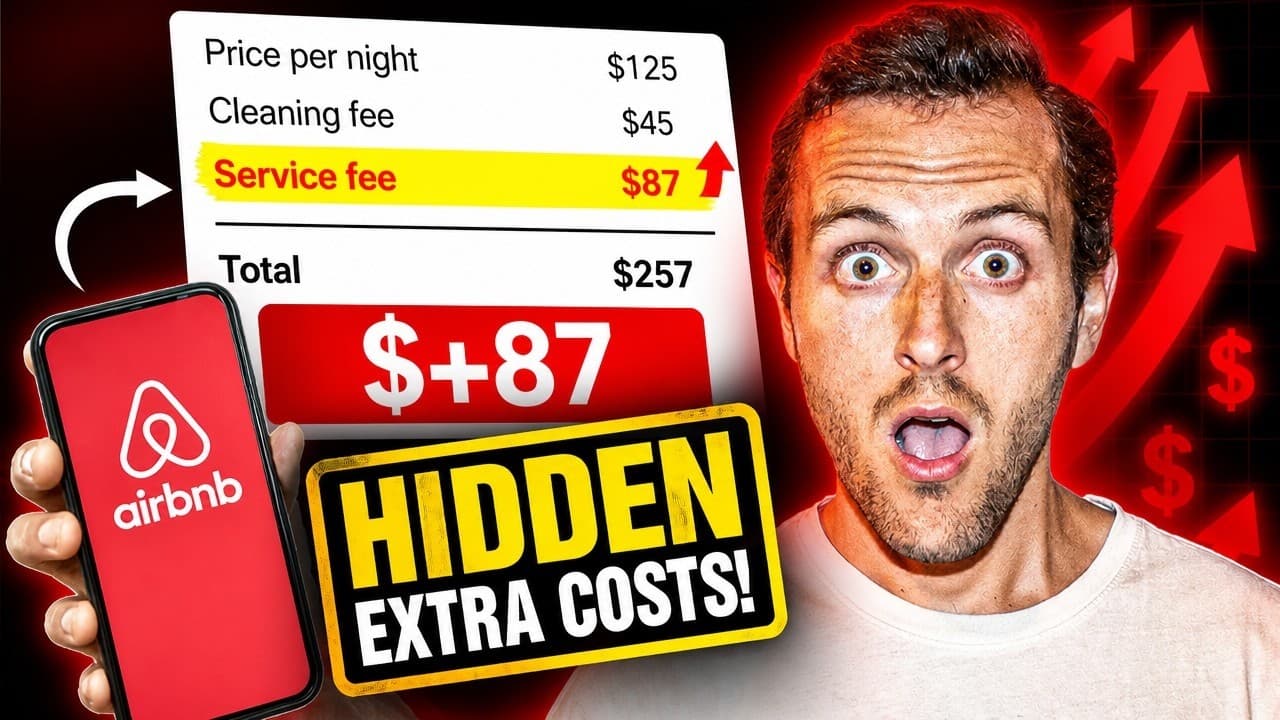
To define Airbnb accurately in 2026, hosts need to understand more than just the platform — they need to know exactly how its 15.5% commission model affects every fee on their listing and what to do about it.
October 1, 2026 · 8 min read