How to Get Your Landlord's Permission to Host on Airbnb
By James Svetec · August 18, 2019 · 6 min read
Part of our Airbnb Hosting 101 guide →
You want to know the number one question hosts ask, over and over?
"I want to rent on Airbnb, but I have a landlord. How do I approach them and get permission to rent out my space?"
That question is a bit of a doozy, but let's walk through it.
Plenty of successful hosts — myself included — do not own their Airbnb property. They rent it. And like anyone in that situation, it isn't entirely up to you to rent out the space. At the end of the day, your property owner decides whether your Airbnb dreams sink or float.
Do It the Right Way
It's a pretty big conversation, and if you're going to be successful, you're going to need to be prepared.
You might think to yourself: "What's the big deal? Why would my landlord even care?"
That's a common first reaction, and it's the number one reason so many people rent on Airbnb without telling their landlords. (That is NOT a good idea.)
While flying under the radar might work for a while, it's almost inevitably going to blow up in your face. In that case, you stand to lose a lot more than your rental income — you could get evicted and have to find a whole new place to live.
What's ironic is that your landlord might have actually been open to the idea in the first place. You never asked, so you'll never know.
And if they find out by "catching" you, you've eroded any goodwill you could have worked with. Approaching the conversation after you've been caught makes your odds of getting permission dramatically lower.
So you want to do it the right way — correct? Of course you do. Let's get your unit landlord-approved.
Get Into the Mind of an Airbnb Landlord
First off, you don't stand a chance of negotiating with your landlord if you don't understand the position they're coming from. You must clearly understand how a landlord uniquely sees Airbnb.
Put yourself in their shoes and think about what influences their decisions and how they view their properties.
Landlords see their long-term rental properties — units under one, two, or three-plus year contracts — as a low-risk, modest source of income. Some make a lot of money off their properties, some make only side income, but the one thing that doesn't change is that they see long-term rental income as low risk.
Now imagine you own a property. Chances are you put a lot of effort into renovating it, and you've signed your first tenant for two years. Whether or not you're an active, attentive landlord, the property makes you the same amount every month for the term of that lease.
So most landlords logically don't see the need to pour extra time and energy into their properties — they see it as a long-term, fixed income stream. Any additional effort can feel like a waste.
The worst-case scenario for a landlord is losing a tenant or suffering property damage. Tenants can be replaced, and insurance can cover damage. Check and check.
Now imagine your tenant approaches you and asks to let a stream of strangers come in and out of the space for their own profit. Your property just went from low risk and modest income to high risk and modest income.
Airbnb Landlord Risks
So why is it suddenly "high risk" for landlords? It's at least riskier for a few reasons:
- While Airbnb verifies guests, there's still potential for bad-apple guests who cause property damage, harass neighbors, or commit theft.
- In many city municipalities, short-term rentals are illegal and can carry fines if you're caught.
But here's the biggest one:
- Landlords are required to carry homeowners insurance for their building that covers anything that could go wrong.
Homeowners insurance will deny any and all claims if they discover the space was being rented like a business — and yes, Airbnb is a business. Even worse, the insurer could cancel the landlord's policy entirely, which would make the entire building non-compliant.
And remember: they'd be taking on all of this risk with no upside. It simply won't make sense for them. In very few circumstances will a landlord be okay with you renting on Airbnb without getting something in return.
Free Tool
Grab the Airbnb Nightly Pricing Tool
Grab the exact spreadsheet James uses to set profitable nightly rates — plus a step-by-step setup cheatsheet.
Make a Conversation Game Plan
Now that you understand why landlords actually do care about Airbnb, it's time to make a game plan.
To get a yes, you have to be prepared to change the risk/income equation for them. That doesn't necessarily mean paying more rent — but in many cases, that's all it takes.
Be aware of your relative position before you enter the conversation:
- How long have you been a tenant?
- Have you been a good tenant?
- How old is your landlord? Do you think they've even heard of Airbnb?
- How quickly could they find a new long-term tenant? Is it a hot rental market?
- Do you share space with other tenants who could be affected?
- Are you rent controlled?
- Does the landlord own multiple properties?
You're in a strong negotiating position when:
- You've been a tenant for a long time
- The landlord is comfortable with you
- The landlord is familiar with Airbnb
- The landlord owns only a few properties
- ...and the worse the rental market, the better your position
If you're in a strong position, it might only take a little compromise to get a yes. If you're in a weak position, it could take a lot — and getting a yes may require some creativity.
Consider What You Can Offer Your Landlord
On the income side:
- Offer to extend your lease
- Offer to pay more — a flat rate or a percentage of your Airbnb earnings
- Offer to pre-pay rent up front
On the risk side:
- Explain how Airbnb's host protection and liability coverage works
- Offer to purchase your own short-term rental insurance (typically anywhere from $80–$200 per month)
- Offer to limit rentals to certain times and certain groups
- Guarantee that you'll only rent private rooms and be present throughout the stays
- Amend your rental contract to cover certain damages yourself
- Increase the size of your security deposit
This is by no means an exhaustive list, but these are the options I've seen work. In my experience, these are the things landlords care about — plus or minus a couple of curveballs. Walk in knowing what you can offer and what you think it will cost to address their concerns.
Start the Conversation With Your Landlord
There are two ways to bring this up: directly with your landlord, or what I call the "nuclear option."
If you think you have enough rapport, approach them directly. My suggestion is to focus on simply starting a dialogue — don't treat it like a business pitch.
Keep it simple. A landlord won't approve what they can't understand, and if you pile on information, they'll get confused. Try emailing them or talking in person like this:
"Hi Mr. Landlord — I was recently introduced to Airbnb on a trip, and it's an amazing service. I was wondering if you had an opinion about Airbnb?"
By simply asking their opinion, you don't prime them for confrontation. You open a conversation about what they already KNOW about Airbnb. Once you understand what they know and think, it's much easier to explain it and dispel any myths.
In that same conversation, try to bring up two things:
- You're exploring the opportunity but wanted to be respectful and ask their opinion first. Establish a solid reason why you're interested and how you'd benefit.
- Let them know it will help you pay rent, meet bills, or improve your life in some way — and acknowledge that this sounds risky to a landlord, and you're willing to make it more than worth their while.
Then take it from there and start deploying your compromise options from above. (If you want a deeper script for this, here's a full breakdown on how to pitch landlords on Airbnb and get most of them to say yes.)
Landlord Not Open to Airbnb?
Here's the nuclear option.
If your landlord isn't receptive, find out who their legal counsel is. In most cases, landlords have some legal counsel they work with on contracts, insurance, and tenant rights.
Either contact their lawyer and state your case, or hire your own lawyer to make it. As legal counsel to your landlord, it's their duty to represent the landlord's best interest. If there's an opportunity to make them more money within the bounds of local law, they're obligated to present it.
It's much harder for a landlord to say "no" when their own legal counsel says, "This is legal, and it can work."
Get the Permission — Then Build the Business
Getting your landlord's permission is the first domino. Once you've cleared it, the real opportunity is building a profitable, repeatable hosting operation that you can scale beyond a single unit.
If you're ready to do exactly that — legally, professionally, and at scale — the BNB Mastery Program walks you through landing approvals, structuring agreements, and growing a real short-term rental business. And to trade strategies with hundreds of active hosts who've had these exact landlord conversations, come join the BNB Tribe community.
Free Tool
Grab the Airbnb Nightly Pricing Tool
Grab the exact spreadsheet James uses to set profitable nightly rates — plus a step-by-step setup cheatsheet.
Ready to get started with Airbnb?
Join 240+ members in BNB Tribe — the community James built for hosts and investors who want real results.
Join BNB TribeMore Articles
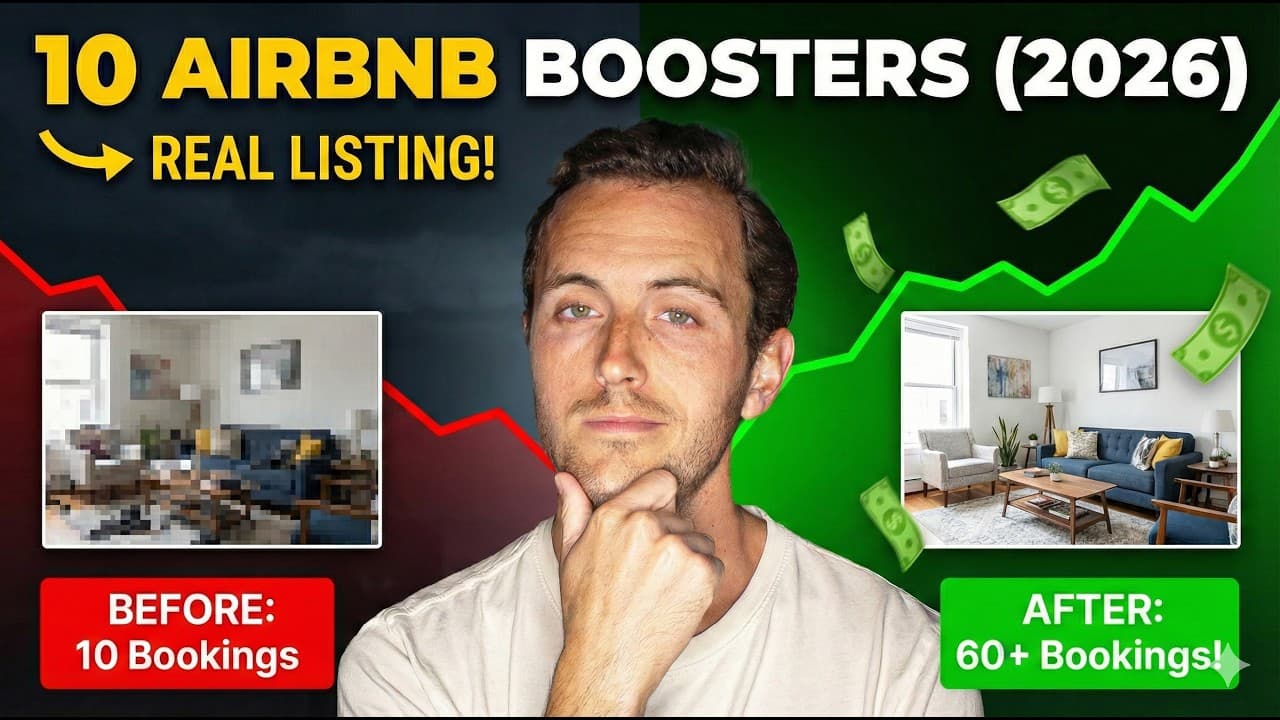
10 ESSENTIAL Steps to Improve Your Airbnb in 2026 (Real Listing Example!)
Most Airbnb listings lose bookings to the same fixable mistakes: bad photos, weak headlines, incomplete amenities, and missed seasonal opportunities. Here are 10 proven strategies to turn any underperforming listing into a consistent booking machine in 2026.
January 1, 2026 · 11 min read

10 Game-Changing Hacks to Improve Your Airbnb
What does it really mean to run a successful Airbnb in 2026? These 10 practical hacks — including a $15 sensor that prevented $44,000 in property damage — show exactly what separates top hosts from average ones.
January 16, 2025 · 9 min read

10 Tips to Get More Views on Airbnb
More views mean more bookings, and more bookings mean more revenue. This guide breaks down 10 actionable Airbnb listing optimization strategies that help hosts climb the search rankings and fill their calendars in 2026.
March 26, 2024 · 14 min read