3 DIFFERENT Ways to Make Millions On Airbnb
By James Svetec · July 18, 2024 · 8 min read
Part of our Airbnb Hosting 101 guide →
Key Takeaways
- Airbnb is a short-term rental marketplace where hosts list properties, spare rooms, or unique spaces to earn income from traveling guests.
- Co-hosting (managing other people's properties for a cut) can scale to six figures with little to no upfront capital.
- A single high-quality Airbnb property — even one spare bedroom — can generate substantial income if positioned and listed correctly.
- Investing in STR properties is a legitimate path to wealth, but it requires careful deal analysis and sufficient capital reserves.
- Rental arbitrage carries serious financial risk and is not recommended — the pandemic wiped out multiple eight-figure arbitrage businesses in weeks.
To define Airbnb in simple terms: it's an online marketplace that connects travelers looking for short-term accommodations with hosts who have space to rent.
Founded in 2008, Airbnb has grown into a global platform with millions of listings — and for hosts who understand the business models available to them, it has become a legitimate vehicle for building serious wealth in 2026.
Watch the full video above or keep reading for the complete breakdown.
What Is Airbnb and How Does It Work?
Airbnb stands for "Air Bed and Breakfast" — a name that reflects the platform's scrappy origins as a way for hosts to rent out an air mattress in their living room to conference attendees. Today, the platform is far more sophisticated, hosting everything from spare bedrooms to luxury compounds, treehouses, and private islands.
At its core, Airbnb connects three groups of people: hosts who list their space, guests who book those spaces, and Airbnb itself, which takes a service fee from both sides of each transaction. Hosts typically pay around 3% per booking; guests pay a variable service fee on top of the nightly rate.
But knowing what Airbnb is only gets you so far. The more important question is: how do people actually make money with it? As three real-world examples show, there's no single answer — and the business model you choose matters enormously.
Model 1: Airbnb Co-Hosting (Managing Other People's Properties)
Co-hosting is one of the most overlooked and highest-upside ways to build income on Airbnb without owning a single property. A co-host manages another property owner's Airbnb listing — handling everything from guest communication and pricing to cleaning coordination — in exchange for a percentage of the booking revenue, typically around 20%.
Tim Cho built a company called Red Awning using this exact model. Founded in 2010, Red Awning grew to manage more than 100,000 properties and generated an estimated $32 million in revenue. To get there, Tim raised over $40 million in funding and scaled aggressively — not a model most individual hosts need to replicate.
The real opportunity here is much more accessible. You don't need venture capital or 100,000 properties to build a meaningful co-hosting income. Many hosts build full six-figure co-hosting businesses managing a handful of properties in their local market.
What makes co-hosting attractive is the low barrier to entry. You don't need to buy real estate, carry a mortgage, or invest large sums of capital upfront. You need systems, communication skills, and the ability to find property owners who want professional help.
BNB Mastery has helped more than 750 people build co-hosting businesses. For those interested in doing the same, BNB Mastery's Co-Hosting Program provides a structured framework for landing your first client and scaling from there. You can also explore why Airbnb co-hosting is growing in 2026 and why now is a strong time to get started.
What Does a Co-Host Actually Do?
- Create and optimize the Airbnb listing (photos, descriptions, pricing strategy)
- Handle all guest communication before, during, and after stays
- Coordinate cleaning crews and maintenance between bookings
- Manage dynamic pricing tools to maximize nightly rates
- Handle reviews, refunds, and guest issue resolution
Pro tip: The most successful co-hosts treat each property like it's their own investment. The better it performs, the more the property owner earns — and the more secure your management contract becomes.
Model 2: Listing Your Own Space on Airbnb
This is the most straightforward way to understand what Airbnb is designed for: you have a space, you list it, guests book it, you earn income. The variation in outcomes is enormous — and Laura's story in Austin, Texas proves just how high the ceiling can be.
Laura owns a 14-bedroom, 11.5-bath compound eight miles from downtown Austin. The property features a resort pool, a separate lap pool, an Airstream trailer, and a one-acre fish pond. Last year, that single listing generated over $1.1 million in Airbnb revenue — more than $3,000 per day on average.
Most people don't have a multi-million dollar compound sitting unused. But that misses the point of what Laura's story teaches.
The underlying strategy is simple: take a space you already have and open it up to guests. That might look like:
- A spare bedroom in your primary home
- A basement suite or in-law unit
- A vacation property you use only a few weeks per year
- Your own home while you're traveling
Even modest listings can generate thousands of dollars per month when optimized correctly. The key variables are location, listing quality, pricing strategy, and guest experience — not the size of your property. For practical tips on driving more bookings to any listing, check out these 10 tips to get more views on Airbnb.
If you're new to hosting and want to understand the full landscape before jumping in, grabbing a free copy of "Airbnb Unlocked" is a good starting point — it covers the core principles of what makes a listing profitable.
Model 3: Investing in Airbnb Properties
The third major way to earn on Airbnb is to buy property specifically to run as a short-term rental. This is the approach that most resembles traditional real estate investing — with significantly higher potential returns when executed well.
Isaac's story is a striking example. Starting with just $50,000, Isaac used a combination of bank financing, investor partners, and a line of credit to build a unique Airbnb compound in Texas. Within two years, the project generated $7 million in revenue.
Those returns are exceptional and not typical. But the underlying framework — buying or building a distinctive property in a high-demand market — is one that any serious investor can apply at various budget levels. You don't need to start with a compound. Many successful STR investors begin with a single condo or small home.
The critical skill in STR investing is deal analysis. Before buying any property, investors need to model out projected revenue, occupancy rates, operating expenses, mortgage costs, and cash-on-cash returns. Getting that math wrong is how investors end up with properties that bleed cash instead of generating it.
For a structured approach to running those numbers, the BNB Investing Blueprint walks through the full analysis process — from market selection to deal evaluation. It's worth reviewing the five biggest mistakes Airbnb investors make before committing capital to any deal.
Free Tool
Grab the Airbnb Nightly Pricing Tool
Grab the exact spreadsheet James uses to set profitable nightly rates — plus a step-by-step setup cheatsheet.
Key Factors That Drive STR Investment Returns
- Market selection: High-demand tourist or business travel markets outperform generic suburban locations
- Property differentiation: Unique properties (pools, game rooms, distinctive design) command premium rates
- Operational efficiency: Keeping cleaning and maintenance costs controlled protects margins
- Pricing strategy: Dynamic pricing tools that adjust nightly rates based on demand significantly boost revenue
- Financing structure: Your mortgage rate and down payment directly determine whether the property cash-flows
The Model to Avoid: Rental Arbitrage
Not every Airbnb business model is created equal. Rental arbitrage — renting apartments on long-term leases, furnishing them, and then subletting them on Airbnb at a higher nightly rate — looks attractive on paper but carries structural risks that have destroyed multi-million-dollar companies.
Jordan launched a rental arbitrage company called Stay Alfred in 2011. Over eight years, it scaled to over $100 million in annual revenue. Then 2020 happened. When COVID-19 hit, Airbnb bookings dried up almost overnight. But the rent payments on hundreds of apartments kept coming due.
Within three months, Stay Alfred — a $100 million company — was gone. Similar stories played out across multiple large arbitrage operators simultaneously.
In a post-collapse interview, Jordan said: "If we were doing this again, we would have looked to own more buildings — but renting became the business model."
The lesson is clear: arbitrage means you carry the financial exposure of a property owner without the asset. You're paying rent whether guests show up or not. Any prolonged dip in bookings — a pandemic, a platform policy change, new local regulations — can wipe out your business.
For a deeper look at why this model is so risky, see why Airbnb arbitrage with no money is a trap.
Which Airbnb Business Model Is Right for You?
Choosing the right model depends on your starting capital, risk tolerance, and income goals. Here's a quick comparison:
| Model | Capital Required | Income Potential | Risk Level |
|---|---|---|---|
| Co-Hosting | Very Low | $50K–$200K+/year | Low |
| Listing Your Own Space | Low–Moderate | Varies widely | Low–Moderate |
| STR Investing | Moderate–High | High (property-dependent) | Moderate |
| Rental Arbitrage | Moderate | Variable | Very High |
For most people getting started in 2026, co-hosting is the most accessible entry point — it generates real income with minimal financial risk. Those with capital to deploy should look seriously at STR investing, provided they do rigorous deal analysis first.
And if you already own a property with underutilized space, listing it on Airbnb is a near-zero-risk way to generate additional income.
Connecting with others who are actively working all three models accelerates your learning curve significantly. The BNB Tribe community brings together hosts and investors at every stage — from first listing to full portfolio — with live coaching calls and step-by-step training resources.
For a full side-by-side breakdown of these approaches, see Airbnb hosting vs. co-hosting vs. investing.
Final Thoughts on Getting Started With Airbnb
To define Airbnb fully, you have to look beyond the platform itself. It's not just a booking website — it's an ecosystem that has enabled thousands of ordinary people to build extraordinary income streams using property they own, property they manage for others, or property they've purchased specifically for this purpose.
The three models that actually work in 2026 — co-hosting, direct hosting, and STR investing — each have a different risk-reward profile. The one model to avoid is rental arbitrage, which concentrates financial risk without the offsetting benefit of asset ownership.
Pick the model that fits your situation, build your skills, and execute with consistency. The hosts generating six and seven figures on Airbnb aren't doing anything magical — they're applying proven strategies with discipline and good data.
Frequently Asked Questions
What does Airbnb stand for and what does it do?
Airbnb stands for 'Air Bed and Breakfast.' It's an online marketplace that connects travelers with hosts who rent out their homes, spare rooms, or investment properties on a short-term basis. Hosts set their own prices, availability, and house rules, while Airbnb facilitates the booking and payment process.
Is Airbnb still profitable for hosts in 2026?
Yes, Airbnb remains a profitable platform for hosts in 2026, though success depends heavily on market selection, property quality, and pricing strategy. Hosts who invest in standout listings, use dynamic pricing tools, and optimize their guest experience consistently outperform those who simply list and wait.
What is Airbnb co-hosting and how does it work?
Airbnb co-hosting means managing someone else's property on the platform in exchange for a percentage of the booking revenue — typically 15–25%. The co-host handles guest communication, pricing, cleaning coordination, and listing optimization. Property owners earn passive income while co-hosts earn management fees without needing to own real estate.
What is the difference between Airbnb hosting and Airbnb investing?
Airbnb hosting typically refers to listing a property you already own or occupy — like a spare room or vacation home. Airbnb investing means buying property specifically to operate as a short-term rental for cash flow and appreciation. Investing requires more capital upfront but offers greater long-term wealth-building potential.
Is Airbnb rental arbitrage a good business model?
Rental arbitrage — renting apartments long-term and subletting them on Airbnb — is considered high-risk by most STR experts. You carry ongoing rent obligations whether or not guests book, meaning any disruption to bookings (economic downturns, regulation changes, platform shifts) can create rapid financial losses. Multiple large arbitrage businesses collapsed during 2020 for exactly this reason.
Whether you're drawn to co-hosting, direct hosting, or full STR investing, the next step is finding the right community and training to back you up. The BNB Tribe community gives you access to live coaching, step-by-step training, and a network of hosts who are actively building income on Airbnb right now — so you're not figuring it out alone.
Free Tool
Grab the Airbnb Nightly Pricing Tool
Grab the exact spreadsheet James uses to set profitable nightly rates — plus a step-by-step setup cheatsheet.
Ready to get started with Airbnb?
Join 240+ members in BNB Tribe — the community James built for hosts and investors who want real results.
Join BNB TribeMore Articles
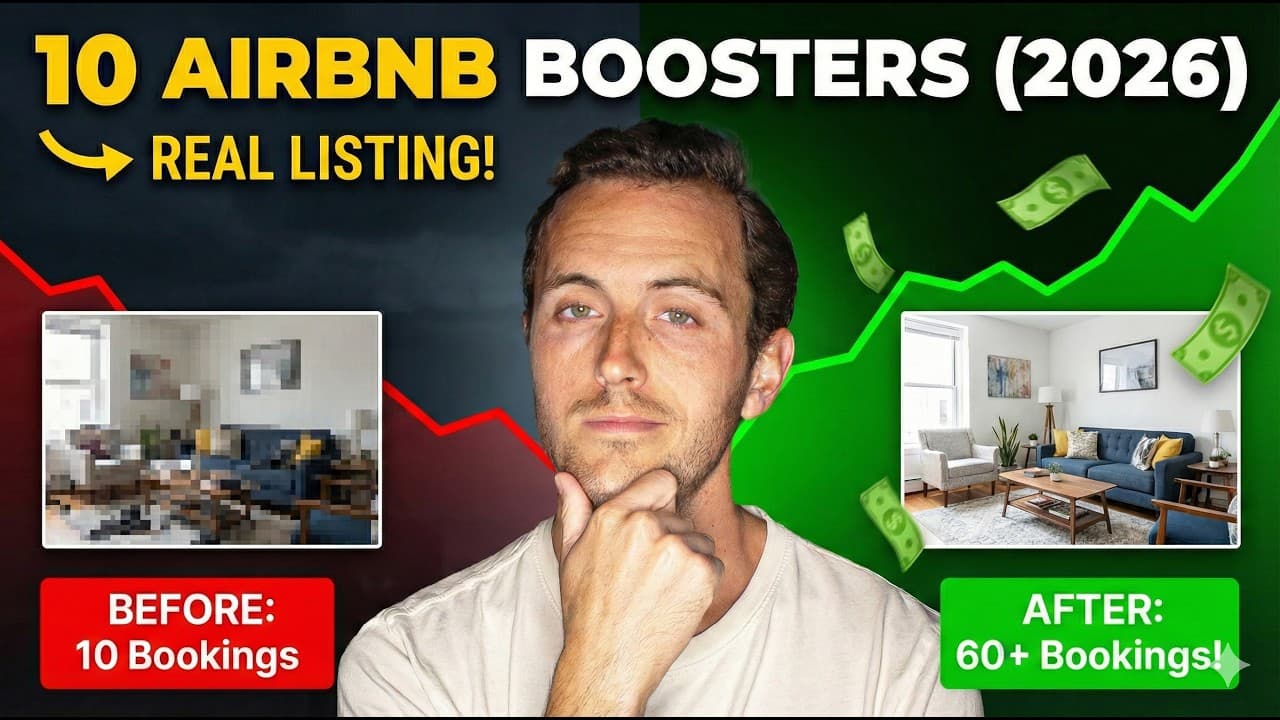
10 ESSENTIAL Steps to Improve Your Airbnb in 2026 (Real Listing Example!)
Most Airbnb listings lose bookings to the same fixable mistakes: bad photos, weak headlines, incomplete amenities, and missed seasonal opportunities. Here are 10 proven strategies to turn any underperforming listing into a consistent booking machine in 2026.
January 1, 2026 · 11 min read

10 Game-Changing Hacks to Improve Your Airbnb
What does it really mean to run a successful Airbnb in 2026? These 10 practical hacks — including a $15 sensor that prevented $44,000 in property damage — show exactly what separates top hosts from average ones.
January 16, 2025 · 9 min read

10 Tips to Get More Views on Airbnb
More views mean more bookings, and more bookings mean more revenue. This guide breaks down 10 actionable Airbnb listing optimization strategies that help hosts climb the search rankings and fill their calendars in 2026.
March 26, 2024 · 14 min read