How I Keep My Airbnb Profitable Off Season
By James Svetec · November 28, 2023 · 9 min read
Part of our Airbnb Hosting 101 guide →
Key Takeaways
- In low season, the goal shifts from maximizing nightly rate to maximizing occupancy — price accordingly.
- Strategic amenities like hot tubs, saunas, or home theaters give guests a reason to book even when the season doesn't.
- Expanding to multiple OTAs and using social media marketing puts more eyes on your listing when organic demand is low.
- Low season is actually easier to outperform competitors because fewer hosts are actively optimizing for it.
- Collecting guest emails and marketing for repeat bookings is one of the most underused tools in an Airbnb host's toolkit.
Knowing how to host Airbnb profitably during peak months is one thing — keeping your calendar full when demand dries up is a different challenge entirely. Low season is where many short-term rental operators lose money, let properties sit vacant, and quietly wonder if the whole business model still works. It doesn't have to be that way.
Watch the full video above or keep reading for the complete breakdown.
Why Low Season Is an Underrated Opportunity
Most hosts spend the majority of their energy squeezing every dollar out of high season. That's understandable — demand is high, rates are elevated, and bookings come in without much effort.
But here's what most people miss: there is far less competition in the low season, which means it's actually easier to outperform the market if you're willing to put in a little extra work.
In high season, every property in your market is fighting for the same guests. In low season, many hosts pull back — they raise their minimum stays, keep prices too high, or simply don't bother optimizing. That creates a genuine opening for hosts who do the work.
Think about what's actually at stake. A property sitting vacant for 10 nights a month in low season might be losing $1,500–$2,500 in revenue that could otherwise be captured with the right strategy. Over a three-month slow period, that's $4,500–$7,500 in missed income — more than enough to cover operating costs and keep cash flow positive.
The three strategies below are what experienced Airbnb hosts consistently use to stay booked when demand is soft. Whether you're just starting out, working as an Airbnb co host managing someone else's property, or building a portfolio of your own, these apply directly to your situation.
Tip 1: Adjust Your Pricing Strategy for Low Season
The number one mistake hosts make in low season is treating pricing the same way they do in peak months. In high season, the goal is to push your nightly rate as high as the market will bear. In low season, the goal is simply to get the property booked.
These are fundamentally different objectives, and your pricing needs to reflect that shift.
Stop Optimizing for Rate — Start Optimizing for Occupancy
When demand is high, you can afford to hold out for a premium rate. When demand is low, an empty night generates zero revenue — which is always worse than a discounted night that's booked. A property earning $90/night for 25 nights beats one earning $130/night for 15 nights. Run that math before you hold firm on your rates.
Dynamic pricing tools like PriceLabs, Wheelhouse, or Airbnb's own Smart Pricing can help automate this adjustment. But don't set them and forget them. Review your market's low-season data manually — look at what comparable listings are actually charging and what their occupancy looks like.
Be Realistic, Not Pessimistic
Dropping prices doesn't mean giving the property away. It means calibrating to actual demand. A 20–30% reduction from your peak rate might be all it takes to go from 40% occupancy to 75% occupancy in a slow month. That's a significant revenue difference.
For a deeper look at how to structure your rates throughout the year, these Airbnb pricing hacks cover specific techniques that apply to both high and low seasons.
Also consider adjusting your minimum stay requirements. In high season, a 3-night minimum makes sense. In low season, dropping to a 1 or 2-night minimum can capture weekend travelers who wouldn't otherwise book.
Tip 2: Add Amenities That Create Demand
High season has a built-in draw — great weather, local events, holidays. Low season doesn't have that natural pull, which means your property itself needs to be the draw. That's where amenities come in.
Think about a lakeside cabin in the northern United States or Canada. In summer, the draw is obvious: swimming, kayaking, sunshine. In winter? The weather is cold, the lake is frozen, and most guests have no reason to make that drive — unless the property gives them one.
Amenities That Actually Move the Needle
Not all amenities are equal when it comes to generating low-season bookings. These tend to have the highest impact:
- Hot tub: One of the highest-ROI amenities for cold-weather low seasons. Guests actively search for properties with hot tubs in winter months. The upfront cost is real, but the booking lift is consistently strong.
- Sauna: Growing in popularity and particularly compelling for winter escapes. A barrel sauna in the backyard of a ski-adjacent or rural property can become a key selling point.
- Home theater setup: Surprisingly inexpensive — a decent projector, a soundbar, and blackout curtains can cost under $500 and dramatically improve the property's appeal for movie-night getaways.
- Winter activity gear: Snowshoes, cross-country skis, sleds, and hiking poles are relatively cheap to purchase but signal to guests that this property was built for the season, not just tolerating it.
- Fireplace or fire pit: A wood-burning or gas fireplace is a massive search filter advantage on Airbnb. Hosts who have them and highlight them in photos and listing descriptions see a measurable bump in low-season interest.
Match Your Amenities to Your Market
The right amenity depends entirely on where your property is and who your guest is. A Florida Gulf Coast property struggling in hurricane season (summer) needs a different approach than a Vermont ski town property struggling in the mud-season shoulder months.
For Florida, that might mean emphasizing a screened-in pool and air conditioning as a feature — marketing the property as a place to beat the heat — or targeting longer-term workcation guests who are less sensitive to weather. For northern markets, leaning into winter coziness with the right amenities is often the answer.
If you're evaluating a property purchase and want to factor low-season performance into the decision, it's worth reviewing what makes the best type of property for Airbnb investing before you buy. Year-round demand potential should be part of that analysis.
Pro tip: Properties near ski hills, snowmobile trails, or winter hiking areas naturally have lower low-season risk because the attraction exists independent of your amenities. When you're buying, this is worth paying a slight premium for.
Free Tool
Grab the Airbnb Nightly Pricing Tool
Grab the exact spreadsheet James uses to set profitable nightly rates — plus a step-by-step setup cheatsheet.
Tip 3: Expand Your Marketing Beyond Airbnb
In high season, your Airbnb listing more or less markets itself. In low season, you need to actively push the property in front of more eyes. Organic platform traffic isn't enough — you need to build your own top-of-funnel.
This is one of the most overlooked levers available to an Airbnb host. More exposure equals more bookings. It's a simple equation, but most hosts never act on it because in high season, they don't have to.
List on Multiple OTAs
If your property is only on Airbnb, you're missing a significant chunk of potential guests in low season. VRBO (especially strong for families and longer stays), Booking.com, and even niche platforms like Hipcamp (for outdoor/rural properties) can add meaningful occupancy during slow months.
Channel managers like Hostaway, Lodgify, or Guesty make it straightforward to sync calendars across platforms so you're not manually managing double-bookings. The initial setup takes a few hours but pays off consistently.
Build an Email List and Market to Past Guests
One of the highest-converting low-season marketing strategies is re-engaging past guests. Someone who already stayed at your property and had a great experience is far more likely to book again than a cold prospect — and they'll do it faster.
Tools like StayFi allow you to collect guest email addresses via a branded WiFi login page. Once you have that list, a simple email campaign in October or November offering a returning-guest discount for winter dates can fill gaps that would otherwise stay empty.
Airbnb's own platform makes direct guest communication somewhat limited, so capturing emails through a tool like StayFi before guests check out is one of the smartest moves an Airbnb host can make for long-term occupancy management. For more tactics on getting bookings outside the Airbnb platform, this guide on getting direct bookings for your short-term rental is worth reading.
Use Instagram and Facebook Marketplace
Visually striking properties — cabins in the woods, A-frames, unique architecture, beachfront homes — lend themselves naturally to Instagram. A few high-quality photos of a snow-covered deck with a hot tub steaming in the background can generate significant organic interest if the account is managed consistently.
Facebook Marketplace is a simpler, lower-effort option. Listing your property there (with a link back to the Airbnb listing to handle the actual booking) costs nothing and can surface your listing to local travelers who aren't actively searching Airbnb.
For a structured look at additional marketing approaches, these five creative Airbnb marketing strategies offer practical tactics that work particularly well during slow periods.
Connecting with other hosts who are actively experimenting with low-season marketing is another way to accelerate results. A community like BNB Tribe gives you direct access to hosts sharing what's actually working — not just generic advice, but real strategies with real numbers behind them.
How Co-Hosts and Property Managers Can Apply These Strategies
If you're operating as an Airbnb co host or running an Airbnb hosting service on behalf of property owners, low season performance matters even more. Your clients are watching the numbers year-round, and the hosts who can demonstrate strong occupancy in slow months are the ones who keep clients long-term and earn referrals.
Co-hosts who proactively recommend low-season pricing adjustments, suggest amenity upgrades, and expand listings to additional platforms are genuinely more valuable than those who just execute day-to-day operations. That added value is what justifies better commission splits and builds a reputation that grows the business.
If you're building a co-hosting or property management business, you're essentially selling year-round performance — not just peak-season results. Understanding how to deliver that is a core competency. For a broader look at how co-hosting compares to other Airbnb business models, this breakdown of Airbnb hosting vs. co-hosting vs. investing covers the key differences and trade-offs.
For those looking to build a structured co-hosting business with a proven client acquisition framework, BNB Mastery's Co-Hosting Program walks through the entire process from landing your first client to managing multiple properties at scale.
Keep Your Airbnb Profitable All Year Long
The hosts who win in 2026 aren't necessarily the ones with the best properties in the best markets — they're the ones who manage the slow months well. Low season is where the gap between average hosts and great hosts becomes visible. Apply smart pricing, invest in the right amenities, and actively market your listing beyond Airbnb's organic traffic.
These three strategies work together. Competitive pricing gets you in front of budget-conscious off-season travelers. Strong amenities give them a reason to choose your property over a hotel or a competitor's listing. Expanded marketing ensures enough people see it in the first place. None of these require a major budget — they require intentional action.
Whether you're a solo Airbnb host, an Airbnb co host managing properties for clients, or an investor optimizing a portfolio, the low season is a genuine opportunity. Most of your competition isn't trying. That means if you are, you're already ahead.
Frequently Asked Questions
How do I keep my Airbnb booked during low season in 2026?
The three most effective strategies are: adjusting your pricing to match lower demand (prioritizing occupancy over nightly rate), adding amenities that give guests a reason to book in the off-season, and expanding your marketing to additional platforms like VRBO and social media channels.
What amenities help Airbnb bookings in the off-season?
Hot tubs, saunas, home theater setups, and winter activity gear like snowshoes or sleds tend to generate the most off-season bookings. The right amenity depends on your market and target guest — a lakeside cabin benefits from different additions than a city apartment.
Should I lower my Airbnb price in low season?
Yes. In low season, the priority shifts from maximizing your nightly rate to maximizing occupancy. An empty night always earns zero. A 20-30% rate reduction that fills those vacant nights almost always produces more total revenue than holding firm on a higher price.
Is it worth listing on VRBO as well as Airbnb during slow months?
For most properties, yes. VRBO attracts a different demographic — often families and longer-stay travelers — and listing on multiple OTAs increases your total exposure during periods when organic Airbnb traffic is lower. A channel manager can sync calendars automatically to prevent double-bookings.
How can an Airbnb co-host help improve low season performance?
A proactive Airbnb co-host can recommend pricing adjustments, suggest amenity upgrades, expand listings to additional platforms, and implement guest email collection strategies for remarketing. These actions can significantly improve a property's year-round occupancy and make the co-host far more valuable to property owners.
Low season profitability is a skill — and it's learnable. If you're managing properties for clients and want to consistently deliver strong numbers year-round, the BNB Mastery Co-Hosting Program gives you the systems and frameworks to do exactly that. And if you want to connect with hosts who are actively sharing what's working in 2026, the BNB Tribe community is where those conversations are happening.
Free Tool
Grab the Airbnb Nightly Pricing Tool
Grab the exact spreadsheet James uses to set profitable nightly rates — plus a step-by-step setup cheatsheet.
Ready to get started with Airbnb?
Join 240+ members in BNB Tribe — the community James built for hosts and investors who want real results.
Join BNB TribeMore Articles
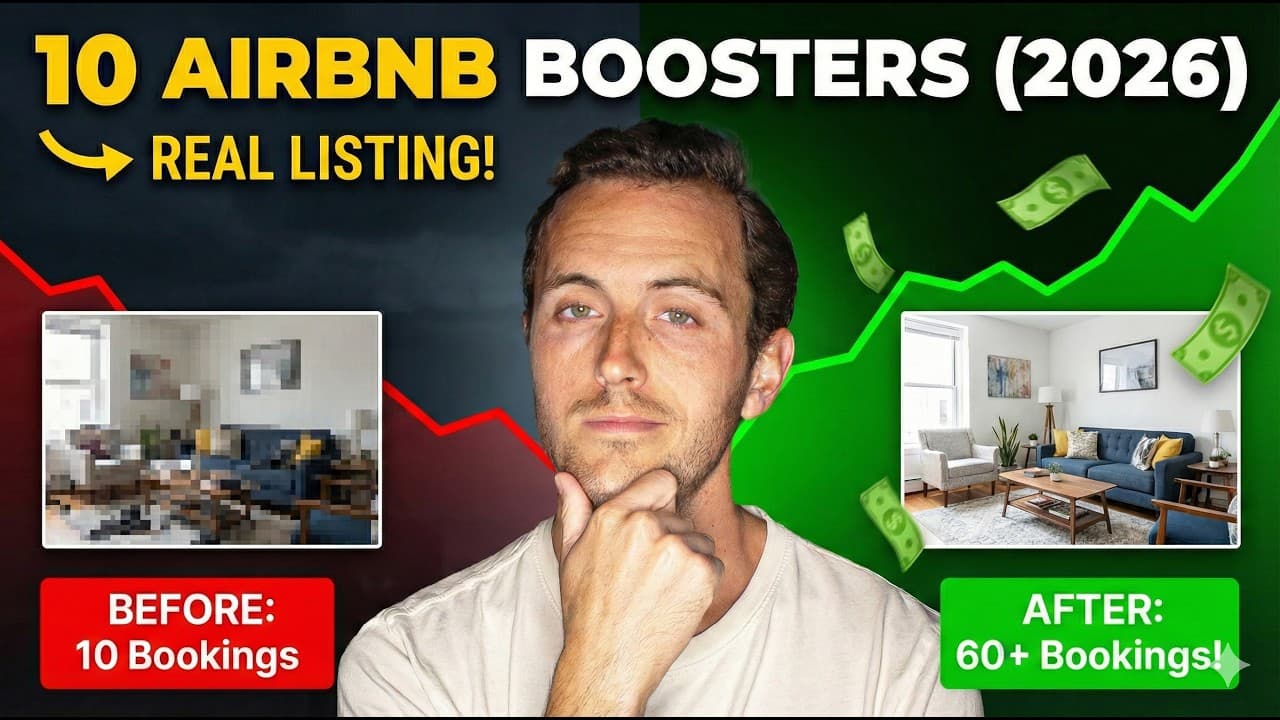
10 ESSENTIAL Steps to Improve Your Airbnb in 2026 (Real Listing Example!)
Most Airbnb listings lose bookings to the same fixable mistakes: bad photos, weak headlines, incomplete amenities, and missed seasonal opportunities. Here are 10 proven strategies to turn any underperforming listing into a consistent booking machine in 2026.
January 1, 2026 · 11 min read

10 Game-Changing Hacks to Improve Your Airbnb
What does it really mean to run a successful Airbnb in 2026? These 10 practical hacks — including a $15 sensor that prevented $44,000 in property damage — show exactly what separates top hosts from average ones.
January 16, 2025 · 9 min read

10 Tips to Get More Views on Airbnb
More views mean more bookings, and more bookings mean more revenue. This guide breaks down 10 actionable Airbnb listing optimization strategies that help hosts climb the search rankings and fill their calendars in 2026.
March 26, 2024 · 14 min read